Winter Compost: Sustainable Gardening Through Cold Weather for Thriving Spring Growth
Winter Compost blends practical, low-cost techniques with real environmental impact. Use these eco-first methods to reduce waste, save water, build living soil, and support pollinators—all while keeping your garden beautiful and productive through the cold season.
Why Winter Compost Matters This Season
Winter prep is when smart gardeners get ahead: leaves become mulch, rain becomes irrigation, and “waste” becomes soil food. With Winter Compost, you set resilient foundations now—so spring growth is faster, healthier, and cheaper.
Core Materials & Tools for Effective Winter Composting
Preparing for winter composting doesn’t require an arsenal of expensive specialized tools. In fact, many of the most effective materials are already abundant in your landscape. Understanding what to gather and how to use simple tools will make your winter composting journey smooth and successful.
- Dry leaves, shredded cardboard, twig cuttings: These are your primary “brown” materials. Leaves, especially, are a goldmine for creating rich leaf mould and providing excellent mulch. Shredded cardboard prevents weeds and provides carbon. Twig cuttings, when properly managed, add structure and micronutrients.
- Compost setup: This could be a traditional bin (wire mesh, wooden pallet, or ready-made plastic), a bokashi system for kitchen scraps, or a worm tower for container gardening. The key is to choose a system that fits your space and composting goals.
- Rain barrel with downspout diverter: Essential for water conservation. A rain barrel collects precious rainwater, reducing your reliance on municipal supplies and providing plants with chlorine-free water.
- Watering can or soaker hose: For efficient, targeted watering, especially important for newly established beds or containers.
- Reusable pots (terracotta/metal/wood) and sturdy seed trays: Investing in durable, reusable containers reduces plastic waste and provides a healthier environment for your plants.
- Hand tools: A stainless trowel, pruners, and a rake are fundamental for garden maintenance. A simple sieve is invaluable for refining leaf mould or compost for seed starting.
- Garden gloves: Protect your hands from thorns, soil, and potential irritants.
- Wheelbarrow or garden cart: For easily moving heavy loads of leaves, compost, or soil.
- Garden fork: Ideal for turning compost piles and aerating heavy soils.
- Shredder/chipper (optional): If you have a large volume of woody material or fallen leaves, a shredder can significantly speed up decomposition. However, simply mowing over leaves or breaking down cardboard by hand is often sufficient for smaller gardens.
By focusing on these core materials and basic tools, you simplify your approach to Winter Compost, making it accessible and sustainable.
Step-by-Step Method for Optimal Winter Composting
Step 1 — Build a No-Dig Base with Leaves (Foundation for Winter Compost)
The no-dig method is a cornerstone of sustainable gardening, especially suitable for preparing beds for Winter Compost. It builds soil health by disturbing it as little as possible, mimicking natural processes.
- Lay cardboard on bare soil: Start with clean, bare soil (or an area where you want to suppress weeds). Flatten cardboard boxes, removing all tape and labels. Lay them directly over the soil, ensuring a complete, light-blocking layer. This suffocates existing weeds and prevents new ones from germinating.
- Overlap edges by 10–15 cm: Proper overlapping is crucial to prevent weeds from popping up through gaps. Think of it like roofing shingles, directing moisture downwards and maintaining a solid barrier.
- Wet lightly: Once the cardboard is in place, water it thoroughly. This softens the cardboard, kickstarts its decomposition, and helps it settle into the soil, creating a moist environment for beneficial microbes.
- Add 5–10 cm of shredded leaves: This is where the “winter” magic truly begins. Shredded leaves (collected from your yard or neighbors) are rich in carbon and provide food for fungi and bacteria. They also act as a fantastic insulating layer, protecting the soil from harsh winter temperatures.
- Apply a thin layer of compost: A layer of finished compost (or a good quality bagged compost) introduces a diverse community of microorganisms. These microbes will begin breaking down the cardboard and leaves, transforming them into rich, fertile soil. This also adds essential nutrients that will become available for spring planting.
This no-dig base suppresses weeds, buffers moisture, and jumpstarts fungi for spring. It’s an efficient way to make Winter Compost directly in your garden beds.
Step 2 — Capture Rain & Water Smarter (Essential for Winter Compost)
Water is a precious resource. By implementing smart water capture and utilization techniques, you reduce your environmental footprint and create a more resilient garden. This is a critical component of successful Winter Compost management.
- Install a rain barrel: Attach a rain barrel to a downspout. It collects rainwater from your roof, providing a free, chlorine-free water source for your garden. Position it strategically for easy access.
- Water early: If you must water during winter (e.g., newly planted evergreens or protected containers), do so early in the morning. This allows the plants to absorb the water before evaporation rates peak and ensures foliage dries before evening, reducing fungal disease potential.
- Group pots by water needs: Container plants dry out faster. Arrange them according to their water requirements. Drought-tolerant plants can be together, while moisture-loving plants are grouped. This prevents over or under-watering.
- Mulch containers with leaves: Just as you mulch garden beds, apply a layer of shredded leaves to the surface of your container plants. This insulating layer reduces water evaporation, keeps soil temperatures more stable, and eventually breaks down to enrich the potting mix. This is vital for protecting roots over winter.
- Add saucers with gravel: Place saucers under pots to catch excess water. Adding a layer of gravel to the saucer prevents the pot from sitting directly in stagnant water, which can lead to root rot, while still increasing humidity around the plant and allowing some reabsorption.
- Check soil moisture, don’t guess: Before watering, stick your finger 2-3 inches into the soil. If it feels dry, then water. Overwatering is just as detrimental as underwatering, especially in winter when plants are less active.
- Consider passive irrigation systems: For larger containers or raised beds, explore wicking beds or buried unglazed clay pots (olla-Mesoamerican technique) that slowly release water into the soil, reducing frequency of watering.
These practices ensure your plants stay hydrated with minimal effort and maximum efficiency, optimizing your Winter Compost efforts by fostering healthy soil moisture.
Step 3 — Feed Soil Life Naturally (Key to Winter Compost Success)
Healthy soil is a living ecosystem. By focusing on natural inputs and processes, you nurture the microscopic life that, in turn, nurtures your plants. This step is central to maximizing the benefits of your Winter Compost.
- Start a cold compost (leaves + coffee grounds): Cold composting is slower but requires less effort. Pile up leaves, adding occasional layers of nitrogen-rich materials like coffee grounds, vegetable scraps, or spent annuals. Keep the pile moist. Over winter, this material will slowly break down into a nutrient-rich leaf mould or crumbly compost, perfect for spring.
- Use bokashi indoors, then trench it: Bokashi is an anaerobic fermentation process ideal for kitchen scraps, including meats and dairy (which regular compost struggles with). The fermented material, once buried (trenched) into resting garden beds, rapidly breaks down in the soil, enriching it and inoculating it with beneficial microbes.
- Sieve last year’s leaf mould: If you started a leaf mould pile last year, it should be beautifully decomposed. Sieve it to remove any large, undecomposed bits. The resulting fine, dark, crumbly material is incredibly valuable.
- Craft a silky seed mix for early sowings: Blend your sieved leaf mould with a small amount of fine sand (for drainage) or perlite, and a dash of finished compost. This creates an ideal, sterile-enough, and nutrient-rich medium for starting seeds indoors, providing a gentle boost without harsh synthetic fertilizers.
- Apply compost tea: During mild spells, brew compost tea by steeping finished compost in water for a day or two. This liquid “superfood” can be diluted and applied to the soil to give a microbial boost, especially around dormant plants or new no-dig beds.
- Cover crops (if timing is right): If you have empty beds early in winter, consider sowing a winter cover crop like clover or hairy vetch. These plants protect the soil from erosion, suppress weeds, and fix nitrogen. They’ll be turned into your soil in spring, providing green manure that complements your Winter Compost.
- Avoid chemical fertilizers: Synthetic fertilizers can harm beneficial soil microbes. Stick to organic inputs that feed the soil food web, not just the plants.
By consistently feeding your soil with organic matter, you build resilience and fertility, ensuring your garden is vibrant and productive for seasons to come. This natural approach is the essence of effective Winter Compost.
Step 4 — Balance Pests with Habitat (A Winter Compost Strategy)
A balanced ecosystem is your best defense against pests. Instead of immediate eradication, embrace strategies that attract beneficial organisms and foster biodiversity. This integrates with your Winter Compost strategy by creating a self-sustaining garden.
- Keep select seed heads for winter birds: Resist the urge to “deadhead” everything. Leave spent seed heads of coneflowers, sunflowers, and other plants. These provide vital food sources for finches, sparrows, and other birds during the lean winter months. Birds are also natural pest controllers, hoovering up insect eggs and larvae.
- Bundle stems into a habitat corner: Create a “bug hotel” or habitat zone. Gather hollow stems (e.g., from sunflowers, elderberry, bamboo), sticks, and leaf litter. Bundle them together and place them in an out-of-the-way corner of your garden. This provides shelter for overwintering beneficial insects like ladybugs, lacewings, and solitary bees, which emerge in spring to pollinate and predate pests.
- Use mild soap, neem, or garlic sprays only when necessary: Reserve organic pest control sprays for targeted interventions. Broad-spectrum sprays, even organic ones, can harm beneficial insects. Focus on improving soil health and supporting natural predators first. Many “pest” issues are symptoms of underlying plant stress.
- Companion plant where possible: Plan for next season by researching companion planting. Marigolds deter nematodes, nasturtiums act as trap crops for aphids, and dill attracts predatory wasps. Building these relationships helps to establish a natural balance.
- Provide water for wildlife: A shallow bird bath or even a simple dish of water can be a lifesaver for birds and insects during dry spells or if natural water sources are frozen.
- Identify pests and problems: Before reaching for any solution, correctly identify the pest or disease. Many insects are harmless or even beneficial. Understanding their life cycle helps in choosing the most effective and least disruptive management strategy.
- Tolerate a little damage: A few munched leaves are a sign of a vibrant ecosystem. Don’t strive for perfection; aim for balance. A diverse garden with rich Winter Compost-enhanced soil can often withstand minor pest incursions without intervention.
By encouraging natural processes and providing habitat, you create a resilient garden that works with nature, not against it. This proactive step helps to reduce pest problems for the coming spring, making your Winter Compost even more effective.
Environmental & Cost Impact of Winter Composting
Adopting Winter Compost practices creates a ripple effect of positive environmental and economic benefits, transforming your garden into a model of sustainability.
- Waste Diversion: Annually, municipal landfills are deluged with countless tons of “yard waste”—primarily leaves and garden trimmings—that could be valuable resources. By engaging in Winter Compost, you can divert many bags of leaves, kitchen scraps, and cardboard from landfill. This reduces methane emissions (a potent greenhouse gas produced in landfills) and significantly lessens the burden on local waste management systems. Instead of being a waste product, these materials become soil builders.
- Water Conservation: Mulching with leaves, a cornerstone of Winter Compost, dramatically cuts irrigation needs. A thick layer of mulch reduces water evaporation from the soil surface, suppresses weeds (which compete for water), and moderates soil temperature. Combined with rainwater capture through rain barrels, you can significantly decrease your reliance on potable water supplies for gardening, saving money on water bills and conserving a vital resource.
- Increased Biodiversity: By creating habitat zones with bundled stems and leaving seed heads, Winter Compost actively supports local wildlife. These areas provide food, shelter, and overwintering sites for beneficial insects (pollinators and pest predators) and birds. A diverse ecosystem leads to more resilient plants, natural pest control, and a healthier overall garden environment.
- Reduced Chemical Use: A garden enriched with homemade compost and nurtured naturally has healthier soil and stronger plants, making them more resistant to pests and diseases. This diminishes the need for synthetic fertilizers, pesticides, and herbicides, reducing chemical runoff into waterways and protecting beneficial organisms.
- Soil Health Improvement: Regular application of compost and leaf mould, especially through no-dig methods, improves soil structure, aeration, and water retention. It increases organic matter content, fostering a thriving soil microbiome. Healthy soil means healthier plants that are more productive and resilient.
- Long-Term Cost Savings:
- Fertilizer: You produce your own nutrient-rich soil amendment, eliminating the need to purchase synthetic fertilizers.
- Potting Mix: Leaf mould and sieved compost can partially or fully replace expensive bagged potting mixes.
- Water: Reduced irrigation due to mulching and rain capture lowers water bills.
- Pest Control: A balanced ecosystem reduces reliance on costly pesticides.
- Garden Productivity: Healthier soil and plants often lead to higher yields and more vigorous growth, providing more food or flowers from your garden.
- Carbon Sequestration: By incorporating organic matter into your soil, you are effectively sequestering carbon. Plants draw carbon dioxide from the atmosphere, and when they decompose and become part of the soil, that carbon is stored, reducing atmospheric CO2 levels.
In essence, Winter Compost is not just gardening; it’s an investment in ecological health and financial prudence, yielding substantial returns for both your garden and the planet.
Advanced Eco Hacks for Enhancing Winter Compost
Beyond the basics, integrating advanced eco hacks can supercharge your Winter Compost efforts, making your garden even more productive and environmentally friendly.
- Charge homemade biochar in compost tea before mixing into beds: Biochar, a stable form of carbon produced from biomass pyrolysis, dramatically improves soil structure, water retention, and nutrient availability. Its porous structure becomes a microbiome hostel. “Charging” it by soaking it in nutrient-rich compost tea (or even urine diluted 1:10) before adding it to beds allows it to absorb beneficial microbes and nutrients, making it instantly effective upon soil incorporation. This enhances the long-term fertility benefits of your Winter Compost.
- Swap plastic seed trays for soil blocks: Eliminate single-use plastics from your seed-starting process. Soil blocks are created by compressing damp potting mix (often enhanced with sieved leaf mould from your Winter Compost) into cubes, which then hold their shape. Seeds are sown directly into these blocks. This method reduces transplant shock, as seedlings can be planted directly into the garden without removing them from a container.
- Try milk-jug winter sowing for hardy perennials and salad greens: This ingenious technique uses recycled translucent plastic containers (like milk jugs) as miniature greenhouses. Cut jugs in half, fill the bottom with potting mix, sow seeds for hardy annuals, perennials, or cool-season greens, tape them back together, and place them outdoors. The jugs protect seeds from harsh winter elements while allowing natural freeze-thaw cycles and light exposure to stratify seeds and encourage natural germination when conditions are right. It’s an incredibly low-maintenance way to start many plants using materials that would otherwise be discarded.
- Insulate patio pots with cardboard jackets and leaf fill to protect roots: For sensitive perennial plants or edibles overwintering in containers, root protection is crucial in cold climates. Wrap the exterior of your pots with several layers of cardboard, using twine or tape to secure it. Then, fill the space between the cardboard jacket and the pot with dried leaves (collected from your Winter Compost efforts). This creates an excellent insulating layer, preventing the soil from freezing solid and protecting roots from frost damage. For added protection, you can also mulch the top of the soil with leaves.
- Worm composting (Vermicomposting) for all kitchen scraps: Beyond bokashi, a worm bin (vermicomposter) provides continuous, high-quality “worm castings” (worm poop) which are a goldmine of nutrients and beneficial microbes. It handles a wide range of kitchen scraps (excluding meat, dairy, and oily foods) and operates indoors, making it perfect for winter. The castings are an incomparable soil amendment and a fantastic addition to your Winter Compost.
- Build a Hugelkultur bed during mild spells: If you’re building a new raised bed, consider hugelkultur. This technique involves burying large pieces of wood (logs, branches) under smaller organic materials and soil. The wood slowly decomposes, providing nutrients and acting like a sponge, retaining water over time. It’s a long-term approach to building incredibly fertile and self-watering beds, a great companion to your Winter Compost materials.
- DIY Solar Dehydrator for unused produce/herbs: Extend the life of excess garden produce from your previous season or even foraged wild foods. A simple solar dehydrator built from reclaimed wood and mesh can preserve food without electricity, making it another sustainability hack that complements the ethos of Winter Compost.
- Recycle greywater for outdoor plants (where permitted): In drought-prone areas, carefully consider installing simple greywater systems (e.g., from dishwashing or laundry machines using eco-friendly soaps). This water can be diverted to irrigate non-edible landscape plants, reducing strain on potable water. Always check local regulations before implementing such systems.
These advanced hacks demonstrate how creative recycling and nature-inspired solutions can elevate your gardening, making it more productive, resilient, and in perfect harmony with the principles of Winter Compost.
Design & Aesthetics (Keep It Beautiful with Winter Compost Principles)
Sustainable gardening shouldn’t mean sacrificing beauty. In fact, integrating Winter Compost principles can lead to a garden with a unique, rustic charm and a deeper connection to nature.
- Recycled-wood edges: Instead of new timber or plastic, use salvaged wood for garden bed borders. Old fence posts, reclaimed pallet wood (ensure it’s not chemically treated), or fallen branches can delineate beds while adding a natural, weathered aesthetic. These seamlessly integrate with the organic feel of Winter Compost.
- Mossy planters: Encourage moss growth on terracotta pots, stone features, or even old ceramic shards. Moss adds a lush, verdant texture, signaling maturity and a connection to nature. It thrives in damp, shaded conditions often found in a winter garden.
- Warm solar path lighting: Opt for solar-powered LED lights for pathways and accent lighting. They are energy-efficient, require no wiring, and cast a soft, inviting glow that enhances the cozy Nordic feel of a winter garden. Arrange them to highlight architectural plants or features.
- Choose a restrained palette and repeat textures for cohesion: In winter, color is often sparse. Focus on textures—the gnarled bark of a tree, the feathery fronds of ornamental grasses, the skeletal structure of dormant perennials. Choose a limited color palette of evergreens (various shades of green), browns (mulch, bare branches), and the occasional pop of red from berries. Repeating these textures and colors creates visual harmony even in monochrome.
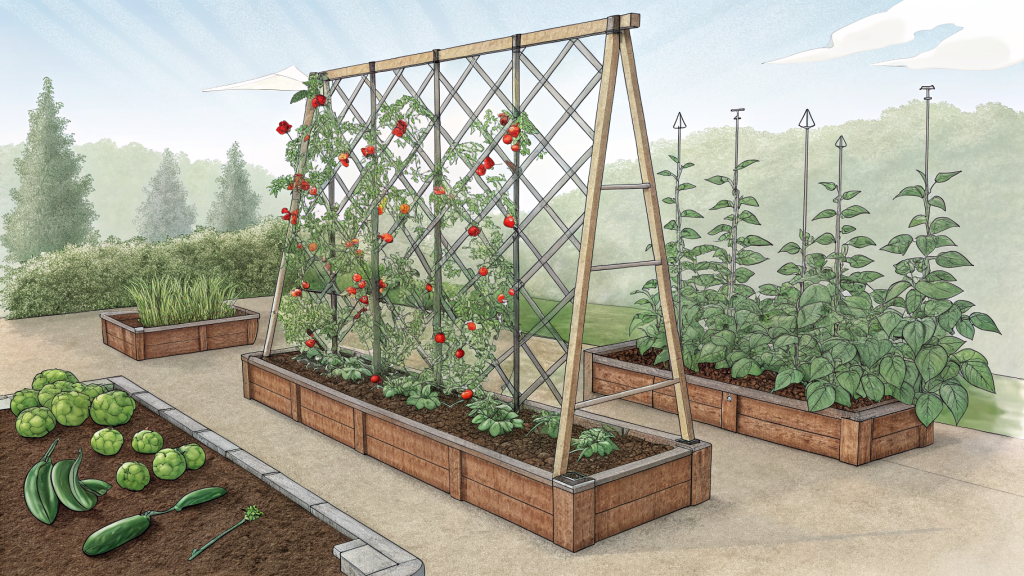
- Embrace structural elements: Consider the “bones” of your garden. Trellises, arbors, and even dormant climbing roses can provide vertical interest. Evergreens or shrubs with interesting branch patterns offer focal points. These permanent structures hold the garden’s form even when deciduous elements are bare, integrating with the long-term vision of a Winter Compost-enhanced garden.
- Incorporate natural stone: Boulders, river rocks, or dry-stacked stone walls add timeless elegance and provide thermal mass, radiating heat. They also offer microclimates for small plants or insects.
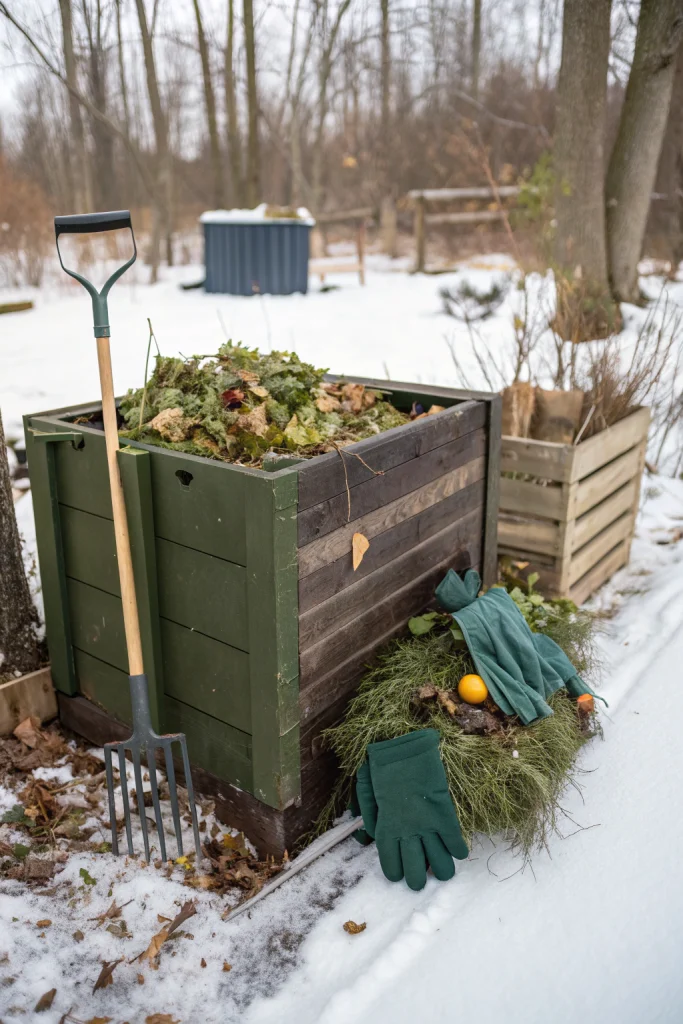
- Decorative compost bins: While functional, your compost bin doesn’t have to be an eyesore. Consider building a three-bay system from reclaimed wood that blends into the garden, or screen a commercial bin with attractive trellises planted with evergreen vines.
- Seed heads as sculptural elements: As mentioned, leaving seed heads supports wildlife, but they also provide wonderful sculptural interest. The dark, intricate shapes against a snowy backdrop or frosty morning are visually stunning.
- Seasonal accent pieces: A single, well-placed ceramic bird bath, a weathered metal sculpture, or even a bundle of willow branches tied with natural twine can add simple, artful touches that resonate with the natural aesthetic.
By consciously designing with sustainability and natural elements in mind, your garden will exude an authentic, serene beauty that is both environmentally responsible and visually captivating, embodying the spirit of Winter Compost.
Common Mistakes to Avoid in Winter Composting
Even with the best intentions, it’s easy to make a few missteps when adapting to Winter Compost techniques. Being aware of these common pitfalls can save you time, effort, and ultimately lead to a more successful garden.
- Using peat moss: This is a critical mistake for eco-conscious gardeners. Peat moss is harvested from ancient peat bogs, which are incredibly slow-forming ecosystems and vital carbon sinks. Its extraction destroys habitat and releases stored carbon into the atmosphere.
- Solution: Choose leaf mould instead. Create your own by simply piling up fallen leaves. It’s free, sustainable, and offers superior benefits for soil structure and moisture retention. Used extensively in Winter Compost, leaf mould is a powerhouse.
- Over-tidying: The impulse to clean up every fallen leaf, cut back every spent stem, and remove all natural debris can be strong. However, this strips your garden of vital winter insulation and habitat.
- Solution: Remove hazards (like diseased plant material or sharp broken branches), but keep habitat zones for allies. Leave perennial stems standing (like those from echinacea or rudbeckia) for winter interest and to provide shelter for beneficial insects and food for birds. Allow a layer of leaves to remain in garden beds as mulch, a key aspect of Winter Compost.
- Watering at midday: Watering in the middle of a winter day is inefficient and can be detrimental.
- Solution: Water early in the morning or late in the evening (if temperatures allow and no hard freeze is expected). This minimizes evaporation losses, ensuring more water reaches the plant roots. In winter, less watering is generally needed, especially for dormant plants. Check soil moisture before watering. Your captured rainwater is precious, so use it wisely.
- Heavy fertilizing in cold soils: Plants are generally dormant or semi-dormant in cold weather. Applying synthetic fertilizers to cold soil is largely a waste, as the plants aren’t actively absorbing nutrients, and the chemicals can leach into waterways.
- Solution: Feed microbes, not just plants. Focus on adding organic matter like compost, leaf mould, or fermented bokashi during winter. These inputs slowly release nutrients as soil life becomes active, improving soil structure and supporting the soil food web. The goal of Winter Compost is to build long-term soil health.
- Neglecting your compost pile: Just because it’s cold doesn’t mean your compost pile stops working entirely, especially if it’s substantial. Lack of moisture or aeration will slow it down significantly.
- Solution: Periodically check the moisture level of your winter compost pile. Add water if it’s too dry (rainwater from your barrel is perfect). If you have the energy during a mild spell, give it a quick turn to aerate it. This keeps the decomposition process chugging along, albeit slowly, ready for spring.
- Not protecting tender plants/containers: Leaving sensitive plants or containerized evergreens exposed to severe cold can result in significant damage or loss.
- Solution: Use cardboard jackets, burlap wraps, or bring very tender container plants into a garage or sheltered area. Mulch the surface of container soils deeply with leaves to insulate roots. This is crucial for maintaining plant health through winter even with a robust Winter Compost program.
- Ignoring tool care: Letting gardening tools sit dirty and wet over winter leads to rust and damage.
- Solution: Clean, sharpen, and oil your tools before storing them away. This extends their lifespan and makes them a joy to use come spring.
By being mindful of these common mistakes, you can refine your Winter Compost practices and ensure a healthier, more productive garden with less hassle.
Storage & Winter Care for Your Winter Compost System and Tools
Proper storage and care ensure your gardening system and tools are ready for action when spring arrives. This approach integrates seamlessly with the efficiency of Winter Compost.
- Cover rain barrels: Once freezing temperatures become consistent, drain your rain barrel. Keeping it full during a hard freeze can cause it to crack due to water expansion. A simple tightly-fitting lid or tarp will prevent debris from accumulating over winter. If your climate permits, you can leave a small amount of water at the bottom to prevent the barrel from blowing away.
- Aerate compost: While decomposition slows in cold weather, your compost pile still benefits from occasional aeration. During milder winter days, use a pitchfork or compost aerator to turn the pile. This introduces oxygen, which is vital for aerobic bacteria, and helps prevent compaction and foul odors. For passive piles (like leaf moulds in a bin), simply ensuring it stays moist (not waterlogged) is enough.
- Label leaf-mould pens by date: If you have multiple leaf mould piles or bins, clearly label them with the date you started them. Leaf mould can take 1-2 years to fully decompose into a rich, fine material. Knowing the age helps you access the most mature product first, which is ideal for seed starting or potting mixes derived from your Winter Compost.
- Oil cleaned tools: After cleaning all soil from spades, trowels, pruners, and hoes, dry them thoroughly. Then, apply a thin coat of linseed oil, mineral oil, or even engine oil to metal parts to prevent rust. Sharpen blades, and for wooden handles, a rub with linseed oil can prevent cracking and splitting. Store them in a dry place.
- Store dry cardboard flat: Keep a stack of flat, dry cardboard boxes stored in a shed, garage, or under a tarp. This ensures you have a readily available supply for quick sheet-mulch builds (as part of your no-dig Winter Compost base) when garden beds become free in late winter or early spring, or for insulating additional pots.
- Protect irrigation lines: Drain and disconnect any hoses, drip irrigation lines, or sprinklers. Store them coil-free in a shed or garage to prevent freezing and cracking. If you have in-ground irrigation, ensure it’s properly blown out to remove all water from the lines.
- Clean and store pots/trays: Wash all reusable pots, seed trays, and plant markers with a stiff brush and a dilute bleach solution or horticultural cleaner to remove soil and potential pathogens. Rinse thoroughly and dry completely before stacking and storing them in a clean, dry place.
- Empty and store garden fabrics/netting: Clean any row covers, bird netting, or shade cloths. Repair any tears, then fold them neatly and store them out of direct sunlight to prolong their life.
By dedicating a little time to these winter care tasks, you safeguard your investments and ensure your gardening elements are maintained for peak performance year after year, enhancing the longevity and effectiveness of your Winter Compost initiatives.
Conclusion
Winter Compost proves greener gardening is easier, cheaper, and more resilient. Far from a dormant period, winter becomes a season of vital preparation and regeneration. By embracing principles of waste reduction, water conservation, and soil enhancement, you lay down robust foundations for the coming year. Start with leaves, water capture, fostering soil life through smart composting, and creating critical habitat—your spring garden will repay you with vigor, abundant yields, and a dramatic reduction in required inputs. This holistic approach makes the garden not just a plot of land, but a thriving, self-sustaining ecosystem that is a testament to mindful, sustainable practices. Embrace the power of Winter Compost to transform your gardening journey and contribute positively to our shared environment.
FAQ About Winter Composting
- Can I start now? Yes—absolutely! It’s never too late to begin incorporating Winter Compost principles. Focus immediately on harnessing fallen leaves (for leaf mould and mulch), setting up rain capture, establishing no-dig beds, and properly cleaning and caring for your tools. These initial actions will yield significant benefits for your garden come spring.
- Only a balcony? Even a small space can benefit from Winter Compost. Use worm towers or bokashi systems in planters for kitchen scraps. Insulate pots with cardboard jackets and layered leaves to protect roots. Mulch container surfaces. Collect rainwater in small buckets. Grow hardy salad greens like lettuce or spinach in insulated containers.
- Special tools required? No—you don’t need fancy gadgets. A rake for gathering leaves, a good pair of pruners for cutting back dead growth, and a basic compost bin (or even just sturdy piles of material in a corner) are often enough. The core of Winter Compost is resourcefulness, not expensive equipment.
- Science behind this? The principles of Winter Compost are rooted in ecological science. No-dig gardening supports fungal networks; mulch conserves water through reduced evaporation; diverse organic matter feeds a complex soil food web (bacteria, fungi, protozoa, nematodes, arthropods) that cycles nutrients and improves soil structure; leaving plant debris provides insulation and habitat for beneficial insects and overwintering wildlife. These practices mimic natural forest ecosystems, building resilience and fertility without artificial inputs. For deeper dives, consult reputable sources on soil biology, permaculture, and ecological gardening.
- Healthline — Growing food in limited space
- Harvard T.H. Chan — Plate & Planet (sustainability)
- Medical News Today — Health benefits of gardening