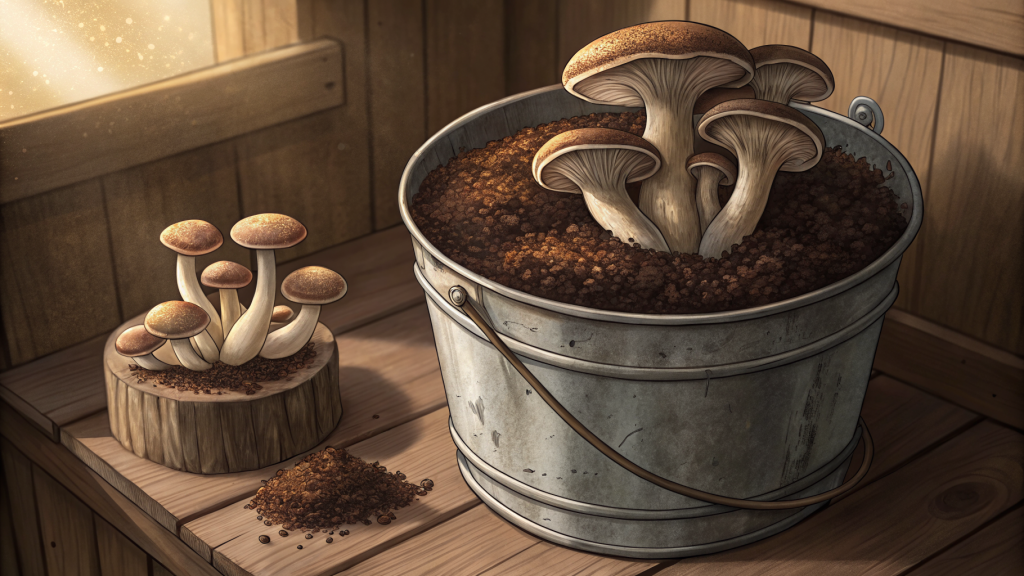
If you love fresh mushrooms and hate waste, it’s time to grow mushrooms coffee grounds in a simple bucket system. Oyster mushrooms are fast-growing, delicious, and perfect for indoor cultivation—especially when you recycle your morning brew. This eco-friendly hack turns spent coffee grounds into a continuous harvest of gourmet fungi, right on your kitchen counter.
Table of Contents
ToggleWhy Oyster Mushrooms and Coffee Grounds Are a Perfect Match
Oyster mushrooms (Pleurotus ostreatus) are one of the easiest mushrooms to grow at home. They thrive on a variety of organic substrates, and spent coffee grounds are ideal because they are already pasteurized by the brewing process and rich in nutrients. Plus, using coffee grounds diverts waste from landfills—a win-win for your plate and the planet.
What You’ll Need
- A clean 5-gallon bucket with a lid (food-grade plastic works well)
- About 5–6 pounds of used coffee grounds (freshly brewed, not moldy)
- Oyster mushroom spawn (available online or from a local supplier)
- Drill with a 1/4-inch bit (for making holes)
- Spray bottle for misting
- Optional: Straw or shredded newspaper to add bulk
Step-by-Step: Building Your Bucket Mushroom Kit
1. Prepare the Bucket
Drill about 20–25 small holes (1/4 inch) evenly spaced around the sides of the bucket, about 2–3 inches apart. These holes allow the mushrooms to fruit. Wash the bucket with soap and water, then rinse well.
2. Collect and Prepare Coffee Grounds
Gather used coffee grounds over a few days. Do not let them sit for more than 24–48 hours at room temperature, or they can mold. If you have too many, freeze the extras. The grounds should be moist but not dripping—aim for the consistency of a wrung-out sponge.
3. Layer Grounds and Spawn
Start with a 2-inch layer of coffee grounds at the bottom of the bucket. Sprinkle a thin layer of mushroom spawn on top. Repeat this layering until the bucket is nearly full, finishing with a layer of spawn. Use about 1 pound of spawn for every 5 pounds of coffee grounds.
4. Incubate the Bucket
Place the lid loosely on top (do not seal) and put the bucket in a dark, warm spot (65–75°F). A closet or basement works well. After about 2–3 weeks, you’ll see white mycelium thread through the coffee grounds—this means the spawn has colonized the substrate.
Caring for Your Mushrooms: From Colonization to Harvest
Fruiting Conditions
Once the bucket is fully colonized, move it to a brighter area with indirect light. Mist the inside of the bucket and the holes daily to maintain high humidity. Temperatures around 60–70°F are ideal. Within 5–10 days, tiny mushroom pins will appear at the holes.
Harvesting
When the caps begin to flatten but before they start dropping spores (look for a white dust), twist and pull the clusters off. Harvest in flushes—each flush yields mushrooms for about a week, then a rest period of 1–2 weeks occurs before the next flush.
Common Issues and Fixes
- No pins forming: Increase humidity or lower temperature slightly.
- Mushrooms look leggy: They need more fresh air—open the lid slightly or increase ventilation.
- Green or black mold: Discard the batch and start with cleaner coffee grounds.
Maximizing Your Harvest: Tips for Continuous Production
- Stagger your buckets: Start a new bucket every 2–3 weeks for a steady supply.
- Reuse the substrate: After 2–3 flushes, the coffee grounds are spent. Add them to your compost pile or use as mulch.
- Boost with straw: Mixing in some pasteurized straw (soaked in hot water for an hour) can increase yields.
Frequently Asked Questions
Can I use any type of coffee?
Yes, any brewed coffee grounds work—caffeinated or decaf. Avoid flavored coffees, as oils can inhibit mushroom growth.
Do I need to sterilize the coffee grounds?
No, the high heat of brewing already pasteurizes them. Just use them within a day or two.
How many harvests can I expect?
Typically 2–3 harvests per bucket, yielding 1–2 pounds total over 6–8 weeks.
Your Sustainable Mushroom Garden Starts Now
Growing oyster mushrooms in a bucket with used coffee grounds is one of the simplest and most rewarding ways to produce fresh food at home. It requires minimal space, virtually no cost after the initial spawn, and turns a daily waste product into a delicious ingredient. Start your first bucket today, and within a month, you’ll be harvesting your own gourmet mushrooms—proof that small eco-friendly actions can yield big results.