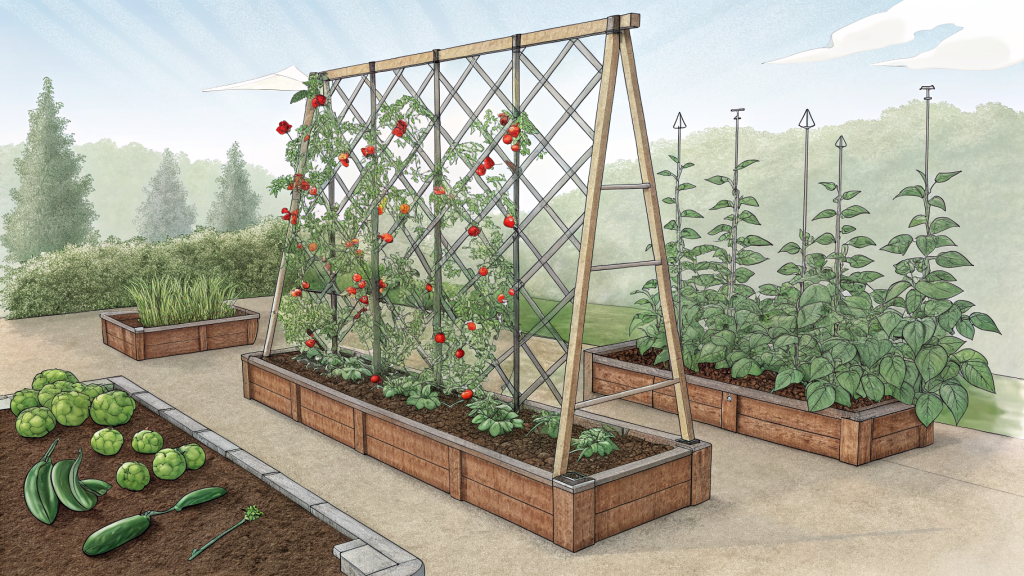
If you want a support system that lasts for years without wobbling or rotting, a rebar trellis for vegetables is the answer. Combining concrete reinforcing bar (rebar) with electrical conduit creates a structure sturdy enough for heavy yields of beans and cucumbers. This DIY project takes an afternoon and delivers a professional-looking trellis that won’t budge in strong winds.
Table of Contents
ToggleWhy Rebar and Conduit Work for Vegetable Trellises
Rebar provides the vertical strength and rust resistance (use epoxy-coated or galvanized), while electrical conduit (EMT) is lightweight, inexpensive, and easy to cut for horizontal crossbars. Together they form a rigid frame that can be disassembled if needed. Unlike wooden trellises, this metal version won’t warp, splinter, or harbor pests.
Materials and Tools
Materials
- 4 pieces of ½-inch rebar, each 6–8 feet long (depending on desired height)
- 2 pieces of ½-inch EMT conduit, each 4–5 feet long (for crossbars)
- 2 pieces of ½-inch EMT conduit, each 3 feet long (for lower crossbars)
- 4 rebar caps or plastic end caps for safety
- Heavy-duty zip ties or 14-gauge galvanized wire
- Optional: concrete mix for anchoring (or use ground stakes)
Tools
- Hacksaw or angle grinder with metal cutting blade
- Measuring tape
- Marker
- Hammer or mallet (for driving rebar into ground)
- Drill with ⅛-inch bit (optional, for wire holes)
Step-by-Step Construction
1. Plan the Layout
Choose a sunny spot with well-drained soil. For a 4-foot-wide trellis, mark four spots in a rectangle: two for the back legs and two for the front legs, spaced 4 feet apart lengthwise and 2 feet apart widthwise. The trellis will lean slightly backward for stability.
2. Drive the Rebar into the Ground
Using a hammer or mallet, drive each rebar piece at least 12–18 inches into the ground, leaving 5–6 feet above. Wear safety glasses and gloves. Ensure all four bars are at the same height and plumb. For very loose soil, mix a small amount of concrete around each base, but often tamping the soil back is sufficient.
3. Attach the Crossbars
Position the two longer conduit pieces horizontally across the front and back pairs of rebar, about 6 inches from the top. Use zip ties or wire to secure each crossbar to both rebar legs. Repeat with the shorter conduit pieces at about 2 feet above ground. These lower bars help support vines as they climb.
4. Create a Grid (Optional)
For cucumbers, add vertical strings or additional conduit between the crossbars. Tie a strong jute or nylon string from the top crossbar to the bottom, spaced 6–8 inches apart. Beans will climb these easily.
5. Secure and Finish
Cut off excess zip tie tails. Place rebar caps on the top ends of rebar to prevent injury and rust. If you used wire, twist the ends neatly. Your trellis is ready to plant.
Planting and Training Your Vegetables
Beans
Sow pole bean seeds 1 inch deep and 3 inches apart at the base of the trellis. Once seedlings are 4 inches tall, gently guide them toward the strings or conduit. They will twine naturally.
Cucumbers
Plant cucumber seeds or transplants 12 inches apart along the trellis. As they grow, loosely tie the main stem to the vertical supports with soft plant ties. Cucumbers may need occasional guidance to keep tendrils wrapping around the grid.
Maintenance and Longevity
Check zip ties annually and replace if brittle. If you used uncoated rebar, a light coat of rust-inhibiting paint every few years extends life. At season’s end, cut vines at the base and pull them free. Store conduit indoors if possible. With minimal care, this rebar trellis for vegetables will serve for a decade or more.
Practical Takeaway
Building a rebar and conduit trellis is a one-time investment of about $30 and two hours. It provides a sturdy, reusable support that maximizes vertical space and keeps your beans and cucumbers healthy. Adjust dimensions to fit your garden, and enjoy a trellis that stands strong through many growing seasons.