Table of Contents
ToggleWhy Build a Vertical Salad Garden Pallet?
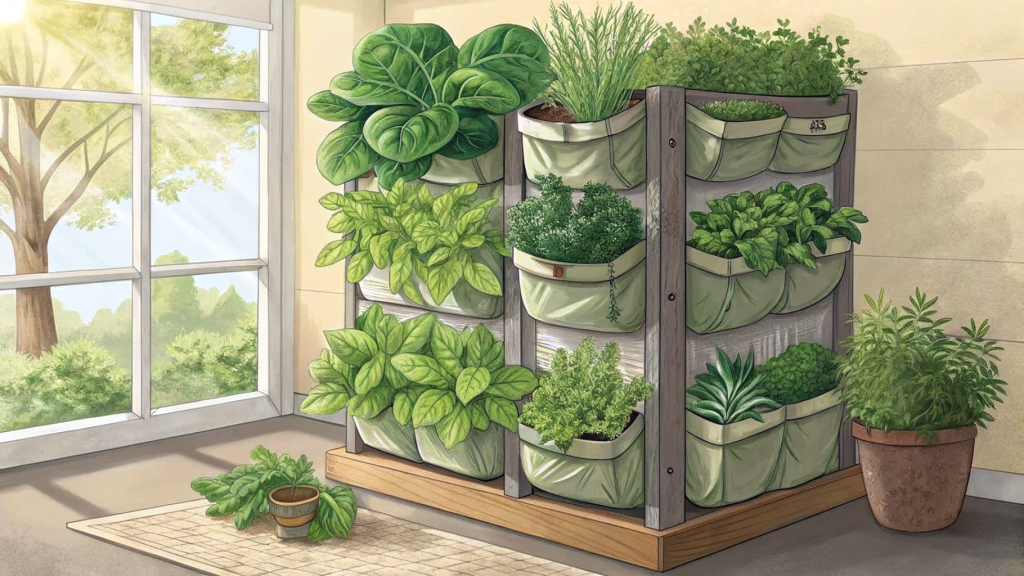
If you have limited patio or balcony space, a vertical salad garden pallet is a brilliant solution. By repurposing a wooden pallet and adding landscape fabric pockets, you can create a living wall that grows lettuce, herbs, and edible flowers in a fraction of the ground space. This project is inexpensive, eco-friendly, and perfect for urban permaculture setups.
Materials and Preparation
What You’ll Need
- A standard wooden pallet (heat-treated, not chemically treated; look for HT stamp)
- Landscape fabric (heavy-duty, weed-block type)
- Staple gun and heavy-duty staples
- Potting mix (lightweight, well-draining)
- Seedlings or seeds of salad greens, herbs, and edible flowers
- Drill with screws (optional, for extra stability)
Pallet Safety Check
Ensure your pallet is untreated. Avoid pallets marked MB (methyl bromide). Sand rough edges to prevent splinters. If the slats are widely spaced, add a backing board or extra slats to hold soil.
Step-by-Step: Building the Pockets
1. Attach Landscape Fabric
Lay the pallet flat. Cut landscape fabric large enough to cover the back and sides with extra folding over the bottom edge. Staple fabric tightly across the back, then wrap around the sides, stapling every 2–3 inches. The front slats remain open—these form the pocket openings.
2. Create Planting Pockets
Turn the pallet so the open side faces up. Cut strips of fabric to line each cavity between slats. For a deeper pocket, fold the fabric double. Staple the fabric along the inner edges of each slat, forming a trough. Leave the top open for planting.
3. Add Soil and Plants
Fill each pocket with moistened potting mix. Gently tamp down to remove air gaps. Plant seedlings or sow seeds according to their spacing needs—leafy greens can be closer together. Water thoroughly after planting.
Best Plants for a Vertical Salad Garden Pallet
Leafy Greens
- Lettuce (cut-and-come-again varieties like ‘Black Seeded Simpson’)
- Spinach (compact types like ‘Baby’s Leaf’)
- Arugula (fast-growing and spicy)
Herbs
- Basil (dwarf varieties like ‘Spicy Globe’)
- Chives (grow well in shallow soil)
- Parsley (curly or flat-leaf)
Edible Flowers
- Nasturtiums (trailing types spill over pockets)
- Violas (compact and continuous bloom)
- Calendula (adds color and is edible)
Watering and Maintenance
Vertical gardens dry out faster than ground beds. Check moisture daily by sticking a finger into the pockets. Water slowly until it runs out the bottom. A drip irrigation system with emitters for each pocket can simplify watering. Fertilize every two weeks with a diluted liquid seaweed or fish emulsion. Rotate crops after harvesting to replenish nutrients.
Mounting and Positioning
Where to Hang Your Pallet
Choose a spot that gets 4–6 hours of sun for most greens. A south- or east-facing wall is ideal. Ensure the structure can support the weight—a fully watered pallet can weigh over 50 pounds. Use heavy-duty hooks or a sturdy frame. Tilt the pallet slightly backward (about 10 degrees) to help water soak into lower pockets.
Troubleshooting Common Issues
Soil Leaking
If soil escapes through gaps, add an extra layer of landscape fabric inside each pocket. You can also line pockets with coconut coir mats.
Uneven Watering
Top pockets tend to dry faster. Group plants with similar water needs together, or install a vertical drip line that irrigates each level.
Pest Control
Aphids and slugs can be managed with neem oil sprays or diatomaceous earth. Encourage beneficial insects by planting dill or fennel nearby.
Practical Takeaway
A vertical salad garden pallet is a simple, low-cost way to grow fresh greens in small spaces. With proper planning and care, you can harvest salads for months from a single pallet. Start with easy crops like lettuce and chives, then expand to flowers and herbs. Happy growing!