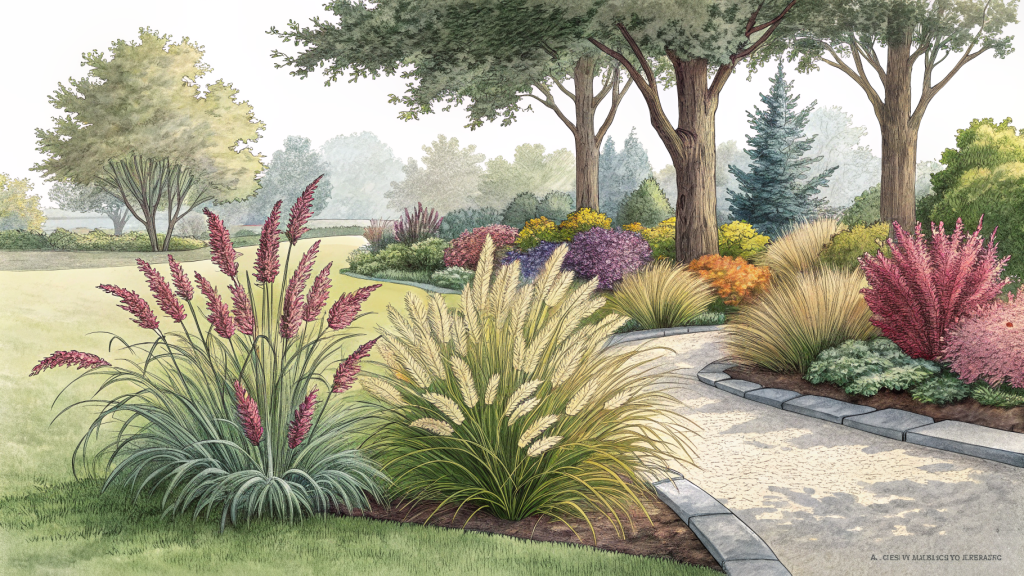
Dry shade—under eaves, beneath large trees, or along north-facing walls—is one of the toughest spots in any garden. But it doesn’t have to be barren. By choosing drought tolerant ornamental grasses shade lovers, you can add soft texture, gentle movement, and year-round interest without constant watering. These five grasses thrive with little moisture and low light, turning challenging corners into inviting retreats.
Table of Contents
Toggle1. Japanese Forest Grass (Hakonechloa macra)
This cascading grass is a top performer for dry shade. Its arching, bamboo-like foliage forms a soft mound that sways with the slightest breeze. Cultivars like ‘Aureola’ offer golden variegation that brightens dark areas.
Planting and Care
- Site: Partial to full shade; tolerates dry soil once established.
- Soil: Prefers rich, well-drained loam but adapts to clay if amended.
- Water: Water deeply weekly for the first year; then only during extended dry spells.
- Maintenance: Cut back dead foliage in early spring before new growth emerges.
2. Northern Sea Oats (Chasmanthium latifolium)
Named for its flat, oat-like seed heads that rustle in the wind, this grass adds both texture and sound. It spreads slowly by rhizomes, making it an excellent groundcover for dry shade.
Design Ideas
- Use as a border along shaded paths or driveways.
- Combine with ferns and hostas for a layered woodland look.
- Leave seed heads standing through winter for visual interest and bird food.
Growing Tips
- Light: Full shade to part sun; avoid hot afternoon rays.
- Water: Drought tolerant once established; water only if leaves wilt.
- Spread: Divide clumps every 3–4 years to control size.
3. Blue Fescue (Festuca glauca)
This compact, clumping grass offers icy blue foliage that stands out in dim corners. It stays small (6–12 inches tall), making it perfect for edging or rock gardens in dry shade.
Care Instructions
- Soil: Needs sharp drainage; avoid heavy clay that stays wet.
- Water: Very low water needs; overwatering causes rot.
- Pruning: Comb out dead blades in spring; cut back hard every few years to rejuvenate.
- Note: Blue fescue is short-lived (3–4 years) but reseeds readily in favorable spots.
4. Tufted Hair Grass (Deschampsia cespitosa)
Native to cool, shady woodlands, this grass produces airy plumes of gold-tinted flowers in early summer. It forms dense, evergreen tussocks that stay attractive through winter.
Best Uses
- Mass under deciduous trees for a naturalistic meadow effect.
- Pair with spring bulbs like daffodils for early color.
- Use as a specimen in a dry shade container.
Growing Conditions
- Light: Dappled shade to full shade.
- Soil: Moist but well-drained; tolerates dry periods once established.
- Water: Water sparingly; this grass prefers consistent light moisture but survives drought.
5. Liriope (Liriope muscari)
Though technically a perennial, Liriope is grass-like in appearance and often grouped with ornamental grasses. Its evergreen leaves form neat clumps, and purple flower spikes appear in late summer.
Why It Works in Dry Shade
- Drought tolerance: Deep roots help it survive in dry soil under trees.
- Versatility: Use as a groundcover, edging, or in mass plantings.
- Low maintenance: No deadheading needed; cut back every 2–3 years in early spring.
Tips for Success
- Choose clumping varieties (‘Big Blue’) over spreading types to avoid invasiveness.
- Plant in well-drained soil; avoid wet feet.
- Fertilize lightly in spring if foliage is pale.
Practical Takeaway
Dry shade doesn’t mean a dull garden. With these drought tolerant ornamental grasses shade selections, you can create a low-water landscape full of texture, movement, and quiet beauty. Start with one or two species, prepare the soil with compost, and water deeply for the first season. After that, sit back and watch your shade garden come alive.