If you’re tired of replanting your vegetable garden every spring, it’s time to discover the magic of perennial vegetables for beginners. These low-maintenance crops come back year after year, saving you time, money, and effort. Once established, they require minimal care while providing fresh harvests for a decade or more.
Table of Contents
Toggle1. Asparagus: The Long-Lived Spring Treat
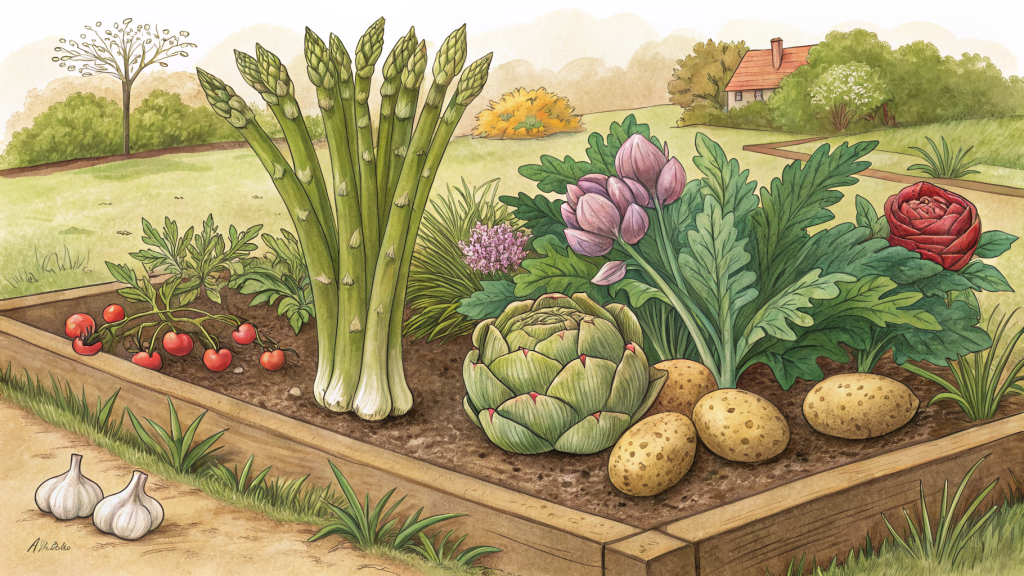
Asparagus is the classic perennial vegetable, producing tender spears each spring for 15-20 years. It’s perfect for beginners because it’s nearly pest-free and thrives in most climates.
How to Plant Asparagus
- Choose a sunny, well-drained spot with rich soil. Prepare a trench 12 inches deep and 18 inches wide.
- Plant one-year-old crowns (roots) in spring, spacing them 18 inches apart. Cover with 2 inches of soil, then gradually fill the trench as shoots grow.
- Mulch heavily with compost or straw to retain moisture and suppress weeds.
Harvesting Tips
- Year 1-2: Let all spears grow into ferns to strengthen the root system. No harvesting!
- Year 3+: Harvest spears when they’re 6-8 inches tall by snapping them off at ground level. Stop harvesting after 6-8 weeks to let ferns regrow.
2. Rhubarb: The Pie Plant That Keeps Giving
Rhubarb is a hardy perennial that produces tart stalks for desserts and sauces. It thrives in cool climates and can live for 10-15 years with minimal care.
Planting and Care
- Plant crowns or divisions in early spring, spacing them 3-4 feet apart. Rhubarb needs cold winters to produce well.
- Add plenty of compost to the planting hole and water regularly during dry spells.
- Remove flower stalks as soon as they appear to redirect energy into stalk production.
Harvesting Safely
- Year 1: Don’t harvest—let the plant establish.
- Year 2+: Pull stalks when they’re 12-18 inches long by twisting and pulling. Never cut them. Leave at least half the stalks to keep the plant healthy.
- Caution: Only eat the stalks; leaves are toxic due to oxalic acid.
3. Perennial Onions: Egyptian Walking Onions and Potato Onions
These hardy onions multiply themselves, providing scallions, bulbs, and sets year after year. They’re among the easiest perennial vegetables for beginners to grow.
Egyptian Walking Onions
- Plant bulb sets in fall or spring. They produce small bulbs at the top of the stalk that fall over and “walk” across the garden.
- Harvest green tops as scallions, or collect the top sets for replanting or eating.
Potato Onions (Multiplier Onions)
- Plant small bulbs in fall, spacing 6 inches apart. Each bulb splits into a cluster of 5-10 new bulbs.
- Harvest in midsummer when tops die back. Replant the smallest bulbs for next year’s crop.
4. Sunchokes (Jerusalem Artichokes): The Nutritious Tuber
Sunchokes are sunflower relatives that produce crunchy, nutty tubers. They’re extremely vigorous and can become invasive, so plant them in a contained bed or large pot.
Growing Sunchokes
- Plant tubers in spring, 4 inches deep and 18 inches apart. They tolerate poor soil but prefer full sun.
- Water only during drought; they’re very drought-tolerant once established.
- Harvest after frost sweetens the tubers. Dig up what you need and leave some in the ground for next year’s crop.
Controlling Spread
- Use a bottomless bucket or raised bed with solid sides to contain the roots.
- Harvest all tubers in spring if you want to limit spread, then replant just a few.
5. Good King Henry: The Forgotten Green
This ancient leafy perennial is making a comeback. It produces asparagus-like shoots in spring and spinach-like leaves throughout summer. It’s highly adaptable and requires almost no care.
Planting and Harvest
- Sow seeds directly in spring or fall, or plant divisions. Space plants 18 inches apart.
- Harvest young shoots in early spring when 6-8 inches tall—they taste like asparagus.
- Harvest leaves later in the season as a cooked green (they’re slightly bitter raw). Remove flower stalks to keep leaves tender.
Why It’s Perfect for Beginners
- Thrives in poor soil and partial shade.
- No pests or diseases bother it.
- Self-seeds easily, so you’ll have plenty of plants to share or expand.
Practical Takeaway
Starting a perennial vegetable garden is one of the best long-term investments you can make. Choose just two or three of these crops this year, prepare the soil well, and be patient during the first season. By the second year, you’ll enjoy effortless harvests that only get better with time. For more help, look for local perennial plant swaps or online sources for crowns and bulbs.