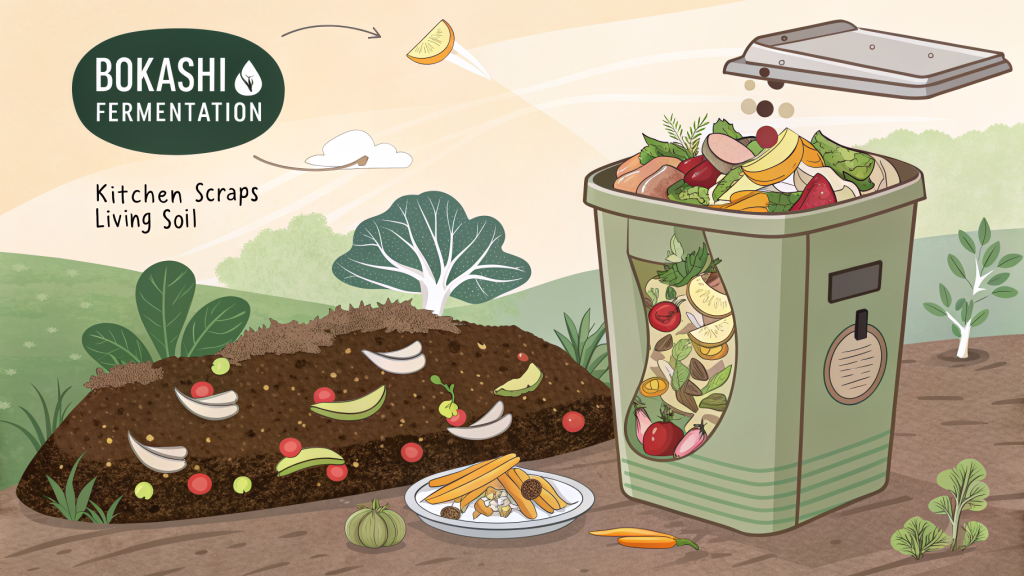
If you’re looking for a low-effort way to recycle kitchen scraps into a powerful soil amendment, bokashi fermentation is the answer. This anaerobic process transforms food waste into a nutrient-rich pre-compost that feeds soil life, all without the smell or pests of traditional composting. With bokashi fermentation, kitchen scraps become a living soil booster that’s easy to manage even in small spaces.
Table of Contents
ToggleWhat Is Bokashi Fermentation?
Bokashi is a Japanese term meaning “fermented organic matter.” Unlike composting, which relies on aerobic decomposition, bokashi uses an anaerobic fermentation process. You layer kitchen scraps with a bokashi bran inoculant—typically wheat bran or rice bran infused with beneficial microorganisms (EM). The bran suppresses spoilage organisms and pickles the waste, preventing rot and odors.
Key Differences from Traditional Composting
- No oxygen required: You seal the scraps in an airtight bucket, so no turning or aeration needed.
- Accepts all food waste: Meat, dairy, cooked foods, citrus, and onions are all fine—things that attract pests in a compost pile.
- Faster process: Fermentation takes about 10–14 days, after which the material is ready to be buried in soil.
- No bad smells: A properly running bokashi bucket smells sweet-sour, like pickles or fermented grain—not rotten.
How to Start a Bokashi System
Getting started requires minimal equipment: an airtight bucket with a spigot (to drain liquid) and bokashi bran. You can buy a complete kit or DIY with two 5-gallon buckets stacked inside each other, drilling holes in the inner one and adding a spigot to the outer.
Step-by-Step Setup
- Prepare your bucket: Ensure the lid seals tight. Place a small rack or perforated plate at the bottom to keep scraps above the liquid.
- Add a layer of bokashi bran: Sprinkle about 2 tablespoons of bran on the bottom.
- Add kitchen scraps: Chop large pieces into small chunks (1–2 inches). Add a 2–3 inch layer of scraps.
- Press down firmly: Use a potato masher or your fist to remove air pockets. This is crucial for anaerobic conditions.
- Add another sprinkle of bran: A thin, even layer over the scraps—about 1 tablespoon per inch of waste.
- Seal the lid: After each addition, close the bucket tightly. Drain the liquid every 2–3 days via the spigot (this is “bokashi tea”—see below for uses).
- Fill and wait: Continue layering until the bucket is full. Then let it ferment undisturbed for 10–14 days (or 2–3 weeks in cooler weather).
Using Bokashi Pre-Compost in the Garden
After fermentation, the scraps look recognizable but smell pickled. They are not yet compost—they are a pre-compost that needs to be incorporated into soil to finish breaking down. This is where the magic happens: the fermented material feeds soil microbes, which rapidly convert it into humus.
How to Apply
- Bury it: Dig a trench or hole 8–12 inches deep in garden beds. Add the bokashi pre-compost and cover with soil. In 2–4 weeks, it will decompose completely, enriching the soil with nutrients and beneficial microorganisms.
- Add to compost pile: Mix it into a traditional compost heap to accelerate decomposition and add microbial diversity.
- Use in potting soil: Blend 1 part pre-compost with 10 parts potting mix and let it sit for 2 weeks before planting.
Bokashi Tea: Liquid Fertilizer
The liquid drained during fermentation is a mild, acidic fertilizer. Dilute 1 teaspoon of tea in 1 liter of water and use it to water plants or pour down drains (it helps clean pipes). Do not use undiluted—it can harm plant roots due to acidity.
Troubleshooting Common Issues
Bokashi is forgiving, but a few problems can arise. Here’s how to handle them:
- Bad smell (rotten or ammonia): Usually means too much air or insufficient bran. Open the bucket, press down firmly, add extra bran, and reseal. If mold appears (white or blue-green), it’s likely fine—white mold is beneficial, blue-green may indicate too much air; scoop it out and add more bran.
- Fruit flies or maggots: Seal the bucket tightly. If maggots appear, the lid wasn’t airtight; clean the bucket and start fresh.
- Too much liquid: Drain more frequently. If the spigot clogs, flush it with hot water.
- Slow fermentation: In cold weather, move the bucket indoors or to a warmer spot (60–80°F ideal).
Why Bokashi Builds Living Soil
Living soil teems with bacteria, fungi, protozoa, and other microorganisms that cycle nutrients and support plant health. Bokashi pre-compost directly feeds this soil food web. The fermented material is a concentrated source of organic acids, amino acids, and enzymes that stimulate microbial activity. When buried, it creates a hotspot of biological activity that spreads outward, improving soil structure and fertility.
Long-Term Benefits
- Increased organic matter: Regular bokashi application boosts humus levels, improving water retention and aeration.
- Suppressed pathogens: The beneficial microbes in bokashi bran outcompete harmful soil pathogens, reducing disease pressure.
- Enhanced nutrient availability: Fermentation breaks down complex molecules, making nutrients more plant-available.
Practical Takeaway
Bokashi fermentation is the easiest way to recycle all your kitchen scraps into a potent soil amendment. With just a bucket and some bran, you can turn waste into a living soil booster in two weeks. Start small, bury the pre-compost in your garden, and watch your soil come alive. No fuss, no smell, no pests—just healthy soil from your kitchen leftovers.