Table of Contents
ToggleWhy Build an Upcycled Pallet Compost Bin?
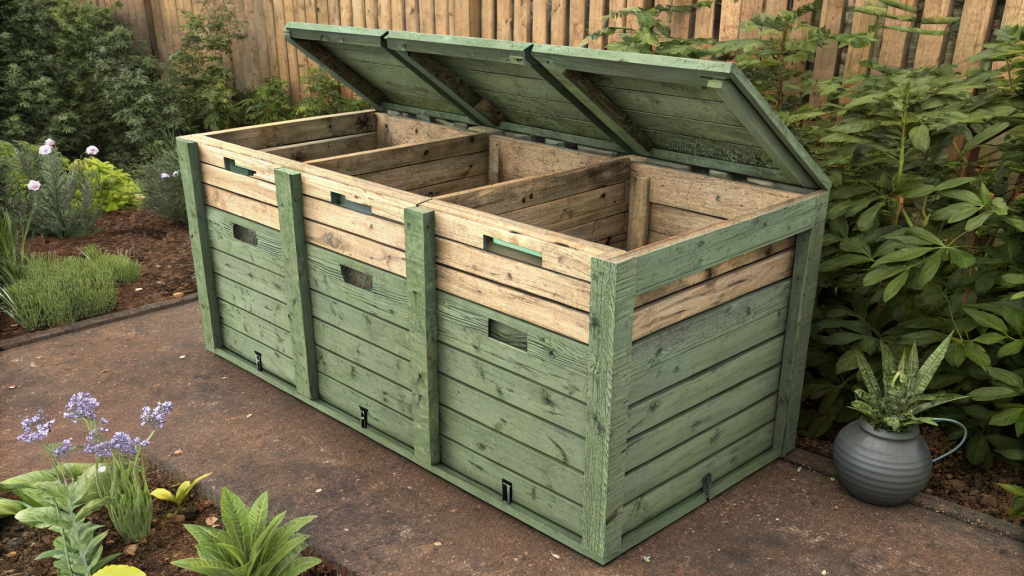
If you’re serious about making rich compost fast, a three-chamber system is the gold standard. By building your own upcycled pallet compost bin, you save money, reduce waste, and gain the ability to manage hot composting efficiently. This project uses free or low-cost pallets to create a durable, low-maintenance setup that will reward you with garden-ready compost in as little as three weeks.
Choosing and Preparing Pallets
Selecting Safe Pallets
- Look for pallets stamped with HT (heat treated) – never use those marked MB (methyl bromide).
- Avoid pallets that have been used to transport chemicals or food spills.
- Choose pallets in good condition without rot or broken boards.
Prepping Your Pallets
- Remove any protruding nails or staples.
- Lightly sand rough edges to prevent splinters.
- If desired, apply a food-safe linseed oil or leave them natural – untreated wood works fine.
Planning Your Three-Chamber System
The idea is simple: three adjacent bins, each about 3 feet wide, 3 feet deep, and 3 feet high. You’ll fill the first bin, then turn the compost into the second bin, and finally into the third bin for finishing. This continuous process ensures a steady supply of compost.
Materials Needed
- 7–9 wooden pallets (depending on size – standard 48″ x 40″ pallets work well)
- Deck screws (3″ or 4″ exterior-grade)
- Power drill or screwdriver
- Hammer and pry bar (for adjusting pallets)
- Optional: hinges for front doors, latch, and landscape fabric for covering
Layout Diagram
- Back wall: three pallets placed side by side, secured together.
- Dividing walls: two pallets placed vertically between the bins, forming the inner walls.
- Front: you can leave open or add removable pallet fronts for easy access.
- Floor: optional – you can set the bins directly on soil for worm access, or add a pallet bottom for easier turning.
Step-by-Step Build
1. Assemble the Back Wall
- Stand three pallets upright, flush against each other.
- Screw them together at the top, middle, and bottom using 3″ screws. Pre-drill if needed.
2. Attach the Dividing Walls
- Position two pallets perpendicular to the back wall, creating three equal sections.
- Screw each dividing pallet to the back wall at multiple points.
- Ensure they are plumb (vertical) before tightening.
3. Add the Front Panels
- For easy access, attach a pallet to the front of each bin using hinges, or simply lean a pallet against the opening.
- If using hinges, secure a horizontal board across the top of the front pallet for stability.
- Add a latch or hook to keep the front closed.
4. Secure the Sides (Optional)
- If your bins are free-standing, consider adding side pallets to enclose the outer chambers completely.
- Screw these to the back wall and to the dividing walls.
5. Finishing Touches
- Cover the top with a tarp or old carpet to retain heat and moisture – critical for hot composting.
- If you want a bottom, screw a pallet into the base of each chamber, leaving gaps for drainage.
Using Your Three-Chamber Compost Bin
Filling Chamber 1
- Add a mix of browns (dried leaves, cardboard, straw) and greens (kitchen scraps, grass clippings) in roughly 2:1 ratio by volume.
- Chop materials into small pieces for faster decomposition.
- Water each layer until it feels like a wrung-out sponge.
Turning to Chamber 2
- After 3–5 days, the pile should heat up. Check internal temperature with a compost thermometer (aim for 130–150°F).
- When the temperature starts to drop, turn the entire contents of Chamber 1 into Chamber 2.
- As you move it, mix thoroughly and add water if dry.
Finishing in Chamber 3
- After another few days, turn from Chamber 2 to Chamber 3.
- Let it cure for 1–2 weeks, turning occasionally, until it smells earthy and looks dark and crumbly.
- Sift if desired, then use immediately.
Continuous Operation
- While Chamber 3 is finishing, start a new pile in Chamber 1.
- This rotation gives you a steady supply of compost every 3–4 weeks during the growing season.
Practical Takeaway
Building an upcycled pallet compost bin is a weekend project that pays dividends for years. The three-chamber design makes hot composting manageable, turning waste into black gold without the cost of a commercial tumbler. With proper maintenance – balancing greens and browns, keeping it moist, and turning regularly – you’ll produce compost faster than you thought possible. Happy composting!