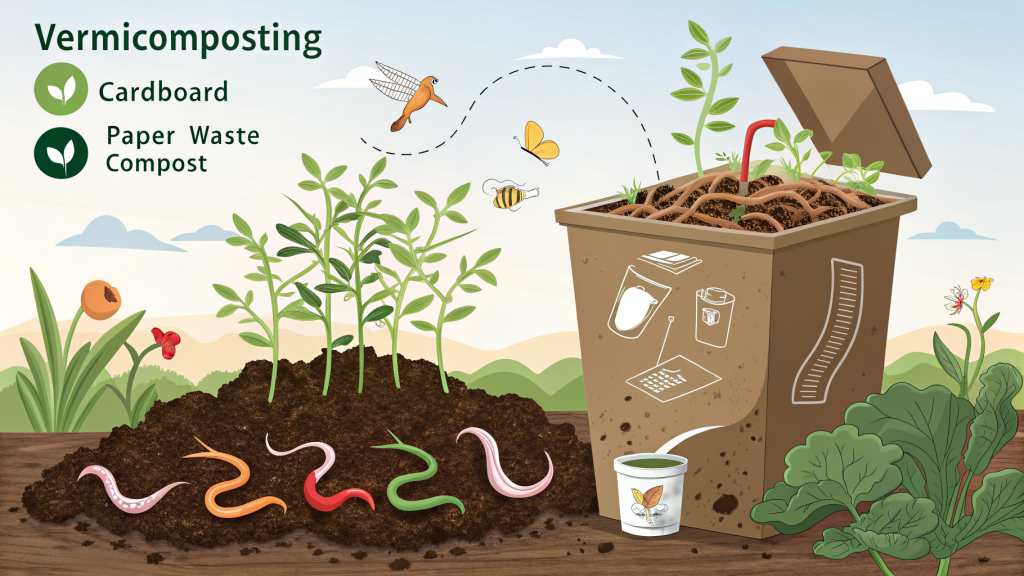
If you have a steady stream of cardboard and paper waste, vermicomposting cardboard paper is an efficient way to recycle it into nutrient-rich castings. Red wiggler worms thrive on shredded corrugated cardboard, newspaper, and office paper, transforming them into a valuable soil amendment. This article explains how to set up and maintain a worm bin that turns your cardboard and paper waste into black gold for your garden.
Table of Contents
ToggleWhy Use Cardboard and Paper in Vermicomposting?
Cardboard and paper are excellent carbon sources (browns) for worm bins. They provide bedding, absorb moisture, and balance nitrogen-rich food scraps. Shredded cardboard creates air pockets, preventing anaerobic conditions. Newspaper is safe because soy-based inks are non-toxic. Avoid glossy paper, colored inks, and treated cardboard (like wax-coated boxes).
Setting Up Your Worm Bin for Cardboard and Paper
Choosing the Right Bin
- Use a plastic or wooden bin with a lid, about 8–12 inches deep.
- Drill 1/4-inch holes in the lid and upper sides for aeration.
- Place a tray underneath to catch leachate (liquid runoff).
Preparing the Bedding
- Shred cardboard and paper into 1–2 inch strips. Remove tape, labels, and staples.
- Soak the shreds in water for 10 minutes, then squeeze out excess moisture (like a wrung-out sponge).
- Fluff the bedding and fill the bin halfway.
Adding Worms and Food
- Start with 1 pound of red wigglers per square foot of bin surface.
- Bury kitchen scraps (fruit, vegetables, coffee grounds) under the bedding.
- Cover food with 2 inches of shredded cardboard to deter fruit flies.
Feeding Your Worms with Cardboard and Paper
What to Feed
- Safe: Corrugated cardboard (brown), newspaper, office paper, egg cartons, paper towel rolls, uncoated paper.
- Avoid: Glossy magazines, junk mail with plastic windows, bleached paper, cardboard with heavy ink or adhesive.
How Much to Feed
- Worms eat about half their weight in food per day. For 1 lb of worms, feed ½ lb of scraps and cardboard mix.
- Adjust based on how fast food disappears. If moldy or smelly, reduce feeding.
Preparing Cardboard for Faster Breakdown
- Shred or tear into small pieces. The more surface area, the faster worms consume it.
- Moisten dry cardboard before adding to the bin.
- Layer cardboard with food scraps to encourage decomposition.
Maintaining Your Worm Bin
Moisture and Aeration
- Keep bedding as moist as a wrung-out sponge. Add water if dry, or dry cardboard if too wet.
- Fluff bedding weekly to prevent compaction and odors.
Temperature
- Optimal range: 55–77°F (13–25°C). Keep bin indoors or in a garage during extreme weather.
- In hot weather, add extra cardboard to insulate and absorb moisture.
Harvesting Castings
- After 3–6 months, push bedding to one side and add fresh bedding and food to the other side. Worms migrate, leaving castings behind.
- Scoop out finished castings and use immediately or store in a breathable container.
Troubleshooting Common Issues
Bad Odors
- Cause: Too much food or wet bedding. Add more dry cardboard and reduce feeding.
- Turn bedding to increase aeration.
Fruit Flies
- Cover food with 2 inches of cardboard bedding.
- Freeze food scraps before adding to kill eggs.
Worms Escaping
- Check moisture and food supply. Too wet or acidic drives worms out.
- Ensure bedding is neutral (add crushed eggshells to buffer pH).
Practical Takeaway
By vermicomposting cardboard paper, you reduce landfill waste while creating free, nutrient-rich castings for your garden. Start small, keep bedding moist and aerated, and feed a balanced mix of cardboard and kitchen scraps. Your red wigglers will reward you with rich soil that boosts plant growth and soil health.