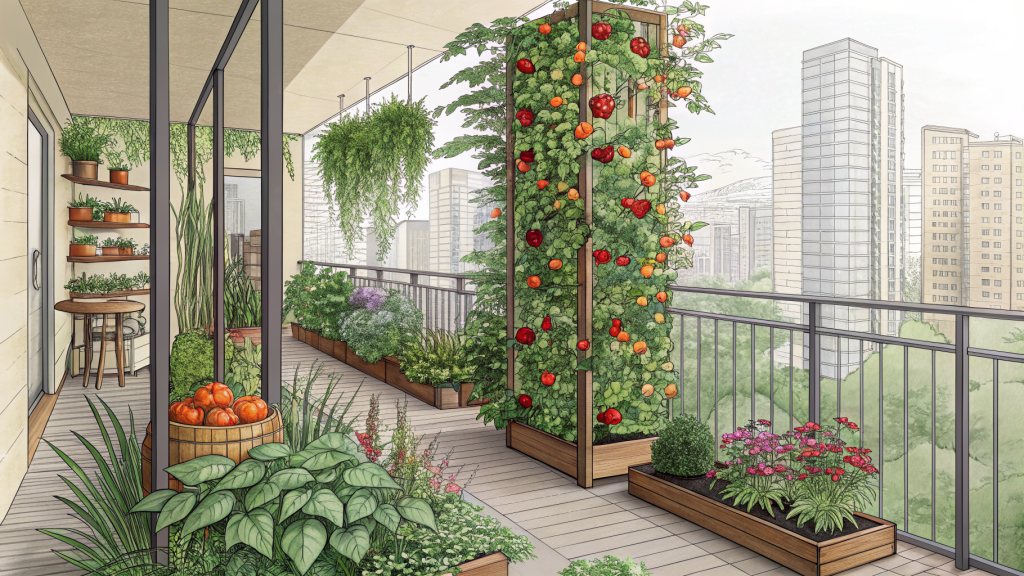
Who says you need acres to grow a food forest? With a balcony food forest vertical approach, you can stack your plants in canopy, understory, and ground layers even on a small condo balcony. By using trellises, hanging pots, and tiered stands, you’ll create a productive, self-sustaining mini-ecosystem that yields fresh herbs, fruits, and greens—all within a few square feet.
Table of Contents
ToggleUnderstanding the Vertical Layers
A food forest mimics natural forests with multiple layers. On a balcony, we scale this down to three main layers: canopy (tall), understory (mid), and ground cover (low). Trellises become your vertical support for vining crops, while containers and hanging baskets fill the other layers.
Canopy Layer
Choose a single dwarf fruit tree or a large shrub trained as a standard. Dwarf citrus (like Meyer lemon), fig, or even a columnar apple work well. Keep it pruned to 4–6 feet tall. Place it in a large container (15–20 gallons) on a sturdy plant caddy for mobility. This layer provides shade and structure.
Understory Layer
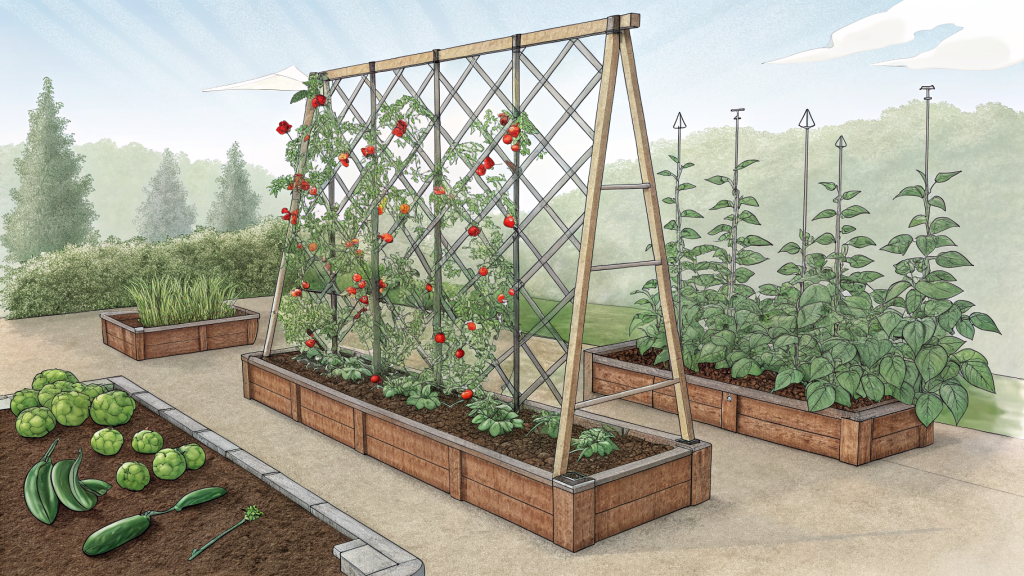
Use trellises for climbing plants like tomatoes, cucumbers, or passionfruit. Install a vertical trellis against a wall or railing. Train vines upward to maximize sunlight. You can also add hanging baskets for trailing plants like strawberries or cherry tomatoes. This layer fills the airspace without taking floor area.
Ground Cover Layer
Low-growing plants like herbs (oregano, thyme), leafy greens (lettuce, spinach), or perennial vegetables (sweet potato as ground cover) occupy the base. Use shallow containers or window boxes on the floor or railing. These plants suppress weeds, retain moisture, and offer continuous harvest.
Choosing the Right Trellis System
Your trellis is the backbone of the vertical design. Select a system that suits your balcony structure and plant needs.
- Wall-mounted trellis: Attach to a sunny wall using brackets. Use for heavy climbers like cucumbers or melons. Ensure it’s rated for wind load.
- Freestanding A-frame or obelisk: Place in a large pot. Ideal for pole beans or small squash. Movable and stable.
- Railing planter with trellis: Clips onto balcony railing. Great for compact vining plants like peas or nasturtiums.
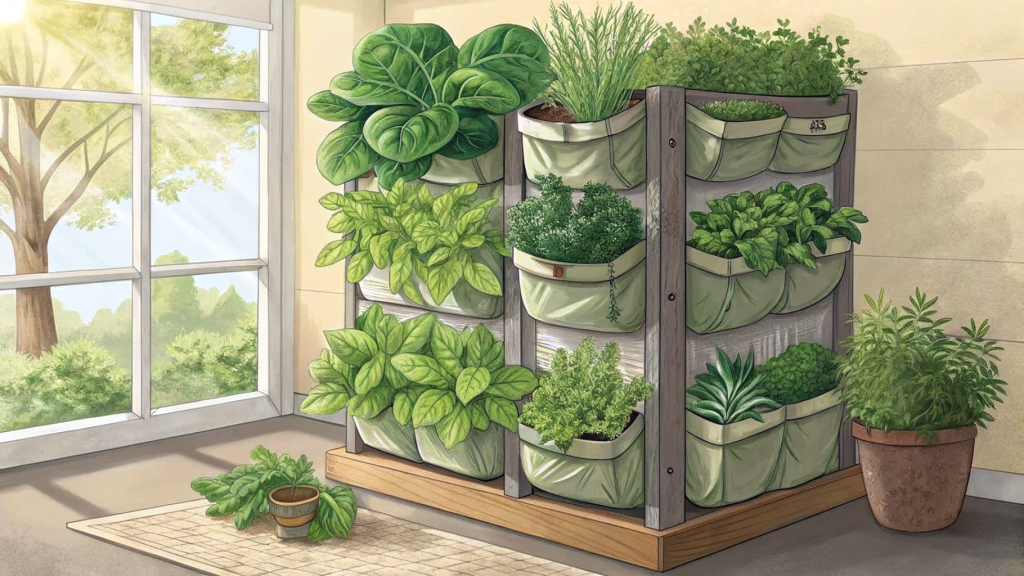
- Hanging tiered system: Suspend from ceiling hooks for cascading plants like cherry tomatoes or herbs. Add multiple tiers for more layers.
Selecting Plants for Each Layer
Choose plants that thrive in containers and have shallow roots where possible. Prioritize perennials to reduce replanting.
Canopy Plant Options
- Dwarf citrus (lemon, lime, kumquat)
- Dwarf fig (e.g., ‘Little Miss Figgy’)
- Columnar apple (e.g., ‘Northpole’)
- Dwarf pomegranate
Understory / Trellis Plant Options
- Tomatoes (cherry or determinate)
- Cucumbers (bush or vining)
- Pole beans
- Passionfruit (if climate permits)
- Malabar spinach (heat-tolerant)
Ground Cover Plant Options
- Creeping thyme (perennial)
- Oregano (perennial)
- Lettuce or mesclun mix
- Strawberries (everbearing)
- Sweet potato (ornamental or edible)
Irrigation and Soil Management
Vertical gardens dry out faster, so consistent watering is key. Use self-watering containers or drip irrigation to maintain moisture. Group plants with similar water needs together.
Soil Mix
Use a lightweight, well-draining potting mix with compost. Add perlite or vermiculite for aeration. For the canopy tree, use a mix formulated for citrus or fruit trees.
Fertilizing
Feed every 2–4 weeks during growing season with a balanced organic liquid fertilizer. Slow-release granules at planting time reduce maintenance.
Watering Tips
- Check moisture daily by sticking a finger 1 inch into the soil.
- Water until it drains from the bottom; never let pots sit in water.
- Use a watering wand with a gentle shower head to avoid soil splash.
Maximizing Sunlight and Microclimate
Most food plants need 6–8 hours of direct sun. South-facing balconies are ideal. If yours is shadier, choose shade-tolerant crops like leafy greens, herbs, and some berries.
Reflective Surfaces
Place a mirror or white panel behind the trellis to bounce light onto lower layers. This helps in north-facing spots.
Wind Protection
Use windbreak netting or a lattice screen to shield tender plants. Secure tall trellises to railings or walls.
Seasonal Care and Succession Planting
In a food forest, you want continuous harvest. Plan for seasonality:
- Spring: Plant cool-season crops like peas, lettuce, and herbs under the canopy.
- Summer: Swap in heat-lovers like tomatoes, cucumbers, and beans on trellises.
- Fall: Replant greens and root vegetables; add a second round of cool-season crops.
- Winter: Protect perennials with frost cloth if needed; grow microgreens indoors.
Practical Takeaway
Start small: choose one canopy plant, one trellis crop, and a ground cover. Install your trellis before planting to avoid root disturbance. Water daily, fertilize regularly, and enjoy the layered harvest. With a balcony food forest vertical system, you’ll be amazed how much food can come from a tiny urban space.