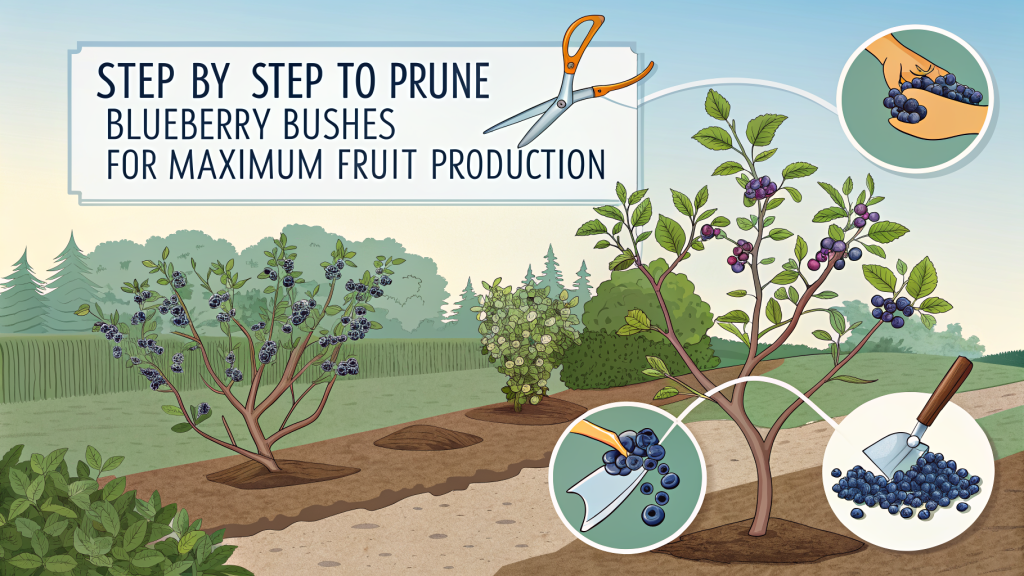
To prune blueberries for maximum fruit production, you must understand that blueberries fruit on one-year-old wood. Without proper pruning, bushes become crowded with old, unproductive canes, leading to small berries and reduced yields. The key is to remove the oldest wood each year to stimulate vigorous new canes that will bear the next season’s crop.
Table of Contents
ToggleWhy Pruning Boosts Blueberry Production
Blueberry plants produce the most fruit on wood that is one to three years old. Canes older than four years become less productive and should be removed to redirect energy to younger, more fruitful wood. Annual pruning also opens the canopy to sunlight and air, reducing disease and improving berry size and quality.
When to Prune Blueberries
The best time to prune is in late winter or early spring while the plants are still dormant, before new growth begins. In most climates, this is February to early March. Avoid pruning in fall or early winter, as cuts may not heal before cold weather, increasing the risk of winter injury.
Tools You’ll Need
- Sharp bypass pruners for small branches (up to ½ inch diameter)
- Loppers for medium branches (½ to 1½ inches)
- A pruning saw for large, old canes (over 1½ inches)
- Disinfectant (e.g., 70% isopropyl alcohol) to clean tools between cuts to prevent disease spread
Step-by-Step Pruning Method
1. Remove Dead, Diseased, and Damaged Wood
Start by cutting out any canes that are dead, broken, or show signs of disease (e.g., discolored bark, cankers). These are unproductive and can harbor pests. Cut them back to the ground or to a healthy lateral branch.
2. Thin Out Old, Unproductive Canes
Identify canes that are four years old or older. They are often thick, dark, and have peeling bark. Remove up to one-third of the oldest canes each year, cutting them to the ground. This opens space for new shoots to emerge from the crown.
3. Remove Low, Spindly, and Crossing Branches
Cut away any branches that are low to the ground (they may rot or be eaten by animals), weak and thin (they won’t support fruit), or crossing/rubbing against each other (they create wounds). Keep the strongest, most upright canes.
4. Shorten Very Long Canes (Optional)
If you have very tall canes that bend under fruit weight, you can shorten them by one-third to keep the bush manageable and encourage lateral branching. Cut just above an outward-facing bud.
5. Maintain a Balanced Structure
Aim for a mature bush to have 6 to 8 productive canes of varying ages (1 to 3 years old). Remove any excess canes that crowd the center. The goal is an open, vase-like shape that allows sunlight to reach all parts of the plant.
Pruning Young vs. Mature Blueberries
First 2 Years: Establish Structure
For newly planted bushes, prune off any flower buds the first year to encourage root and shoot growth. In the second year, remove only dead or weak wood. Let the bush grow freely to build a strong framework.
Year 3 and Beyond: Regular Maintenance
Start the annual pruning routine described above. Once mature (year 4+), you can also thin out some of the 2- and 3-year-old canes if the bush is too dense, but prioritize removing the oldest wood first.
Common Pruning Mistakes to Avoid
- Pruning too lightly: Not removing enough old wood leads to overcrowding and small fruit.
- Pruning too heavily: Removing too many canes at once can stress the plant and reduce next year’s crop.
- Leaving stubs: Always cut back to a bud or to the ground; stubs invite rot and pests.
- Ignoring the crown: The base of the plant (crown) should be free of debris and old stubs to encourage new shoots.
Aftercare for Pruned Blueberries
After pruning, apply a balanced fertilizer (e.g., 10-10-10) according to soil test recommendations, and mulch with 2–4 inches of pine bark or wood chips to conserve moisture and suppress weeds. Water deeply if the season is dry. Your pruned plants will reward you with vigorous new growth and a bountiful harvest.
Practical Takeaway
To prune blueberries for maximum fruit production, focus on removing one-third of the oldest canes each winter, keep a mix of 1- to 3-year-old wood, and maintain an open center. This simple annual practice will keep your bushes healthy and productive for years.