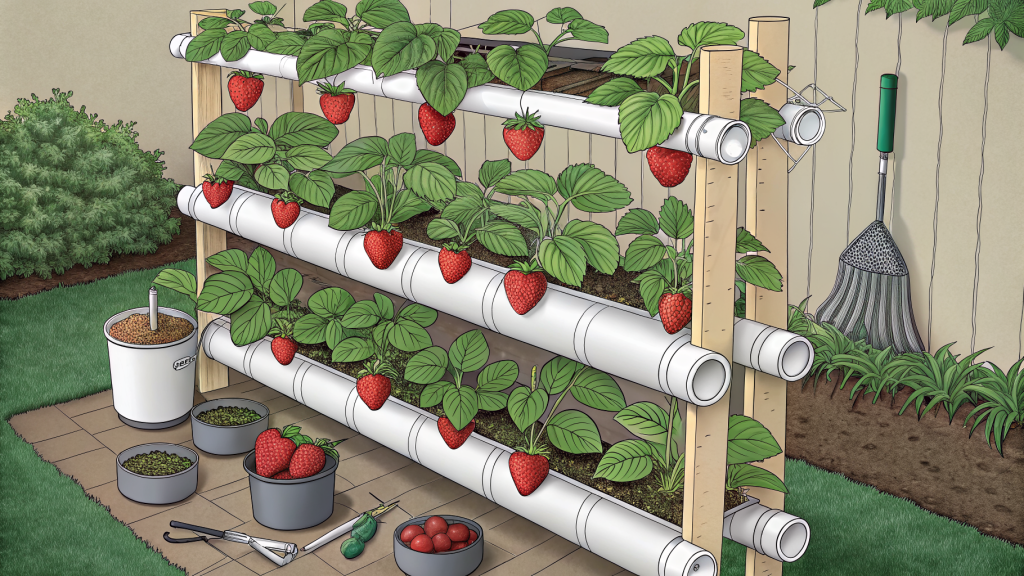
If you love fresh strawberries but lack garden space, a vertical strawberry planter PVC system is the perfect solution. By growing strawberries up a perforated PVC tube, you can enjoy a bountiful harvest from a fraction of the ground area. This DIY project is simple, affordable, and makes picking fruit a breeze—no more bending over or fighting with weeds.
Table of Contents
ToggleMaterials and Tools Needed
Before you start, gather the following items. Most are available at your local hardware store.
- 4-inch diameter PVC pipe (4–6 ft long)
- PVC end cap (to seal the bottom)
- PVC primer and cement
- Drill with 2-inch hole saw and 1/4-inch drill bit
- Landscape fabric or fine mesh
- Potting mix (lightweight, well-draining)
- Strawberry plants (everbearing varieties work best)
- Optional: PVC pipe for support stake (1/2-inch diameter, same height as main pipe)
Step-by-Step Construction
1. Cut and Prepare the PVC Pipe
Start by cutting your main PVC pipe to your desired length. A 4–6 foot pipe works well for most spaces. Use a saw or PVC cutter for a clean edge. Deburr the cut ends with sandpaper.
2. Drill Planting Holes
Using a 2-inch hole saw, drill holes in a spiral pattern along the pipe. Space holes 6–8 inches apart vertically and offset them around the circumference. This staggered arrangement ensures each plant gets enough light and room to grow.
- Mark hole positions with a marker before drilling.
- Drill slowly to avoid cracking the PVC.
- For the bottom row, leave at least 4 inches above the end cap.
3. Drill Drainage Holes
With a 1/4-inch bit, drill several drainage holes in the bottom end cap and around the base of the pipe. Good drainage prevents waterlogging, which can rot strawberry roots.
4. Install the Support Tube (Optional)
To improve water distribution and aeration, insert a smaller PVC pipe (1/2-inch diameter) into the center of the main pipe. Drill small holes along this inner tube to allow water to seep out evenly. This step is optional but highly recommended for healthier plants.
5. Seal the Bottom
Apply PVC primer and cement to the bottom end of the main pipe and the inside of the end cap. Press the cap firmly onto the pipe and hold for a few seconds. Let it dry according to the cement instructions (usually 15–30 minutes).
Assembling the Planter
1. Line the Interior
Cut a piece of landscape fabric to fit inside the pipe, covering the drainage holes. This prevents soil from washing out while allowing water to escape. Alternatively, use fine mesh secured with cable ties.
2. Add Potting Mix
Stand the pipe upright in its final location (e.g., on a patio, against a wall, or in a large pot). Fill the pipe with lightweight potting mix, tamping lightly as you go to remove air pockets. If you’re using the inner support tube, install it first and fill around it.
3. Plant the Strawberries
Insert strawberry plants into each hole, gently spreading the roots inward. Add more soil around the roots to ensure good contact. Water gently after planting.
- Choose compact, everbearing varieties like ‘Albion’ or ‘Seascape’ for continuous harvest.
- Plant one per hole; if holes are larger, you can add two small plants.
4. Top Watering and Mulch
Water from the top of the pipe, allowing moisture to percolate down. Add a layer of straw or mulch on top to retain moisture and keep weeds at bay.
Care and Maintenance Tips
Watering
Vertical planters dry out faster than ground beds. Check moisture daily, especially in hot weather. Water slowly until you see water draining from the bottom holes. During peak summer, you may need to water twice a day.
Fertilizing
Strawberries are heavy feeders. Use a balanced, water-soluble fertilizer (like 10-10-10) every two weeks during the growing season. Alternatively, mix slow-release fertilizer into the potting mix at planting time.
Pest and Disease Control
Keep an eye out for slugs, snails, and aphids. Handpick pests or use organic insecticidal soap. Ensure good air circulation around the planter to prevent fungal diseases.
Winter Care
In cold climates, move the planter to a sheltered location or insulate the pipe with bubble wrap. Strawberries are perennials; they need a dormant period. Reduce watering in winter and resume in spring.
Harvesting and Enjoying
One of the biggest advantages of a vertical strawberry planter PVC system is easy harvesting. The fruit hangs down through the holes, making them visible and accessible. Pick strawberries when they are fully red and ripe. Regular harvesting encourages more fruit production.
With proper care, your vertical planter can produce for 2–3 years before the plants need replacing. Simply remove old plants, refresh the soil, and replant.
Practical Takeaway
Building a vertical strawberry planter PVC is a fun weekend project that gives you fresh berries from a small footprint. It’s ideal for patios, balconies, or small yards. Follow these steps, and you’ll be enjoying homegrown strawberries without the back strain. Happy planting!