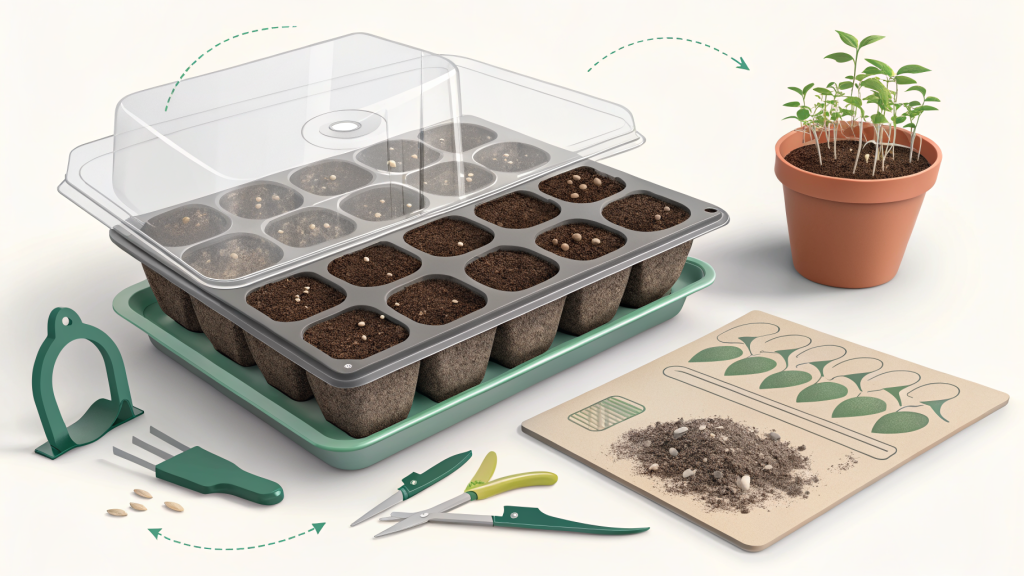
Starting seeds indoors can be tricky, especially when it comes to keeping the soil consistently moist. This self-watering seedling tray DIY transforms a disposable plastic clamshell container into a reliable mini greenhouse, using recycled materials you likely already have. By repurposing takeout packaging, you’ll create a closed-loop system that waters seedlings from below, reducing the risk of damping-off and ensuring even moisture for strong root growth.
Table of Contents
ToggleWhy Build a Self-Watering System from a Clamshell?
A self-watering tray uses a reservoir beneath the soil to wick moisture upward, so you don’t have to water from the top. Using a clear plastic clamshell offers two major advantages: it acts as a humidity dome and lets you monitor water levels without lifting the lid. This method saves time, reduces waste, and gives your seeds a consistent start.
Materials Needed
- Clear plastic clamshell container (e.g., from salad greens, berries, or bakery items)
- Sharp knife or scissors
- Ruler or measuring tape
- Marker
- Cotton string or thick cotton yarn (100% cotton, unwaxed)
- Potting mix (seed-starting mix preferred)
- Seeds of your choice
- Water
Step-by-Step Instructions
1. Prepare the Clamshell
- Wash and dry the clamshell thoroughly. Remove any labels.
- Place the container on a flat surface with the lid side up. Using a marker, draw a cutting line around the container about 1 inch (2.5 cm) from the bottom edge. This lower section will become the water reservoir.
- Carefully cut along the line with a sharp knife or scissors to separate the container into two parts: a shallow bottom tray (reservoir) and a deeper top dome (the growing chamber).
- If your clamshell has a hinge, you may need to cut through it. Aim for a clean edge.
2. Create the Wicking System
- Cut two to three pieces of cotton string, each about 6 inches (15 cm) long. The number depends on the size of your tray; for a standard rectangular clamshell (like a 6×9-inch container), two strings work well.
- Poke small holes through the bottom of the larger (top) section—these will be the wick holes. Space them evenly across the base. The holes should be just wide enough to pull the string through snugly.
- Thread one end of each string through a hole from the inside of the larger section, leaving about 2 inches (5 cm) on the inside. The remaining length will hang down into the reservoir.
- On the inside, spread the short ends of the string flat across the bottom. These will draw water into the soil.
3. Assemble the Tray
- Place the larger section (with the strings) upside down? No—keep it right side up so the strings hang below. Set it inside the shallow bottom tray (reservoir). The strings should rest on the bottom of the reservoir.
- Adjust the height: The top section should sit flush on the reservoir rim, with the strings touching the reservoir floor. If the strings are too long, trim them so they barely touch the bottom.
- Fill the reservoir with water until it’s about 1/2 inch (1.25 cm) deep. The strings will absorb water and wick it upward.
4. Add Potting Mix and Seeds
- Fill the top section with moistened seed-starting mix (pre-wet it to avoid dry pockets). Gently firm the surface.
- Sow seeds according to packet depth and spacing. For small seeds, simply press them into the surface.
- Cover the seeds with a thin layer of vermiculite or fine mix, if needed.
- Place the lid (the shallower dome) on top to create a humid environment. If your clamshell originally had a latch, you can use it to secure the lid.
Using and Maintaining Your Self-Watering Tray
Initial Watering
- After sowing, top-water gently with a spray bottle to settle the soil and ensure the wicks are moist. The wicks will then take over.
- Check the reservoir daily. Refill when the water level drops below 1/4 inch. The clear plastic lets you see the water line easily.
Light and Temperature
- Place the tray in a warm location with bright, indirect light. A sunny windowsill or under grow lights works well.
- If the lid fogs up excessively, prop it open slightly to allow air circulation and prevent mold.
Seedling Care
- Once seedlings emerge and develop their first true leaves, gradually increase ventilation by propping the lid open more each day.
- When seedlings are large enough to handle (usually after 2-3 weeks), transplant them into individual pots. The self-watering system can continue to work if you place the pots in a shallow tray with a wick.
Troubleshooting Common Issues
- Soil too dry: Ensure wicks are in contact with the reservoir bottom and are not blocked. Replace synthetic strings with cotton if needed.
- Mold or algae: Increase airflow by removing the lid for longer periods. Avoid overfilling the reservoir.
- String not wicking: Use 100% cotton string; synthetic materials don’t wick well. Pre-soak the string before threading.
Practical Takeaway
This self-watering seedling tray DIY is a simple, zero-cost solution that repurposes plastic waste into a functional seed-starting system. By maintaining consistent moisture from below, you’ll reduce watering chores and grow healthier seedlings. Once your seeds are up, the tray can be reused season after season—just wash and store. Give it a try with your next batch of seeds, and enjoy the satisfaction of making something useful from what would have been trash.