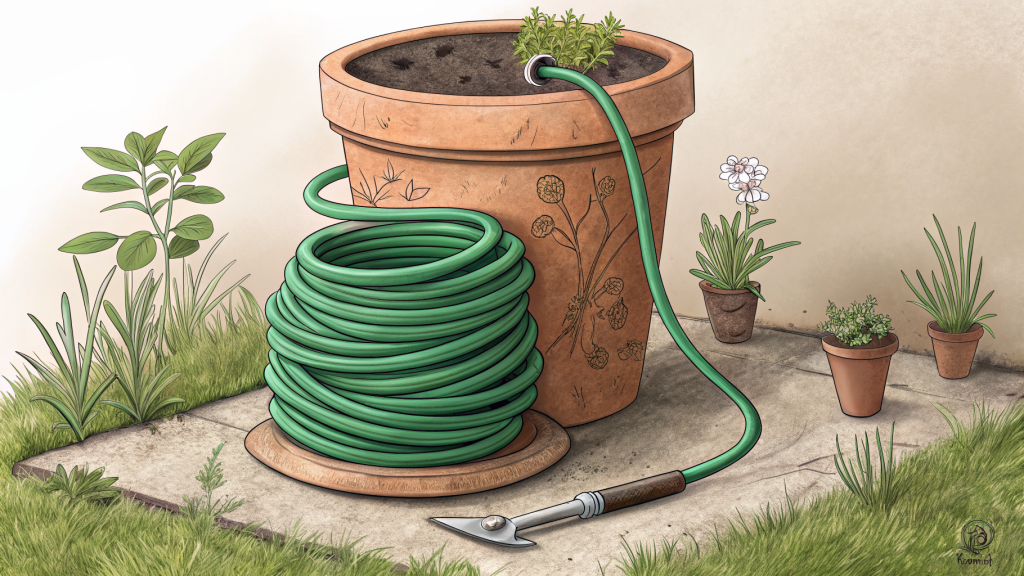
Tired of wrestling with a tangled, kinked garden hose every time you water your plants? A garden hose guide terracotta pot offers a simple, decorative solution that keeps your hose tangle-free while adding rustic charm to your yard. In this DIY guide, you’ll learn how to create your own hose guide in under an hour for just a few dollars.
Table of Contents
ToggleWhy a Terracotta Pot Works as a Hose Guide
Terracotta pots are heavy, porous, and naturally stable—ideal for anchoring a hose guide. The clay’s weight prevents the guide from tipping over, while the rough texture grips the hose to reduce slipping. Unlike plastic or metal guides, terracotta blends seamlessly into garden beds or patios.
Benefits at a Glance
- Prevents kinks: Keeps the hose looped smoothly, avoiding sharp bends that restrict water flow.
- Decorative: Adds a rustic, Mediterranean feel to your garden.
- Durable: Weathers well in sun and rain; just bring indoors during freezing winters.
- Budget-friendly: Uses materials you likely already have.
Materials You’ll Need
- 1 large terracotta pot (10–14 inches diameter; the wider the base, the sturdier)
- 1 wooden dowel or metal rod (½–¾ inch thick, 18–24 inches long)
- Drill with a masonry bit (for terracotta) and a wood bit (if using dowel)
- Sandpaper (medium grit)
- Optional: Outdoor paint or sealant to protect the pot
Step-by-Step Instructions
Step 1: Choose and Prepare the Pot
Select a pot with a flat, wide base for stability. Clean it thoroughly and let it dry. If you plan to paint or seal, do that now and allow it to cure fully (follow manufacturer’s instructions).
Step 2: Drill the Hole
Mark the center of the pot’s bottom. Using a masonry bit slightly smaller than your dowel/rod, drill a hole through the bottom. Go slowly to avoid cracking. Sand the edges smooth.
Step 3: Cut and Insert the Rod
Cut the dowel or rod to your desired height—about 18 inches works well. Insert it into the hole so that 2–4 inches extends below the pot (to anchor into the ground). If using a wooden dowel, seal the bottom end with outdoor wood sealer to prevent rot.
Step 4: Set the Guide in Place
Choose a location near a spigot or along your hose path. Push the protruding rod into the soil until the pot sits flush on the ground. For hard surfaces, leave the rod above ground and secure the pot with a heavy stone inside.
Step 5: Test and Adjust
Loop your hose around the rod. The pot should stay put when you pull the hose. If it wobbles, use a larger pot or add weight (e.g., a bag of pebbles) inside.
Tips for Best Results
- Place multiple guides along long hose runs—every 10–15 feet—to prevent sagging and tangles.
- Use a decorative pot that complements your garden style; glazed pots work too but are heavier.
- Protect the hose: If your rod has sharp edges, file them smooth or cover with a rubber cap.
- Winter care: Bring terracotta indoors to prevent freeze-thaw cracking. Remove the rod if needed.
Alternative Designs
Upside-Down Pot
Drill a hole in the bottom of a pot, invert it over a rod, and stack a smaller pot on top for a tiered look. This hides the rod completely.
Painted Patterns
Use stencils and outdoor paint to add geometric designs or plant motifs. Seal with a clear coat for longevity.
Practical Takeaway
Building a garden hose guide terracotta pot is a quick, rewarding project that eliminates hose frustration while enhancing your garden’s aesthetic. In less than an hour, you can create a durable, attractive solution that keeps your hose organized season after season. Try it this weekend—your back (and your hose) will thank you.