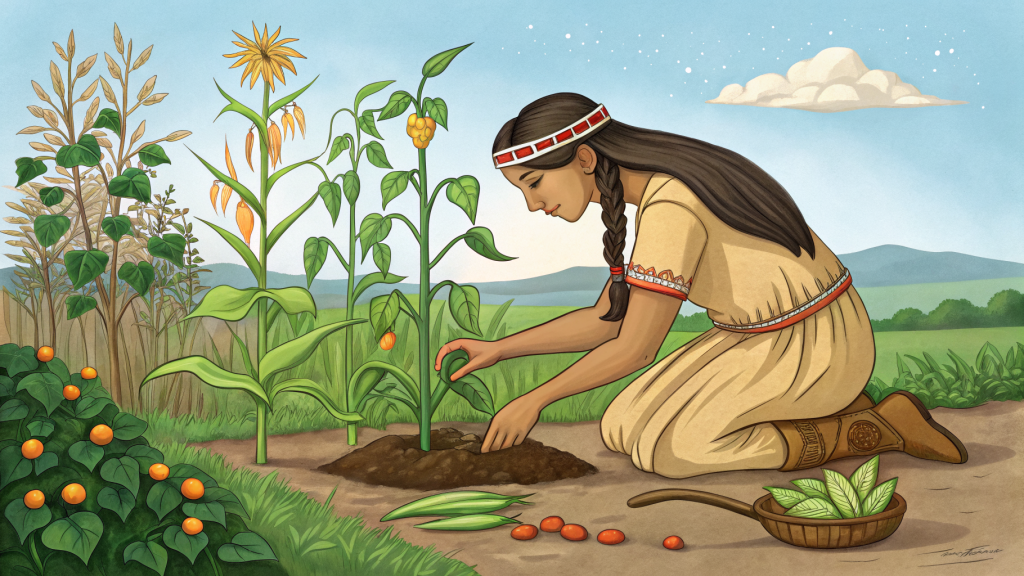
The three sisters planting guild is a traditional Indigenous companion-planting method that pairs heirloom corn, beans, and squash in a mutually beneficial polyculture. This time-tested system maximizes space, soil fertility, and pest control while producing a diverse harvest. By reviving this guild in your urban garden, you can grow a resilient, low-maintenance food source that honors ancient agricultural wisdom.
Table of Contents
ToggleWhy the Three Sisters Guild Works
The three sisters support each other ecologically. Corn provides a natural trellis for beans to climb. Beans fix nitrogen from the air into the soil, feeding the heavy-feeding corn and squash. Squash acts as a living mulch, shading the soil to retain moisture and suppress weeds, while its prickly leaves deter pests like raccoons and squash bugs. This synergy reduces the need for fertilizers, watering, and pest control.
Selecting Heirloom Varieties
Choose open-pollinated, heirloom cultivars adapted to your region for best results. Heirloom varieties often have stronger traits for climbing, vining, and disease resistance.
Corn (the eldest sister)
- Flour corn: ‘Mandan Bride’ or ‘Hopi Blue’ for dry grinding.
- Flint corn: ‘Bloody Butcher’ or ‘Glass Gem’ for ornamental and hominy.
- Sweet corn: ‘Stowell’s Evergreen’ or ‘Country Gentleman’ for fresh eating.
Beans (the nurturer)
- Pole beans: ‘Cherokee Trail of Tears’, ‘Rattlesnake’, or ‘Kentucky Wonder’.
- Avoid bush beans; they won’t climb the corn.
Squash (the protector)
- Winter squash: ‘Waltham Butternut’, ‘Delicata’, or ‘Hubbard’ for long storage.
- Summer squash: ‘Costata Romanesco’ or ‘Yellow Crookneck’ for fresh use.
- Avoid giant varieties like ‘Atlantic Giant’ that may overwhelm the mound.
Site Preparation and Planting
Choosing the Site
Select a sunny spot with at least 6–8 hours of direct sunlight daily. Loose, well-draining soil enriched with compost is ideal. The guild can be planted in raised beds, in-ground rows, or even large containers (at least 18 inches deep).
Preparing the Mounds
- Create mounds about 12–18 inches high and 3–4 feet apart. Mounding improves drainage and warms the soil faster in spring.
- Mix aged compost or well-rotted manure into each mound.
- Space mounds 3–4 feet apart in all directions to give squash room to vine.
Planting Sequence and Timing
- Corn first: After the last frost, plant 4–6 corn seeds per mound in a circle, 6 inches apart. Thin to 3–4 strongest stalks per mound.
- Beans later: When corn is about 6–8 inches tall (about 2–3 weeks later), plant 4–6 bean seeds 2 inches from each corn stalk. The beans will use the corn as a trellis.
- Squash last: Once corn and beans are established (another 2–3 weeks), plant 2–3 squash seeds at the edge of the mound. Thin to 1–2 plants. Alternatively, transplant squash seedlings to a 3–4 leaf stage.
Care and Maintenance
Watering
Water deeply once a week, more during dry spells. Soaker hoses or drip irrigation work best to keep foliage dry and reduce disease.
Weeding
Mulch with straw or untreated grass clippings between mounds to suppress weeds. Hand-pull any weeds that emerge until the squash vines cover the ground.
Pest and Disease Management
- Corn earworm: Apply Bt (Bacillus thuringiensis) when silks appear.
- Squash bugs and vine borers: Use row covers early, remove by hand, or apply neem oil.
- Powdery mildew: Space plants for airflow and avoid overhead watering.
Support
If corn stalks are thin, stake them individually. Ensure beans have access to climb—if any corn falls, prop it up.
Harvesting and Saving Seeds
When to Harvest
- Corn: Harvest when ears are full and silks are brown and dry. For dry corn, let ears dry on stalks until husks are brown and kernels hard.
- Beans: Pick fresh pods when slender and crisp; for dry beans, wait until pods rattle.
- Squash: Summer squash when 6–8 inches long; winter squash after vines die back and skin hardens.
Saving Seeds for Next Year
To preserve heirloom genetics, allow some corn ears, beans, and squash to fully mature. Store seeds in a cool, dry place in paper envelopes. Label with variety and year.
Practical Takeaway
Start small with just one or two mounds to learn the rhythm of the three sisters planting guild. By growing heirloom varieties, you’ll not only enjoy a diverse harvest but also help preserve genetic diversity. This polyculture is forgiving, productive, and a beautiful way to connect with traditional gardening practices.