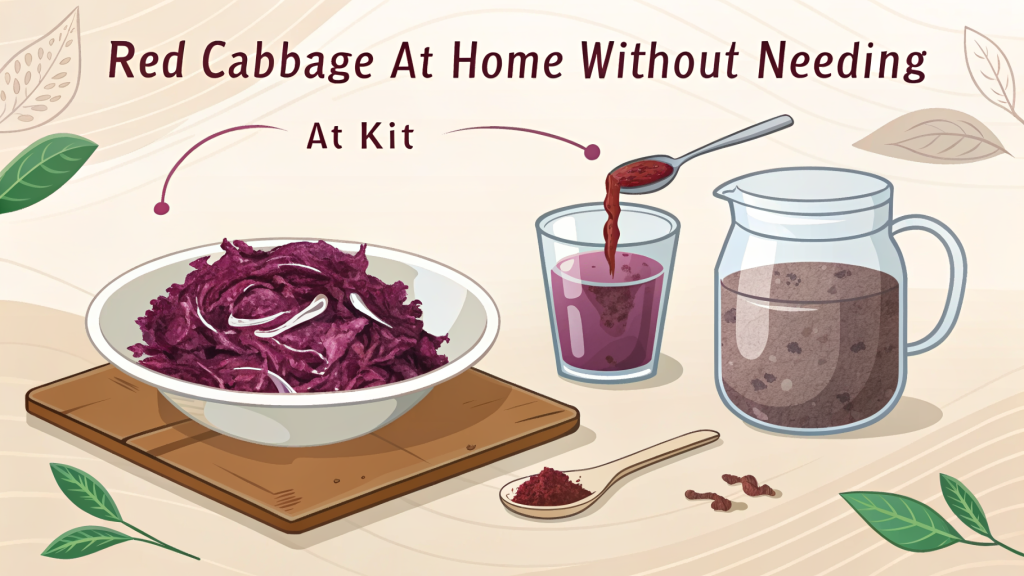
Did you know you can perform a soil pH test red cabbage method using nothing more than a vegetable from your kitchen? This simple, chemical-free technique turns red cabbage into a natural pH indicator, giving you a rough but reliable reading of your soil’s acidity or alkalinity. No special kits or expensive meters needed—just a few household items and 30 minutes of your time.
Table of Contents
ToggleWhy pH Matters for Your Garden
Soil pH affects nutrient availability, microbial activity, and overall plant health. Most vegetables and flowers thrive in a pH range of 6.0 to 7.0 (slightly acidic to neutral). If your soil is too acidic (below 6.0) or too alkaline (above 7.5), certain nutrients become locked up, leading to stunted growth, yellow leaves, or poor yields. The red cabbage test offers a quick check to see if you need to adjust your soil.
How Red Cabbage Works as a pH Indicator
Red cabbage contains a water-soluble pigment called anthocyanin, which changes color depending on the pH of the solution it’s mixed with. In acidic conditions, the pigment turns pink or red; in neutral conditions, it stays purple; and in alkaline conditions, it shifts to blue, green, or even yellow. By mixing a cabbage juice solution with your soil, you can match the resulting color to a pH scale.
Step-by-Step: Making Your Red Cabbage pH Indicator
What You’ll Need
- About 1 cup of chopped red cabbage leaves
- 2 cups of distilled water (tap water may contain minerals that affect the test)
- A pot for boiling
- A strainer or cheesecloth
- A glass bowl or jar
- Small clear cups or jars for testing
- Soil samples from different areas of your garden
- A spoon for mixing
- A white sheet of paper or a white plate (to help see colors)
Prepare the Cabbage Indicator
- Chop the red cabbage into small pieces to increase surface area.
- Place the cabbage in a pot and add 2 cups of distilled water.
- Bring to a boil, then reduce heat and simmer for 10–15 minutes until the water turns deep purple.
- Remove from heat and let it cool. Strain the liquid into a bowl or jar, discarding the solids. The resulting purple liquid is your pH indicator.
Tip: You can store the indicator in a sealed jar in the fridge for up to a week. It should remain purple; if it turns brown, make a fresh batch.
How to Test Your Soil pH with Red Cabbage
Collecting Soil Samples
- Take samples from 4–6 inches deep, avoiding the very top layer which may contain organic matter or fertilizer.
- Test each area separately (e.g., vegetable bed, lawn, flower border) because pH can vary.
- Remove any rocks, roots, or debris. Let the soil air-dry for a few hours if it’s very wet.
Performing the Test
- Place about 2 tablespoons of soil in a small clear cup or jar.
- Add enough cabbage indicator to cover the soil (about 1/4 cup). Stir gently with a spoon.
- Wait 30 minutes, then observe the color of the liquid above the soil. For best results, hold the cup against a white background.
- Compare the color to the pH color chart below.
Interpreting the Colors
- Pink to red: pH 2–4 (very acidic)
- Purple to violet: pH 5–6 (acidic)
- Blue-purple: pH 7 (neutral)
- Blue-green: pH 8–9 (alkaline)
- Greenish-yellow: pH 10+ (very alkaline)
Note that this test gives a rough estimate. For exact numbers, a commercial kit or pH meter is needed, but the cabbage method is accurate enough to tell you if your soil is strongly acidic, neutral, or alkaline.
Tips for Accurate Results
- Use distilled water—tap water can be alkaline and skew the test.
- Make sure your soil sample is clean and not contaminated with fertilizer or compost.
- Test multiple spots in your garden to get an average reading.
- If the liquid turns brown, the indicator may have gone bad or the soil had too much organic matter. Try again with fresh indicator.
What to Do with Your Results
If your soil is too acidic (pink/red), add garden lime (dolomitic lime) to raise the pH. For alkaline soil (blue/green), add elemental sulfur or organic matter like peat moss, pine needles, or compost to lower it. Retest after a few weeks to see if adjustments are working.
Practical Takeaway
The soil pH test red cabbage method is a fun, educational, and zero-cost way to get a snapshot of your garden’s soil health. While not as precise as a lab test, it’s more than enough to guide your soil amendment decisions. Next time you have a leftover red cabbage, skip the compost bin and brew up a pH indicator instead—your plants will thank you.