Table of Contents
ToggleWhy Build a Pallet Compost Bin with Removable Slats?
A pallet compost bin is one of the most cost-effective ways to manage garden waste, but traditional designs often make turning compost a chore. By building a three-bin system with removable slats, you can easily access each pile, aerate it thoroughly, and accelerate decomposition. This DIY project uses free pallets and requires only basic tools—no sawing or complex joinery needed.
Materials and Tools You’ll Need
Materials
- 6–8 wooden pallets (look for heat-treated, not chemically treated)
- 16–24 heavy-duty galvanized hinges (6–8 inches long)
- 2×4 lumber for bracing (optional, for stability)
- Deck screws (3–4 inches)
- Staple gun and landscape fabric (for optional liner)
Tools
- Hammer or mallet
- Drill with screwdriver bits
- Level
- Measuring tape
- Pry bar (for separating pallet slats)
Step-by-Step Instructions
1. Prepare the Pallets
Select pallets that are roughly the same size (typically 48×40 inches). Remove any broken slats or protruding nails. For the removable slats, carefully pry off the top two or three slats from one side of several pallets—these will become your access panels.
2. Build the Three-Bin Frame
Stand three pallets upright to form the back wall, spacing them evenly. Secure them together by screwing through the side rails. For the side walls, attach pallets perpendicular to the back wall at each end. Use a level to ensure everything is plumb. Add a fourth pallet as a divider between bins (screw it to the back wall and the front). The result is three adjacent compartments: left, center, right.
3. Install Removable Slats for Front Access
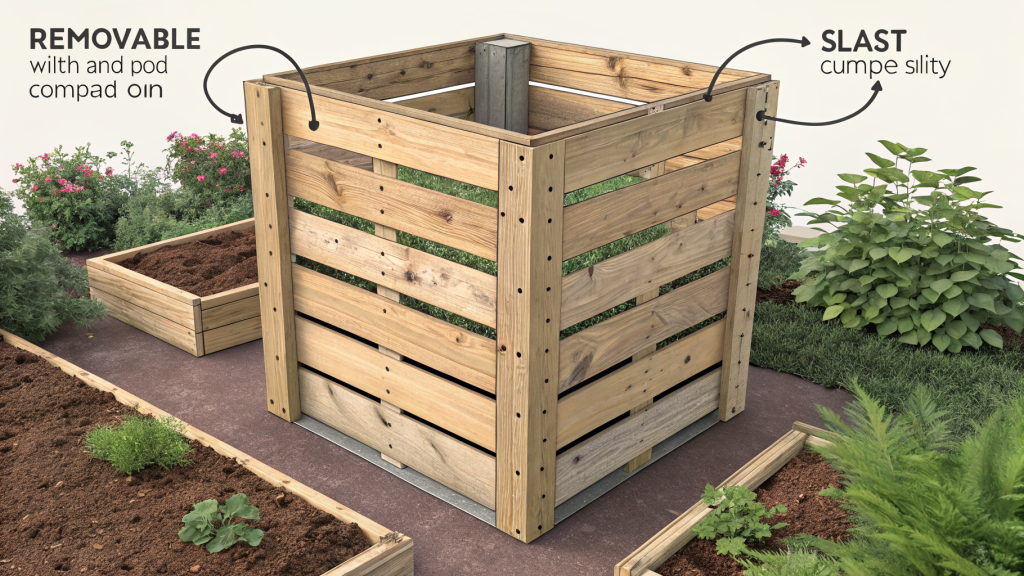
Instead of a fixed front pallet, create a system of horizontal slats that slide into grooves or rest on ledges. Cut 2×4 lumber to create tracks on the inside of each side wall—one near the top, one in the middle, and one near the bottom (about 4 inches from the ground). These tracks should be about 2 inches deep to hold the slats securely. Alternatively, screw small blocks of wood (cleats) onto the inside of the side walls to create ledges. Then, slide the salvaged pallet slats horizontally into the tracks, stacking them from bottom to top. Leave a 1-inch gap between slats for airflow. For easy removal, don’t fasten the slats—they simply rest in place.
4. Add Hinged Top Slats (Optional but Recommended)
For the top row, attach two or three slats to a single 2×4 using hinges. This creates a lid that flips up, making it easy to add kitchen scraps or cover the pile during rain. Secure the hinged assembly to the top of the side walls.
5. Reinforce and Finish
If the pallets wobble, add diagonal braces from the back wall to the side walls using scrap 2×4s. For a neater look, you can staple landscape fabric to the inside of the back and side walls (optional, but helps contain finer compost material).
How to Use Your Three-Bin System
Starting the First Pile
In the left bin, layer green material (grass clippings, kitchen scraps) with brown material (dry leaves, cardboard). Aim for a 2:1 ratio of browns to greens. Moisten each layer as you go.
Turning with Removable Slats
After 3–4 weeks, the pile will need turning. Simply pull out the bottom slats of the left bin—the material will slide out slightly. Use a garden fork to move the contents into the center bin. The removable slats allow you to access the pile from the front without having to dismantle the whole structure. As you transfer, mix the outer material into the center and break up any clumps.
Managing the Second and Third Bins
Repeat the turning process every few weeks, moving the pile from center to right bin. By the time the right bin is full, the left bin’s material will be finished compost—ready to use. This continuous cycle ensures a steady supply of rich humus.
Tips for Success
- Keep it moist: The pile should feel like a wrung-out sponge. Water it if dry; cover with a tarp if too wet.
- Size matters: Each bin should be at least 3×3×3 feet to generate enough heat for hot composting.
- Aerate regularly: Use the removable slats to turn the pile every 2–3 weeks for faster decomposition.
- Pest control: Avoid adding meat, dairy, or oily foods. A hinged top lid helps deter rodents.
Practical Takeaway
Building a pallet compost bin with removable slats is a weekend project that pays off for years. The sliding slat design eliminates the hassle of digging into a fixed bin, making turning effortless. With three bins, you can continuously cycle your garden waste into black gold. Start collecting pallets today—you’re just a few steps away from a smarter compost system.