Table of Contents
ToggleWhy a Stock Tank Pond?
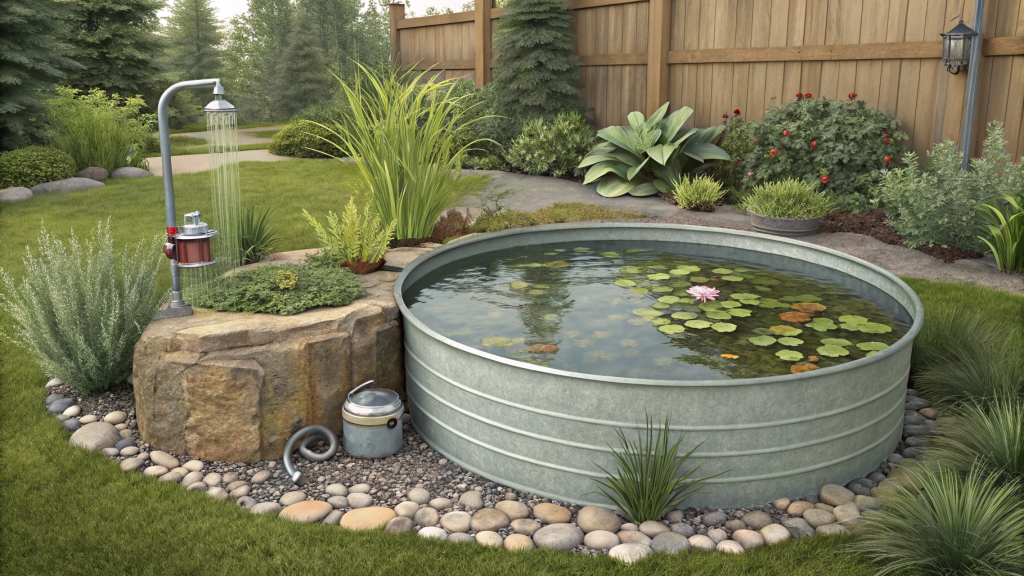
Building a stock tank pond is one of the fastest and most affordable ways to add a water feature to your garden. Galvanized tanks are durable, rust-resistant, and readily available in sizes from 50 to 300 gallons. Pair one with a DIY bog filter, and you get crystal-clear water naturally—no chemicals, no heavy pumps. This guide walks you through the entire process.
Materials and Tools
What You’ll Need
- Galvanized stock tank (100–150 gallons recommended)
- Bog filter container (e.g., a 20–30 gallon plastic tub)
- Submersible pump (200–400 GPH, depending on pond size)
- PVC pipe (1–2 inch diameter) and fittings
- Uniseal bulkhead fittings for water-tight connections
- Gravel or pea stone (about 2–3 cubic feet)
- Aquatic plants (water hyacinth, water lettuce, anacharis)
- Optional: liner if stock tank has seams
- Tools: drill, hole saw, PVC primer and cement, level
Step-by-Step Construction
1. Prepare the Stock Tank
- Place the tank on a level surface (sand or pavers work well).
- If the tank has riveted seams, line the inside with a flexible pond liner to prevent leaks. Otherwise, test with water first.
- Drill a hole near the top for the overflow (use a uniseal). This will connect to your bog filter.
2. Build the Bog Filter
- Drill two holes in the side of the plastic tub: one near the top for incoming water from the pump, one near the bottom for outflow back to the pond.
- Install uniseal fittings in both holes.
- Attach a PVC pipe from the pump to the top inlet of the bog filter. The outlet pipe (from bottom of bog) should return water to the stock tank.
- Fill the bog tub with gravel or pea stone, leaving a few inches at the top for plants.
3. Plumbing and Pump Setup
- Place the submersible pump at the bottom of the stock tank, away from the overflow.
- Run a hose or PVC from the pump to the bog filter’s top inlet. Use a valve to control flow if desired.
- The bog filter’s bottom outlet should be directed back into the pond, ideally creating gentle circulation.
- Ensure all connections are watertight and test the system before adding plants.
4. Add Plants and Gravel
- In the stock tank, add a layer of gravel (1–2 inches) for beneficial bacteria. Rinse thoroughly first.
- Plant aquatic plants in the bog filter: water hyacinth and water lettuce are excellent for nutrient uptake. In the main pond, consider anacharis for oxygenation.
- Introduce plants gradually to avoid shocking the system.
Maintenance Tips for Clear Water
- Run the pump 24/7 for optimal filtration. A timer isn’t necessary.
- Thin out bog plants every few weeks—they grow fast.
- Clean the pump intake monthly to prevent clogging.
- Top off water as needed to compensate for evaporation.
- In cold climates, stop the pump before freezing and store indoors. The bog filter can stay outside but may need winterizing.
Customizing Your Pond
- Add a small fountain or spitter to the stock tank for visual appeal.
- Surround the tank with flagstone or decorative rocks to hide the edges.
- Introduce a few mosquito fish (Gambusia) to control larvae naturally.
- Install solar lights around the perimeter for evening ambiance.
Practical Takeaway
A stock tank pond with a bog filter is a low-maintenance, chemical-free solution for clear water. By mimicking nature’s own filtration, you create a balanced ecosystem that stays healthy with minimal effort. Start small, observe your plants, and enjoy the soothing presence of water in your garden.
Views: 188