Table of Contents
ToggleWhy Make Leaf Mold Compost?
Leaf mold compost is a simple, low-effort way to turn autumn leaves into a rich, acidic humus that acid-loving plants like blueberries, rhododendrons, and azaleas thrive in. Unlike traditional compost, leaf mold is made almost entirely from leaves and breaks down through fungal activity, resulting in a dark, crumbly, slightly acidic material that improves soil structure, moisture retention, and nutrient availability. Best of all, it requires little more than a pile of leaves and patience.
What Is Leaf Mold Compost?
Leaf mold is not the same as regular compost. Regular compost relies on a mix of greens (nitrogen-rich materials) and browns (carbon-rich materials) and involves bacterial decomposition, which generates heat. Leaf mold, on the other hand, is made solely from leaves (browns) and decomposes through cool fungal activity, a process called cold composting. The result is a humus-like material that is slightly acidic (pH around 5.5–6.5) and perfect for acid-loving plants. It doesn’t provide heavy nutrients but excels at improving soil texture, holding moisture, and encouraging beneficial soil fungi.
How to Make Leaf Mold Compost: Step-by-Step
1. Collect the Right Leaves
Not all leaves are equal. The best leaves for leaf mold are those that break down relatively quickly: oak, beech, hornbeam, and birch are ideal. Thicker leaves like sycamore, maple, and chestnut take longer. Avoid leaves from walnut trees (they contain juglone, which inhibits plant growth) and conifer needles (they are very acidic and slow to decompose, though they can be added in small amounts).
- Collect in autumn when leaves are dry and plentiful. Rake or gather leaves from your lawn or garden.
- Shred them if possible – running over them with a lawn mower or using a shredder speeds up decomposition by increasing surface area. Shredding also prevents matting, which can slow airflow.
2. Build the Pile
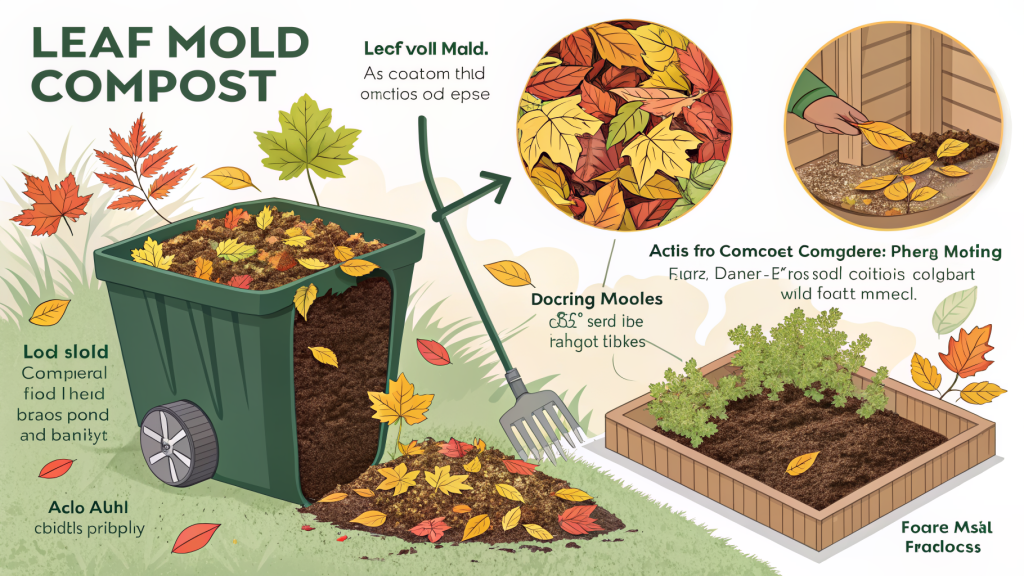
You have two main options: a simple heap or a wire bin. A wire bin (made from chicken wire or hardware cloth) keeps leaves contained and allows airflow, preventing them from blowing away. A simple heap works too, but it may need to be turned occasionally for even breakdown.
- Location: Choose a shaded or semi-shaded spot. If the pile is in full sun, it will dry out quickly; if too wet, it may become slimy. A spot under a tree or on the north side of a building works well.
- Layer: Add leaves in a pile about 3–4 feet (1–1.2 m) tall and wide. If you have shredded leaves, they can be piled higher. Water each layer as you go – the leaves should be damp, like a wrung-out sponge, but not soaking wet.
- Optional: Adding a handful of garden soil or finished leaf mold to the pile can introduce beneficial fungi and speed up the process.
3. Maintain the Pile
Leaf mold is low-maintenance, but a few simple actions help ensure success:
- Keep it moist: Check the pile every few weeks during dry spells. If it feels dry, water it thoroughly. In wet weather, cover the top with a tarp or plastic sheet to prevent waterlogging.
- Turn occasionally: While not strictly necessary, turning the pile once or twice a year (in spring and autumn) aerates it and distributes moisture, speeding up decomposition by a few months. Use a garden fork to move the outer, less decomposed leaves to the center.
- Patience: Leaf mold takes time. Under ideal conditions (shredded leaves, moist, turned), you may have usable material in 6–12 months. Whole leaves in a simple heap can take 2–3 years. The longer it sits, the finer and more humus-like it becomes.
When and How to Use Leaf Mold Compost
As a Soil Amendment
Leaf mold is best used as a top dressing or worked into the soil around acid-loving plants. It’s not a fertilizer but a soil conditioner, so you’ll still need to feed your plants with appropriate acid-loving plant food if needed.
- For blueberries: Apply a 2–3 inch (5–8 cm) layer of leaf mold around the base of the plants in spring or autumn. This mimics the forest floor they love, keeping the soil acidic and moist. Reapply annually.
- For rhododendrons and azaleas: Mix leaf mold into the planting hole when setting out new plants, or use as a mulch around established shrubs. It helps maintain the acidic pH and suppresses weeds.
- For other acid lovers: Camellias, heathers, ferns, and even some vegetables like potatoes and sweet potatoes benefit from a leaf mold mulch.
In Seed Starting Mixes
Leaf mold can be sifted and used as part of a homemade seed starting mix. Combine equal parts leaf mold, perlite or sharp sand, and well-rotted compost. The leaf mold provides a fine texture and holds moisture without becoming waterlogged. This mix is excellent for seeds of acid-loving plants.
As a Mulch for General Garden Beds
Even if you don’t have acid-loving plants, leaf mold is a fantastic mulch for flower beds and vegetable gardens. It improves soil structure, reduces watering needs, and encourages earthworms. Just be aware that it will slightly lower soil pH over time, so it’s best used around plants that prefer neutral to acidic conditions.
Troubleshooting Common Issues
- Pile is slimy and smelly: This means it’s too wet and lacking oxygen. Turn the pile to aerate it, and if it’s covered, remove the cover to let it dry out a bit. Add some coarse leaves or twigs to improve airflow.
- Pile is dry and dusty: It needs more moisture. Water thoroughly, and consider covering it with a tarp to retain moisture.
- Leaves haven’t broken down after a year: Whole leaves, especially thick ones, take longer. Shredding helps. Also, ensure the pile is kept moist. If it’s still intact, leave it for another year.
- Mold or mushrooms growing: This is normal and a sign of fungal activity. Leave them be; they’re helping break down the leaves.
Practical Takeaway
Leaf mold compost is one of the easiest and most rewarding garden projects. Start a pile this autumn with your fallen leaves, keep it moist, and in a year or two you’ll have a dark, crumbly, acidic humus that will make your blueberries, rhododendrons, and other acid-loving plants flourish. It’s free, sustainable, and improves your soil for years to come.