Imagine a vegetable garden where aphids never get out of hand, caterpillars are scarce, and your leafy greens stay pristine without a single spray. This isn’t a fantasy—it’s what happens when you design a beneficial insect flower strip. By planting a corridor of dill, fennel, and alyssum, you create a highway for predators like ladybugs, lacewings, and parasitic wasps, who will patrol your crops and keep pests in check naturally.
Table of Contents
ToggleWhy a Flower Strip Works
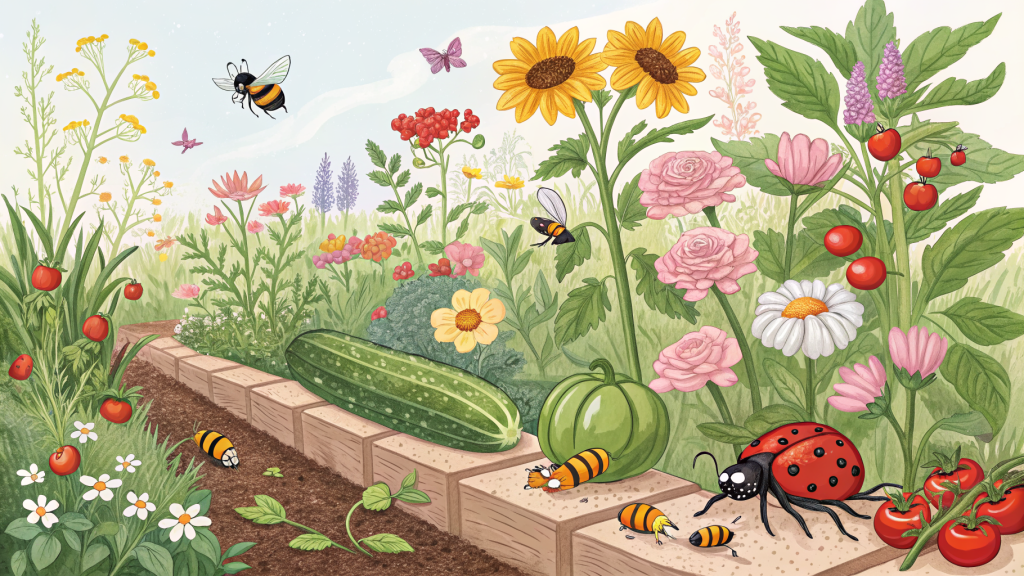
A beneficial insect flower strip is a concentrated planting of flowering plants that provide nectar, pollen, and shelter for beneficial insects. Unlike scattered flowers, a strip creates a continuous resource corridor, encouraging predators to stay and hunt. Dill and fennel are especially valuable because they host tiny parasitic wasps that target caterpillars, while alyssum attracts hoverflies whose larvae devour aphids. Together, they form a self-sustaining pest control system.
Designing Your Flower Strip
Location is everything. Place your strip along the edge of your vegetable beds, or run it through the middle like a spine. It should be at least 2–3 feet wide to provide enough habitat.
Choose the Right Plants
- Dill (Anethum graveolens): Attracts ladybugs, lacewings, and parasitic wasps. Let it flower—the yellow umbels are irresistible.
- Fennel (Foeniculum vulgare): Similar to dill, but with a longer bloom time. Bronze fennel adds ornamental value.
- Sweet Alyssum (Lobularia maritima): Low-growing, long-blooming, and a favorite of hoverflies. Use as a ground cover between taller plants.
Planting Layout
- Space dill and fennel 12–18 inches apart in a staggered row.
- Sow alyssum seeds in a thick band along the front or between the taller plants.
- Add a few companion plants like coriander or cilantro for variety—they attract the same beneficials.
- Ensure at least 6 hours of sun per day for best flowering.
Maintaining the Strip for Continuous Bloom
To keep predators coming, your flower strip must bloom from spring through fall. Here’s how:
- Succession planting: Sow new dill and fennel every 3–4 weeks. They bolt quickly, so constant replanting ensures flowers all season.
- Deadhead alyssum: Trim spent blooms to encourage fresh flowers. Alyssum will self-sow if you let a few go to seed.
- Allow some plants to go to seed: Dill and fennel self-sow readily, creating a self-renewing strip.
- Avoid pesticides: Even organic ones can harm beneficial insects. Rely on the predators instead.
How Predators Hunt in Your Strip
Ladybugs and Lacewings
Adult ladybugs eat pollen and nectar from dill and fennel, then lay eggs near aphid colonies. Their larvae consume hundreds of aphids each. Lacewings follow the same pattern, with larvae that are voracious pest-eaters.
Hoverflies
Alyssum is a hoverfly magnet. Adults feed on the tiny white flowers, and each female lays eggs among aphid infestations. A single hoverfly larva can eat up to 50 aphids a day.
Parasitic Wasps
These tiny, non-stinging wasps are attracted to dill and fennel’s nectar. They parasitize caterpillars, tomato hornworms, and aphids, turning them into living nurseries for their young.
Integrating the Strip with Your Vegetables
The flower strip works best when it’s close to vulnerable crops. Plant it near brassicas (cabbage, kale, broccoli) to control cabbage worms, or next to tomatoes and peppers to manage aphids and hornworms. The predators will easily move between the strip and your vegetables.
Seasonal Tips
- Spring: Start dill and alyssum from seed after last frost. Fennel can be direct-sown or transplanted.
- Summer: Keep deadheading and replanting. Water regularly—stressed plants produce fewer flowers.
- Fall: Let some plants go to seed. The seeds provide food for birds, and the dried stems offer overwintering sites for beneficial insects.
The Takeaway
Designing a beneficial insect flower strip with dill, fennel, and alyssum is one of the most effective ways to control pests naturally. It’s simple to plant, easy to maintain, and rewards you with healthier vegetables and fewer pest problems. Start your strip this season and watch your garden come alive with tiny predators working for you.