Table of Contents
ToggleWhy Espalier a Pear Tree Against a South-Facing Wall?
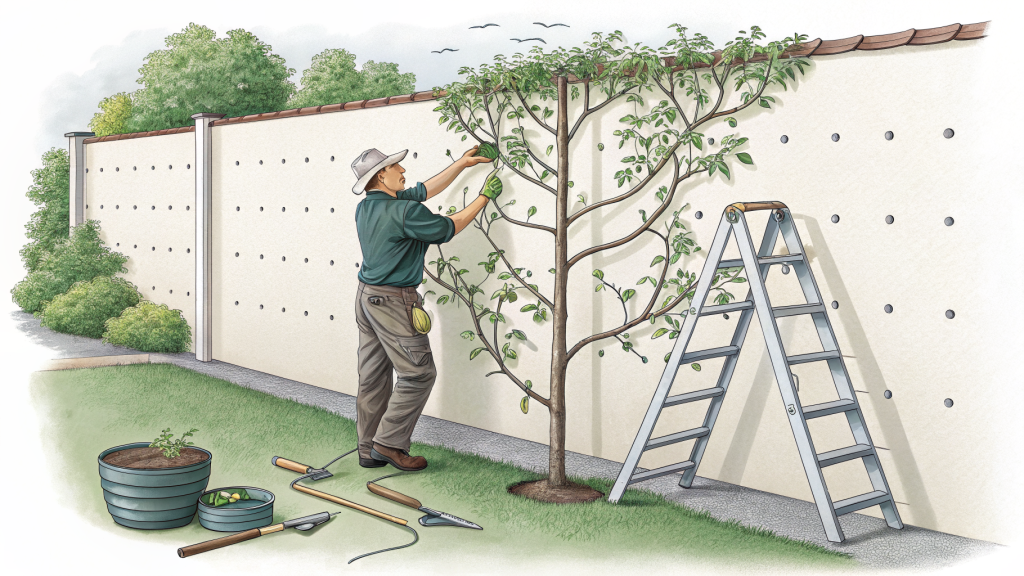
Espaliering a pear tree is a centuries-old technique that turns a standard fruit tree into a living sculpture. By training a pear tree into a horizontal cordon against a warm south-facing wall, you can grow delicious fruit even in a tiny garden. The wall stores heat, ripening pears earlier and improving flavor, while the flat shape makes harvesting and pruning a breeze. This guide walks you through the step-by-step process to create your own espalier pear tree.
Selecting the Right Tree and Wall
Choosing a Pear Variety
Not all pears are suitable for espalier. Look for a tree grafted onto a dwarfing rootstock like Quince C or Quince A. Good varieties include ‘Conference’ (self-fertile, reliable) and ‘Williams’ Bon Chrétien’ (needs a pollinator). If space is tight, buy a ‘family tree’ with two compatible varieties grafted onto one rootstock.
Preparing the Wall
Your south-facing wall should receive at least six hours of direct sun daily. Install a support system before planting: fix horizontal galvanized wires 45–60 cm apart, starting 30 cm from the ground. Use vine eyes to hold wires 10 cm from the wall to allow air circulation. Ensure the wall is free from climbing plants and in good repair.
Planting Your Espalier Pear Tree
- Dig a hole 60 cm wide and deep, 20–30 cm from the wall. Mix organic matter into the soil.
- Position the tree so the graft union is 10 cm above soil level. The main stem should lean slightly toward the wall.
- Backfill and firm the soil. Water thoroughly.
- Attach a temporary bamboo cane to the main stem, tying it to the wires for support.
Plant in late autumn or early spring when the tree is dormant. Water regularly in the first year.
Training the First Tier
Winter Pruning (Year 1)
In late winter, cut the main stem 45 cm above the first wire. This encourages side shoots to form just below the cut. Remove any shoots below 30 cm.
Summer Training
In late summer, select two strong lateral shoots near the first wire. Tie them to the wire at a 45° angle for a few weeks, then gradually lower them to horizontal. Remove all other shoots from the main stem. Cut the central leader again 45 cm above the second wire to repeat the process next year.
Building the Second and Third Tiers
In the second winter, shorten the new central leader to 45 cm above the second wire. In summer, repeat the lateral training process. Continue until you have three or four tiers (wires). Each year, remove any shoots growing toward or away from the wall. Keep the main stem straight by tying it to a cane.
Ongoing Care and Pruning
Summer Pruning
In August, cut back all side shoots from the horizontal arms to three leaves from the base. This redirects energy into fruit buds. Remove any shoots that spoil the flat shape.
Winter Pruning
In winter, thin overcrowded spurs and remove dead or diseased wood. Shorten the main leader if it has reached the top wire. Keep the tree to a maximum height of 2.5 m for easy maintenance.
Feeding and Watering
Apply a balanced fertilizer in spring and mulch with well-rotted manure. Water deeply during dry spells, especially when fruits are swelling. Pears on dwarf rootstocks are less drought-tolerant.
Harvesting and Common Problems
Pears are ready when they lift easily from the spur. Pick them slightly underripe and ripen indoors at room temperature. Watch for pear rust mite (silvery leaves) and fire blight (blackened shoots). Remove affected parts promptly. Espaliered trees are easier to inspect for pests.
Practical Takeaway: Start with a young tree on dwarf rootstock, install sturdy wires, and be patient. In three to four years, your espalier pear tree will reward you with a bountiful, beautiful harvest from a fraction of the space.