Table of Contents
ToggleWhat Is a Hugelkultur Mound Bed?
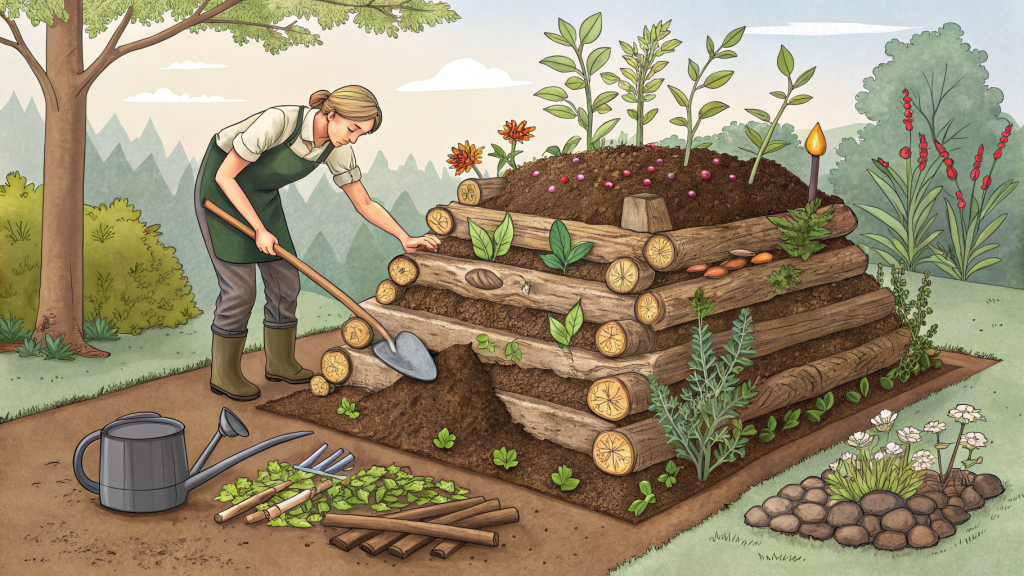
A hugelkultur mound bed is a raised garden bed built on a base of rotting logs, branches, and other woody debris, covered with layers of organic matter and soil. This no-dig method creates a self-sustaining, water-retaining ecosystem that slowly releases nutrients as the wood decomposes. Perfect for urban permaculture, it mimics natural forest floor processes to grow vegetables, herbs, and flowers with minimal watering and fertilizing.
Benefits of Hugelkultur Mound Beds
Water Retention
The logs and wood act like a sponge, absorbing rainwater and releasing it slowly during dry periods. This reduces watering needs by up to 50–70% once the bed is established.
Nutrient Cycling
As the wood decomposes, it feeds beneficial fungi and microbes, which in turn release nutrients to plant roots. This creates a long-term fertility source without synthetic fertilizers.
No-Dig Gardening
Because the mound is built on top of the ground, there is no need to till or dig. This preserves soil structure, protects earthworms, and reduces weed germination.
Ideal for Small Spaces
Urban permaculture gardeners can build hugelkultur mounds in backyards, on balconies (using smaller logs), or even in raised frames. They are space-efficient and can be shaped to fit any area.
How to Build a Hugelkultur Mound Bed: Step-by-Step
Step 1: Choose the Location
Select a spot that receives at least 6–8 hours of sunlight for most vegetables. Avoid low-lying areas where water pools. The mound can be any length but should be 3–4 feet wide for easy reach.
Step 2: Gather Materials
You will need:
- Woody debris: Logs, branches, twigs (avoid black walnut, cedar, or treated wood). Use a mix of sizes.
- Green matter: Grass clippings, vegetable scraps, fresh leaves.
- Brown matter: Dried leaves, straw, cardboard.
- Topsoil or compost: For the final covering layer.
Step 3: Build the Base
Lay the largest logs directly on the ground, parallel to each other, leaving small gaps. Stack smaller branches and twigs on top, filling gaps. Aim for a height of 2–3 feet for the wood core.
Step 4: Add Nitrogen-Rich Layers
Cover the wood with a 4–6 inch layer of green matter (grass clippings, kitchen scraps) to kickstart decomposition. This provides nitrogen for the microbes breaking down the wood.
Step 5: Cap with Brown Matter and Soil
Add a 2–3 inch layer of brown matter (dried leaves, straw) to balance carbon. Then top with 4–6 inches of finished compost or topsoil. This is where you will plant.
Step 6: Plant Immediately or Wait
You can plant seeds or seedlings right away, especially nitrogen-loving crops like squash, tomatoes, or leafy greens. For best results, let the mound settle for a few weeks before planting deeper-rooted plants.
Best Plants for Hugelkultur Mound Beds
First Year (High Nitrogen Demand)
- Pumpkins, squash, cucumbers
- Tomatoes, peppers, eggplant
- Corn, sunflowers
- Leafy greens like kale, chard, lettuce
Later Years (As Wood Decomposes)
After the first year, the wood core becomes more humus-like. Plant root crops like carrots, potatoes, and onions, or perennials like berries and herbs.
Maintenance Tips for Your Hugelkultur Mound Bed
Watering
During the first year, water regularly until the wood core is saturated. After that, water only during extended dry spells. The mound will retain moisture naturally.
Mulching
Apply a 2–3 inch layer of organic mulch (straw, wood chips) each spring to suppress weeds and retain moisture. This also feeds the soil as it breaks down.
Adding Organic Matter
Each season, top-dress with compost or aged manure to replenish nutrients. The wood will continue decomposing for years, so additional fertilizer is rarely needed.
Managing Weeds
Hand-pull weeds when they appear. Because the mound is raised and built on a wood base, fewer weeds emerge compared to traditional beds.
Troubleshooting Common Issues
Mound Sinking
As wood decomposes, the mound will settle by 6–12 inches the first year. This is normal. Simply add more compost or soil on top to maintain height.
Nitrogen Deficiency
If leaves turn yellow, the wood may be tying up nitrogen. Add a nitrogen-rich fertilizer like blood meal or composted manure, or plant nitrogen-fixing crops like beans.
Pests
Slugs and snails may be attracted to the moist environment. Use beer traps, copper tape, or diatomaceous earth. Encourage predators like frogs and birds.
Practical Takeaway
Building a hugelkultur mound bed is a one-time effort that rewards you with years of low-maintenance, productive gardening. Start small with a 3-foot-wide mound using materials you already have, and watch your plants thrive with less water and work. This no-dig permaculture technique is a game-changer for urban growers seeking sustainability and resilience.