Table of Contents
ToggleWhy Choose Native Rain Garden Plants?
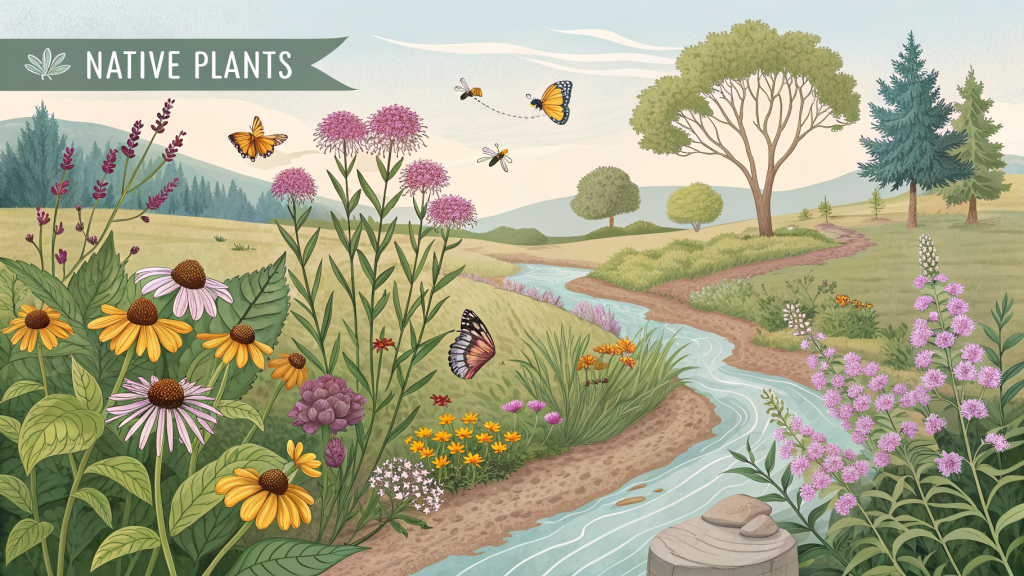
Rain gardens are designed to capture and filter stormwater runoff, but they can also be vibrant pollinator habitats. Selecting native rain garden plants ensures deep root systems that absorb water efficiently while providing nectar and host plants for bees, butterflies, and other beneficial insects. These ten perennials and grasses are proven performers in rain gardens across many regions.
1. Swamp Milkweed (Asclepias incarnata)
This moisture-loving milkweed is a top choice for rain garden zones that stay wet. Its pink flowers attract monarch butterflies and many native bees. Plant in full sun to part shade. It tolerates temporary flooding and clay soil.
Growing Tips
- Space plants 18–24 inches apart.
- Cut back in late winter to promote vigorous growth.
- Do not use pesticides; milkweed is essential for monarch larvae.
2. Blue Flag Iris (Iris versicolor)
With striking blue-violet blooms, this iris thrives in the wetter edges of a rain garden. It spreads slowly by rhizomes and provides early-season nectar for bumblebees. It tolerates standing water for short periods.
3. Joe-Pye Weed (Eutrochium purpureum)
This tall perennial (4–6 feet) produces large domes of pink flowers that are magnets for butterflies and bees. It grows best in full sun to light shade and moist, rich soil. Its deep roots help infiltrate water.
4. Cardinal Flower (Lobelia cardinalis)
Brilliant red flowers attract hummingbirds and swallowtail butterflies. Cardinal flower thrives in consistently moist soil and part shade. It self-seeds readily in rain garden conditions.
5. Turtlehead (Chelone glabra)
Unique white to pink turtle-shaped flowers bloom in late summer, providing nectar for bumblebees. It is the host plant for the Baltimore checkerspot butterfly. Prefers moist to wet soil and part sun.
6. Great Blue Lobelia (Lobelia siphilitica)
This blue-flowered relative of cardinal flower tolerates heavier shade and wetter soil. It blooms from late summer into fall, extending the pollinator season. It spreads by seed and can naturalize.
7. Switchgrass (Panicum virgatum)
As a warm-season grass, switchgrass has deep roots that stabilize soil and absorb runoff. Its airy seed heads provide winter interest and food for birds. Cultivars like ‘Shenandoah’ offer red fall color.
Design with Grasses
- Use grasses as a backdrop for flowering perennials.
- Plant in drifts for visual impact and erosion control.
- Cut back in early spring before new growth emerges.
8. Prairie Dropseed (Sporobolus heterolepis)
This fine-textured grass forms elegant mounds and thrives in drier parts of the rain garden. Its tiny flowers have a distinct popcorn-like scent. It supports skipper butterflies and other pollinators.
9. Black-Eyed Susan (Rudbeckia hirta)
This cheerful yellow daisy is adaptable to both moist and well-drained areas. It blooms all summer and attracts a wide range of bees and butterflies. It self-seeds freely, so deadhead if you want to control spread.
10. New England Aster (Symphyotrichum novae-angliae)
Purple flowers with yellow centers appear in early fall, providing critical late-season nectar for migrating monarchs and native bees. It grows 3–6 feet tall and prefers full sun and moist soil.
Designing Your Pollinator-Friendly Rain Garden
Group plants by moisture tolerance: place moisture lovers like cardinal flower and iris in the lowest, wettest zone; use switchgrass and black-eyed Susan on the drier edges. Include at least three species that bloom in spring, summer, and fall to ensure continuous nectar sources. Avoid chemical fertilizers and pesticides; native plants are adapted to local conditions and require minimal inputs.
Maintenance Tips
- Water deeply during the first growing season to establish roots.
- Remove invasive weeds that may outcompete natives.
- Leave seed heads through winter for birds and visual interest.
Takeaway: Start Small and Observe
A successful rain garden with native rain garden plants evolves over time. Begin with a small area, choose plants suited to your site’s light and moisture, and watch how pollinators respond. You’ll create a beautiful, low-maintenance landscape that supports local ecosystems and manages stormwater naturally.