Table of Contents
ToggleWhy Build Your Own Bokashi Compost Bucket?
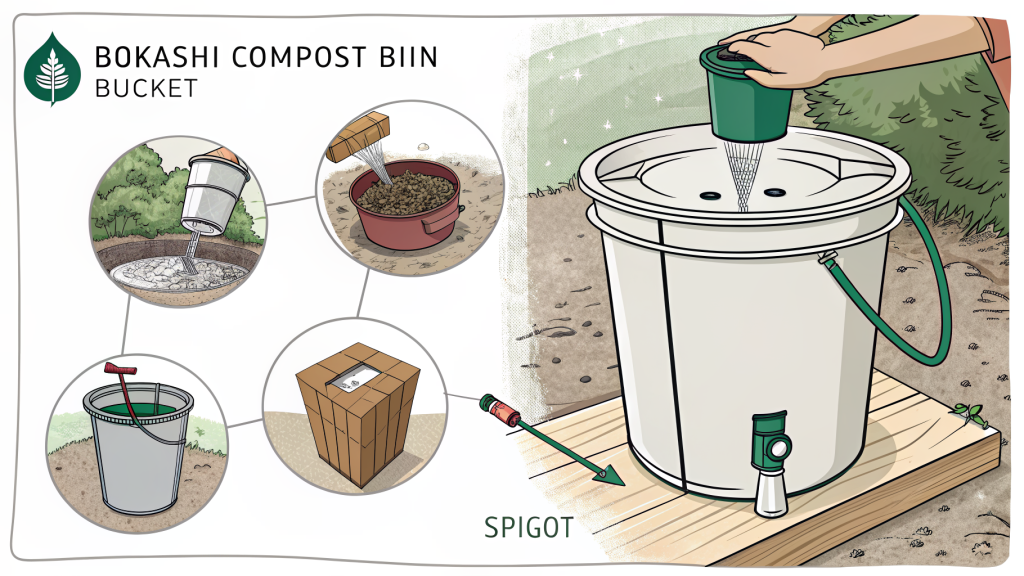
Bokashi composting is a fermentation method that breaks down kitchen waste—including meat, dairy, and cooked leftovers—without the smell or pests associated with traditional bins. A bokashi compost bucket with a spigot lets you drain nutrient-rich liquid (bokashi tea) while fermenting indoors. Building one from two buckets and a spigot is simple, cost-effective, and gives you control over the system.
What You’ll Need
- Two 5-gallon buckets (one should fit snugly inside the other; the inner bucket needs holes)
- Spigot (plastic or stainless steel, ½-inch thread)
- Drill with ⅝-inch and ¼-inch bits
- Rubber washer or plumber’s tape
- Bokashi bran (inoculated with effective microorganisms)
- Kitchen scraps (chopped small)
Step-by-Step Building Instructions
1. Drill the Inner Bucket
Use the ¼-inch bit to drill about 20-30 holes evenly across the bottom of the inner bucket. These holes allow liquid to drain into the outer bucket. Also drill a few holes around the lower sides, 1-2 inches from the bottom, for better drainage.
2. Install the Spigot
On the outer bucket, drill a hole with the ⅝-inch bit about 2 inches from the bottom. Insert the spigot with a rubber washer on the inside and tighten the nut on the outside. Apply plumber’s tape to the threads for a leak-proof seal. Test with water before using.
3. Assemble the System
Place the inner bucket (with holes) inside the outer bucket (with spigot). The spigot should be accessible for draining. The inner bucket should sit slightly above the bottom of the outer bucket—if it rests on the spigot, drill a small notch in the inner bucket’s rim so it can sit flush.
How to Use Your Bokashi Compost Bucket
Layer Kitchen Waste and Bokashi Bran
- Add a thin layer of kitchen scraps (about 1-2 inches) to the inner bucket.
- Sprinkle a generous handful of bokashi bran over the scraps—enough to coat them.
- Press down firmly with a potato masher or your fist to remove air pockets.
- Repeat layers until the bucket is full, pressing each time.
Drain Bokashi Tea Regularly
Every 2-3 days, open the spigot and drain the liquid into a container. This liquid is acidic and rich in microbes. Use it diluted (1:100 with water) as a plant fertilizer or pour it down drains to clean pipes. If it smells putrid, you’re leaving it too long—drain more often.
Seal and Ferment
Keep the lid tightly closed between additions. The process is anaerobic, so oxygen must be excluded. After the bucket is full, seal it and let it ferment for 2 weeks at room temperature. During this time, continue draining liquid every few days.
Odor Control and Troubleshooting
A properly functioning bokashi compost bucket should smell like pickles or sourdough—never rotting garbage. If you notice foul odors:
- Add more bokashi bran (you can’t overdo it).
- Ensure scraps are chopped small (1-inch pieces).
- Press down firmly to eliminate air.
- Check that the lid seals tightly.
- Drain liquid more frequently.
What to Do with the Fermented Waste
After 2 weeks, the waste will be pickled and covered in white mold (a good sign). It’s not ready to use directly on plants—it’s too acidic. Instead:
- Bury it in soil: Dig a trench 8-12 inches deep in your garden or a large pot, add the fermented waste, and cover with soil. Worms and soil microbes will finish breaking it down in 2-4 weeks.
- Add to a compost pile: Mix it into an outdoor compost bin. It will accelerate decomposition.
- Use in a worm bin: Feed small amounts to worms (they love it), but go slowly to avoid overheating.
Practical Takeaway
Building a bokashi compost bucket from two buckets and a spigot is a weekend project that pays off for years. You’ll reduce kitchen waste, produce liquid fertilizer, and create pre-compost that enriches your soil. With regular draining and proper layering, your indoor system will stay odor-free and productive. Start today and close the loop on your food scraps.