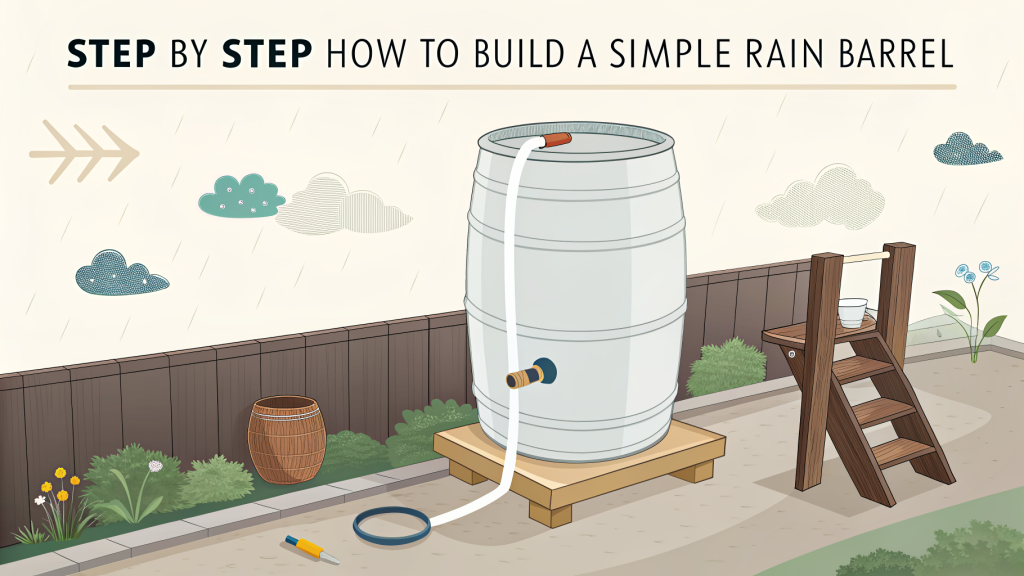
Collecting rainwater is one of the easiest ways to reduce your water bill and keep your garden hydrated during dry spells. By building a rain barrel DIY project from a food-grade plastic drum, you can create a functional, mosquito-proof water storage system in a single afternoon. Here’s how to convert a 55-gallon drum into a rain barrel with a spigot, overflow, and screen.
Table of Contents
ToggleWhy Choose a Food-Grade Plastic Drum?
Not all barrels are safe for collecting water for plants. Food-grade drums are typically made from high-density polyethylene (HDPE) and are free from toxic residues. Look for drums that previously held syrups, juices, or pickles—these are thoroughly cleaned and safe for garden use. Avoid barrels that stored chemicals, oils, or industrial products.
Food-grade drums often have a bung (screw cap) opening, which makes installation easier. They are also UV-resistant if painted or kept in shade, prolonging their lifespan.
Tools and Materials You’ll Need
Before starting, gather the following items. Most are available at hardware stores or online.
- 55-gallon food-grade plastic drum (with lid)
- 1 brass or nylon spigot (3/4-inch thread)
- 1 threaded brass or plastic adapter (male to female, 3/4-inch NPT)
- 1 rubber washer (for spigot seal)
- 1 overflow valve or brass hose fitting (3/4-inch)
- 1 piece of flexible hose (for overflow, 3–4 ft)
- 1 aluminum or fiberglass window screen (approx. 12×12 inches)
- 1 large rubber band or zip tie (to secure screen)
- Drill with hole saws (1-inch and 1/2-inch bits)
- Adjustable wrench or pliers
- Silicone caulk (waterproof, outdoor grade)
- Paint (optional, for UV protection and aesthetics)
- Concrete blocks or a sturdy stand (to elevate barrel)
Step-by-Step Instructions
1. Clean and Prepare the Drum
If your drum previously held food, rinse it thoroughly with a hose. For stubborn smells, fill with water and add a cup of baking soda, then let it sit overnight. Rinse again. Remove any labels or adhesive residue using rubbing alcohol or a scraper.
2. Install the Spigot Near the Bottom
Drill a 1-inch hole about 4 inches from the bottom of the drum. This height allows you to fill a watering can easily. Insert the rubber washer onto the spigot, then thread it through the hole from the outside. Inside the drum, attach the threaded adapter and tighten securely with a wrench. Apply silicone caulk around the exterior hole to prevent leaks. Let it cure per manufacturer instructions (usually 24 hours).
3. Create the Overflow Port
Drill a second 1-inch hole about 3 inches from the top of the drum, on the opposite side from the spigot. This prevents water from backing up into your downspout. Install an overflow valve or a brass hose fitting using the same washer-and-adapter method. Attach a flexible hose to direct overflow away from your foundation. Bury the hose end in gravel or a rain garden to absorb excess water.
4. Cut the Lid for a Screen
Use the lid that came with the drum. If it’s solid, cut a 6-inch diameter hole in the center using a utility knife or jigsaw. Alternatively, you can remove the entire center section, leaving a 2-inch rim. Stretch the window screen over the opening and secure it with a large rubber band or zip tie. The screen will keep out mosquitoes, debris, and small animals while allowing water to enter.
5. Elevate and Position the Barrel
Place the barrel on a sturdy, level base—concrete blocks or a wooden stand work well. Elevate it at least 6 inches off the ground to make the spigot accessible and to allow for a bucket underneath. Position it under a downspout or gutter outlet. If you plan to connect it directly to a downspout, use a downspout diverter kit (available at hardware stores) to route water into the barrel.
6. Test for Leaks
Fill the barrel with water using a hose, checking all connections. Tighten any drips. Let it sit for a few hours to ensure seals hold. If you used silicone caulk, wait for it to fully cure before testing.
Optional Upgrades for Better Performance
Once the basic barrel is working, consider these enhancements:
- Paint the barrel: Use exterior-grade latex paint (light colors reflect heat) to protect the plastic from UV degradation. This also makes the barrel blend into your garden.
- Add a second barrel: Connect two barrels with a linking kit (using a flexible hose between the overflow of the first and the top of the second) to double your storage.
- Install a filter: Place a fine mesh filter inside the lid opening to catch smaller particles.
- Use a soaker hose: Attach a soaker hose to the spigot for drip irrigation, using a timer if desired.
Maintenance Tips
To keep your rain barrel working efficiently:
- Inspect the screen monthly and clean any debris buildup.
- Drain the barrel completely before winter freezes to avoid cracks. Store the spigot inside.
- Every spring, scrub the interior with a mild bleach solution (1 cup bleach per 10 gallons water) to prevent algae.
- Check for mosquito larvae; if found, add a mosquito dunk (Bti) to the water—safe for plants.
Practical Takeaway
Building a rain barrel DIY from a food-grade drum is a straightforward weekend project that pays off every time it rains. With just a few tools and materials, you’ll have a reliable water source for your garden, reduce runoff, and lower your water bill. Start with clean components, ensure tight seals, and always screen the opening—your plants (and local mosquitoes) will thank you.