Table of Contents
ToggleIntroduction
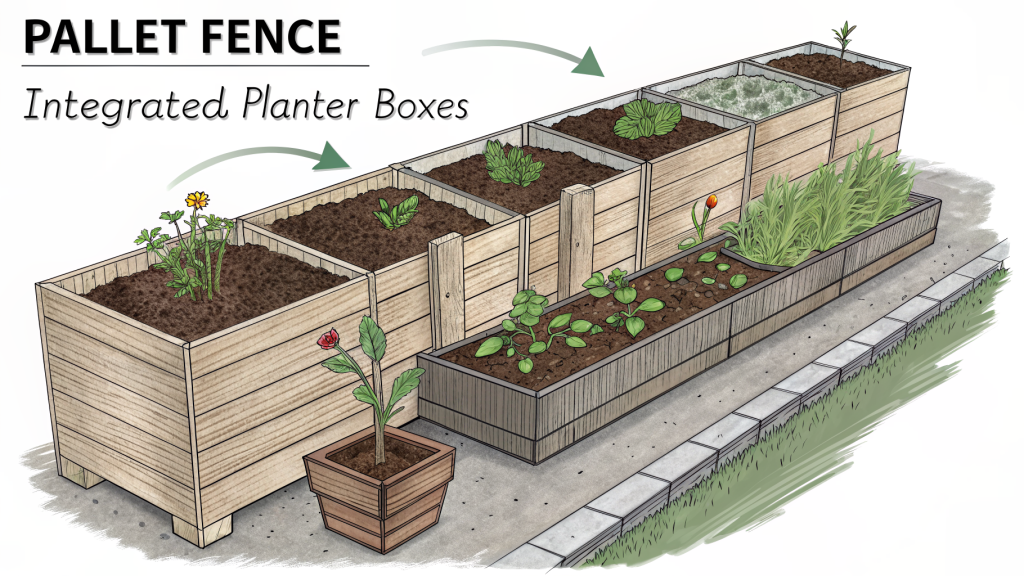
If you’re looking for an affordable way to add privacy and greenery to your yard, a pallet fence planter boxes project is the perfect solution. By repurposing wooden pallets, you can build a sturdy fence that doubles as a vertical garden for herbs, flowers, or trailing plants. This DIY guide walks you through the steps to construct a pallet fence with integrated planter boxes, giving you both seclusion and a living wall of color.
Planning Your Pallet Fence with Planter Boxes
Choosing the Right Pallets
- Look for heat-treated (HT) pallets, not chemically treated (MB). HT pallets are safe for growing edibles.
- Select pallets in good condition—no rot, large cracks, or broken boards.
- Standard 40×48-inch pallets work well; you’ll need about one per 4-foot fence section plus extra for planter boxes.
Designing the Layout
- Decide on fence height (typically 4–6 feet) and planter box placement. Boxes can be at the base, mid-height, or staggered.
- Sketch your fence line, marking where each pallet and planter box will go.
- Consider sun exposure: place sun-loving plants on the south or west side, shade plants on the north or east.
Step-by-Step Construction
Step 1: Prepare the Pallets
- Remove any protruding nails or staples with a pry bar and hammer.
- Sand rough edges to prevent splinters.
- Apply a weather-resistant primer or stain (optional but recommended for longevity).
Step 2: Build the Planter Boxes
- Cut two 2×6 boards to the width of your pallet (typically 40 inches) for the front and back of the box.
- Cut two 2×6 boards to the desired depth (e.g., 12 inches) for the sides.
- Assemble the box using exterior screws (2.5-inch deck screws). Add a bottom made from 1/2-inch plywood with drainage holes drilled every 6 inches.
- Attach the planter box to the pallet: position it at the desired height and screw through the pallet slats into the back of the box. Use 3-inch screws for a secure hold.
Step 3: Set the Fence Posts
- Dig post holes 2 feet deep, spaced 4 feet apart (equal to pallet width).
- Place 4×4 pressure-treated posts in the holes, ensuring they are plumb. Fill with concrete mix and let set for 24 hours.
- Attach horizontal rails (2x4s) between posts at top and bottom to support the pallets.
Step 4: Mount the Pallets
- Lift each pallet into position against the rails. Check that it is level.
- Drive 3-inch screws through the pallet stringers into the rails. Use at least four screws per pallet.
- Repeat for each section, leaving a 1-inch gap between pallets for air circulation.
Step 5: Waterproof and Finish
- Line the inside of each planter box with landscape fabric to prevent soil from leaking out.
- Fill with a lightweight potting mix (not garden soil) to reduce weight.
- Apply a clear wood sealer to the entire fence to protect against moisture.
Planting and Maintenance
Best Plants for Pallet Planter Boxes
- Herbs: thyme, oregano, basil, mint (use containers to control spread).
- Flowers: petunias, nasturtiums, marigolds—they thrive in shallow soil.
- Trailing plants: ivy, creeping jenny, or sweet potato vine for a cascading effect.
Watering Tips
- Planter boxes dry out faster than ground beds; water daily in hot weather.
- Install a drip irrigation system with a timer for convenience.
- Avoid overwatering: ensure drainage holes are clear.
Seasonal Care
- In fall, remove dead plants and empty soil to prevent freezing damage.
- In spring, refresh with new potting mix and plants.
- Inspect wood annually for rot and apply sealer as needed.
Practical Takeaway
Building a pallet fence with integrated planter boxes is a rewarding weekend project that adds privacy and beauty to your outdoor space. With careful planning and simple tools, you can create a unique vertical garden that grows herbs and flowers while screening your yard. Start small with one section to test the design, then expand as you gain confidence. Happy gardening!