Table of Contents
ToggleWhy Choose a Shade Ground Cover Moss Alternative?
If your yard is plagued by bare, shady spots where grass refuses to grow, you’re not alone. Traditional turf struggles in low-light conditions, leading to patchy, muddy areas. Instead of fighting nature, embrace it with a shade ground cover moss alternative —a lush, low-maintenance carpet of plants like ajuga, vinca minor, and sweet woodruff. These resilient ground covers thrive where grass fails, offering year-round greenery, erosion control, and a charming woodland aesthetic.
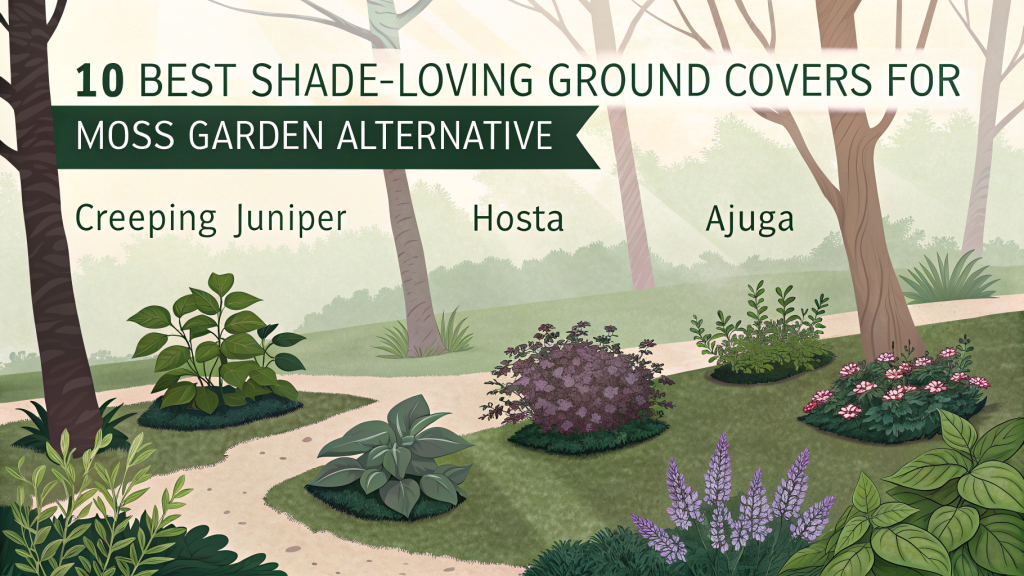
Top 10 Shade-Loving Ground Covers
All these plants are hardy, easy to grow, and perfect for replacing a moss garden or patchy lawn in shaded areas.
1. Ajuga (Bugleweed)
Ajuga is a fast-spreading ground cover with glossy, evergreen leaves and spikes of blue, purple, or white flowers in spring. It thrives in partial to full shade and tolerates a range of soil types. Care: Space plants 6–12 inches apart; water regularly until established. It spreads by runners, so contain it if needed.
2. Vinca Minor (Periwinkle)
Vinca minor features trailing stems with dark green leaves and lavender-blue flowers from spring to fall. It’s exceptionally shade-tolerant and deer-resistant. Planting: Set out nursery plants 12–18 inches apart. Water moderately; it’s drought-tolerant once established. Use as a slope stabilizer.
3. Sweet Woodruff (Galium odoratum)
Sweet woodruff forms a soft, fragrant mat of whorled leaves and tiny white star-shaped flowers in spring. It thrives in moist, shady spots and is perfect for woodland gardens. Tip: Plant 8–12 inches apart in rich, well-drained soil. It spreads moderately; mow once after flowering to keep tidy.
4. Pachysandra (Japanese Spurge)
Pachysandra terminalis is a classic ground cover for deep shade. Its glossy, dark green leaves create a dense, weed-suppressing carpet. How to grow: Space 6–12 inches apart; keep soil moist but not waterlogged. It spreads by underground stems. Avoid full sun, which scorches leaves.
5. Lamium (Dead Nettle)
Lamium maculatum offers variegated silver-and-green leaves and pink, purple, or white flowers from spring to early summer. It’s tough and drought-tolerant once established. Planting: Space 12–18 inches apart in well-drained soil. Trim back after flowering to encourage fresh growth.
6. Hosta (Plantain Lily)
Hostas are beloved for their bold, textured leaves in shades of green, blue, gold, and variegated patterns. They thrive in shade and produce tall flower spikes in summer. Care: Plant 12–36 inches apart depending on variety; water regularly. Divide clumps every 3–4 years. Protect from slugs and deer.
7. Brunnera (Siberian Bugloss)
Brunnera macrophylla ‘Jack Frost’ has heart-shaped, silver-veined leaves and forget-me-not-like blue flowers in spring. It prefers cool, moist shade. Maintenance: Space 12–18 inches apart; mulch to retain moisture. Remove old leaves in early spring.
8. Epimedium (Barrenwort)
Epimedium is a tough, slow-spreading ground cover with delicate, heart-shaped leaves that often turn bronze or red in fall. It produces airy flowers in spring. Best practice: Plant 12–18 inches apart in dry shade. Cut back old foliage in late winter for a fresh look.
9. Gaultheria procumbens (Wintergreen)
Wintergreen is a low-growing evergreen shrub with glossy leaves, white flowers, and red berries that persist into winter. It prefers acidic, moist soil and part to full shade. Planting: Space 12 inches apart; water with rainwater to maintain acidity. The leaves have a minty scent.
10. Tiarella (Foamflower)
Tiarella cordifolia produces mounds of maple-like leaves and fluffy white or pink flower spikes in spring. It spreads by runners and is ideal for woodland gardens. Care: Plant 12 inches apart in rich, moist soil. Divide every 2–3 years to maintain vigor.
How to Plant and Maintain a Shade Ground Cover Moss Alternative
Site Preparation
- Remove existing grass and weeds by hand or with a shovel. Avoid herbicides near trees.
- Loosen soil to a depth of 6–8 inches; amend with compost if needed.
- Test soil pH; most ground covers prefer slightly acidic to neutral (6.0–7.0).
Planting Steps
- Space plants according to their mature spread (see individual recommendations).
- Dig holes slightly larger than root balls; place plants at the same depth as in pots.
- Water thoroughly after planting; apply 2–3 inches of organic mulch (e.g., shredded bark) to retain moisture and suppress weeds.
Ongoing Care
- Water deeply once a week during dry spells until established (first year).
- Fertilize lightly in spring with a balanced, slow-release fertilizer.
- Divide overcrowded clumps every 3–4 years to rejuvenate.
- Remove fallen leaves in autumn to prevent smothering.
Benefits of Using Ground Covers Over Moss
While moss gardens are beautiful, they require constant moisture, acidic soil, and patience to establish. A shade ground cover moss alternative offers several advantages:
- Less moisture dependence: Most ground covers tolerate dry spells once mature.
- Faster coverage: Many spread within one growing season.
- Durability: They can handle light foot traffic, unlike delicate moss.
- Seasonal interest: Flowers, berries, and fall color provide year-round appeal.
Practical Takeaway
Replacing a struggling shaded lawn with a shade ground cover moss alternative is a smart, sustainable choice. Start with a mix of ajuga, vinca minor, and sweet woodruff for quick coverage and varied textures. Prepare the soil well, water consistently during establishment, and enjoy a low-maintenance, green carpet that thrives where grass cannot.