Table of Contents
ToggleWhy Build a Cold Frame from Windows?
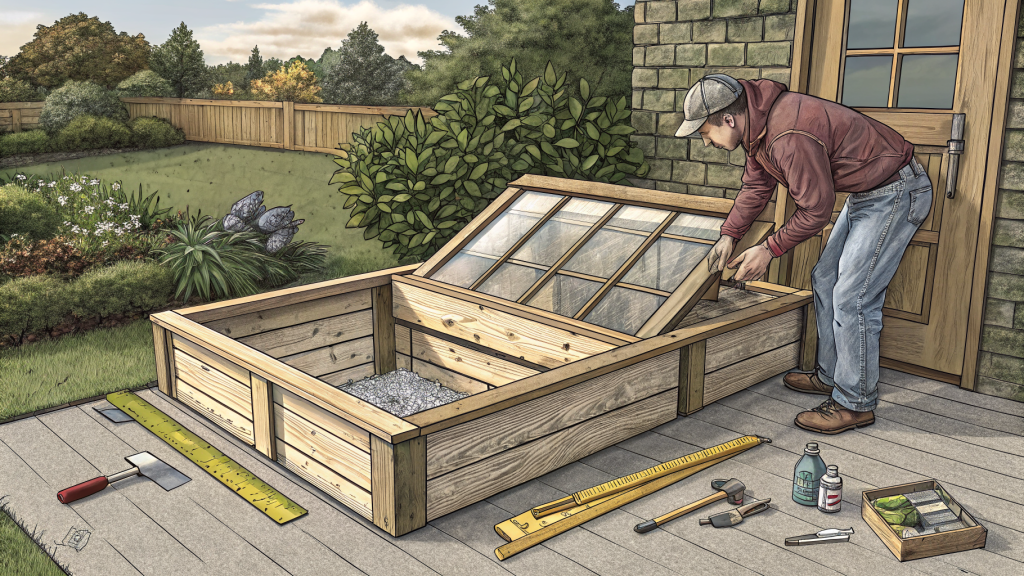
If you want to harvest kale, lettuce, and spinach deep into winter, a cold frame from windows is the perfect DIY project. By repurposing scrap lumber and old window sashes, you can create a sturdy, free (or nearly free) structure that traps solar heat and protects crops from frost. This guide walks you through every step, from gathering materials to planting your winter greens.
Planning and Materials
What You’ll Need
- Old window sashes – single-pane or double-pane, any size (around 24–36 inches wide works best). Check salvage yards, Craigslist, or ask neighbors replacing windows.
- Scrap lumber – 2x4s or 2x6s for the frame; pressure-treated or cedar is ideal for ground contact.
- Hardware – hinges, handle, latch, and galvanized screws.
- Tools – saw, drill, tape measure, level, square, and safety gear.
Choosing the Right Location
Place your cold frame against a south-facing wall or in an open area with full winter sun. The site should be well-drained and protected from strong winds. Level the ground thoroughly before building.
Step-by-Step Construction
1. Measure and Cut the Lumber
- Lay your window sash flat and measure its width and length. Add 2–4 inches to each dimension to allow for the frame’s side walls. For example, if the window is 36″ wide x 24″ long, cut the lumber to create a box that is 38″ wide x 26″ long.
- Cut two side pieces (shorter) and two end pieces (longer) from 2×4 or 2×6 lumber. The height of the sides should be 12–18 inches at the back and 6–10 inches at the front to create a sloped top for water runoff and better sun exposure.
- For a sloped design, the back side pieces will be taller than the front. The ends are cut at an angle to match the slope.
2. Assemble the Frame
- Join the corners using galvanized screws or deck screws (3-inch length). Pre-drill holes to prevent splitting. Use a square to ensure right angles.
- If your frame is large, add a center support (a crosspiece) to prevent bowing. This also provides a place to rest the window sash when open.
- Attach a wood strip along the top edge of the back and front walls to create a lip that holds the window in place.
3. Attach the Window Sash
- Place the window on top of the frame, centered. Mark hinge locations on the back (tall) side. Use two or three heavy-duty hinges.
- Screw hinges to the frame first, then to the window. Be careful not to crack the glass – drill pilot holes for the screws.
- Add a prop stick (a notched piece of wood) to hold the window open at different angles for ventilation.
- Install a handle and latch on the front side so you can open and close the window easily.
4. Optional: Insulate and Secure
- Line the inside of the frame with rigid foam insulation board (1 inch thick) to retain heat. Avoid covering the soil directly – just the walls.
- If you live in a very windy area, bury the bottom of the frame a few inches into the ground or stake it down.
- Caulk any gaps between the window and the frame to prevent drafts.
Planting and Managing Winter Greens
Best Crops for a Cold Frame
- Leafy greens – kale, spinach, Swiss chard, lettuce, arugula.
- Root vegetables – carrots, beets, radishes (if harvested before hard freeze).
- Hardy herbs – parsley, cilantro, chives.
Planting Tips
- Fill the frame with 6–8 inches of quality garden soil mixed with compost.
- Sow seeds in late summer or early fall, or transplant seedlings 4–6 weeks before first frost.
- Water sparingly in winter – overwatering can cause rot. Open the window on sunny days to reduce humidity.
Temperature Management
- On sunny winter days, the inside temperature can soar above 80°F (27°C). Prop the window open to vent excess heat.
- At night, close the window completely. For extra cold nights (below 20°F/-6°C), cover the entire frame with an old blanket or bubble wrap for insulation.
- Monitor with a max-min thermometer placed inside the frame.
Troubleshooting Common Issues
- Condensation – Wipe the glass regularly and increase ventilation. Condensation can lead to mold and disease.
- Pests – Slugs and snails love the moist environment. Use diatomaceous earth or hand-pick them.
- Frost damage – If plants look wilted after a cold night, they may recover once they thaw. Avoid touching frozen leaves.
- Window breakage – Use old windows with intact glass. If a pane breaks, replace it with plexiglass or a similar cut piece.
Practical Takeaway
Building a cold frame from windows is a weekend project that pays off all winter. With scrap lumber and salvaged windows, you create a microclimate that yields fresh greens when the garden is dormant. Start small, adjust ventilation as needed, and enjoy homegrown salads even in January.