Designing a food forest design on a 1/4 acre lot allows you to create a self-sustaining, multi-story edible landscape that maximizes diversity and productivity. By mimicking natural forest ecosystems, you can layer plants from canopy to ground cover, ensuring every vertical inch contributes to your harvest. This approach reduces maintenance, builds soil health, and yields fresh food for years.
Table of Contents
ToggleUnderstanding the 7 Layers of a Food Forest
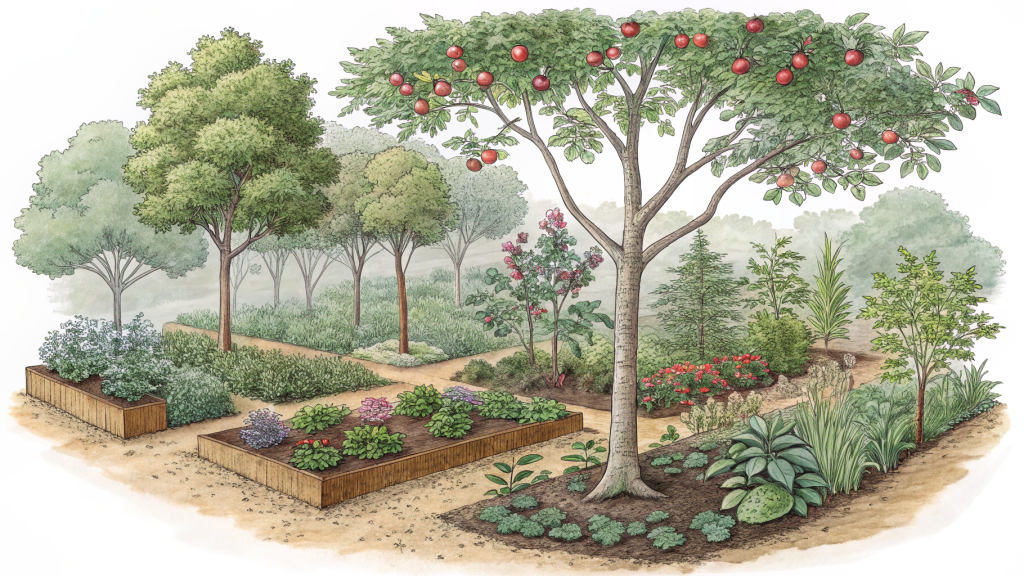
A food forest mimics natural woodland with seven distinct layers: canopy, understory, shrub, herbaceous, ground cover, root, and vine. Each layer plays a role in capturing sunlight, protecting soil, and providing habitat. On a 1/4 acre (about 10,890 sq ft), you can include all layers by carefully selecting species that fit your climate and space constraints.
Canopy Layer (Tall Trees)
These are the tallest trees, typically 15–30 feet high. They provide shade, wind protection, and structure. For a small lot, choose one or two productive trees that won’t overwhelm the space.
- Recommended: Dwarf or semi-dwarf fruit trees like apple, pear, or Asian pear. For warmer climates, consider citrus or avocado (check mature size).
- Spacing: Plant one canopy tree in the center or offset to allow sunlight for lower layers.
- Action: Select disease-resistant varieties and ensure at least 6 hours of direct sun for the tree.
Understory Layer (Smaller Trees)
These trees grow 10–20 feet tall and thrive in partial shade. They add diversity and extend the harvest season.
- Recommended: Serviceberry, pawpaw, or persimmon. In mild climates, consider fig or pomegranate.
- Spacing: Plant 2–3 understory trees around the canopy tree, 8–10 feet apart.
- Action: Choose species that tolerate some shade and produce fruit or nuts.
Shrub Layer
Shrubs grow 3–10 feet tall and fill the space between trees. Many bear berries and provide habitat for pollinators.
- Recommended: Blueberry, currant, gooseberry, hazelnut (as a shrub), or elderberry.
- Spacing: Plant shrubs 3–5 feet apart in clusters beneath the understory.
- Action: Test soil pH for acid-loving plants like blueberries; amend as needed.
Herbaceous Layer
This layer includes perennial vegetables, herbs, and flowers that die back in winter. They add color, repel pests, and provide food.
- Recommended: Asparagus, rhubarb, sorrel, comfrey, mint (in containers to control spread), and culinary herbs like oregano and thyme.
- Spacing: Scatter in gaps between shrubs and trees.
- Action: Use comfrey as a dynamic accumulator to bring nutrients to the surface.
Ground Cover Layer
Low-growing plants protect soil, suppress weeds, and retain moisture. Choose edible or beneficial species.
- Recommended: Strawberries, creeping thyme, sweet woodruff, or clover. For shady areas, use wild ginger or hosta (young shoots edible).
- Spacing: Plant in patches or as a living mulch under trees and shrubs.
- Action: Avoid invasive species; native ground covers are often best.
Root Layer
Root crops and tubers grow underground, utilizing space without competing for light. They are harvested in fall or left for perennial harvest.
- Recommended: Jerusalem artichoke, sweet potato (in warm climates), or groundnut (Apios americana).
- Spacing: Plant in sunnier spots or along edges to avoid shading.
- Action: Use deep mulch to protect roots and retain moisture.
Vine Layer
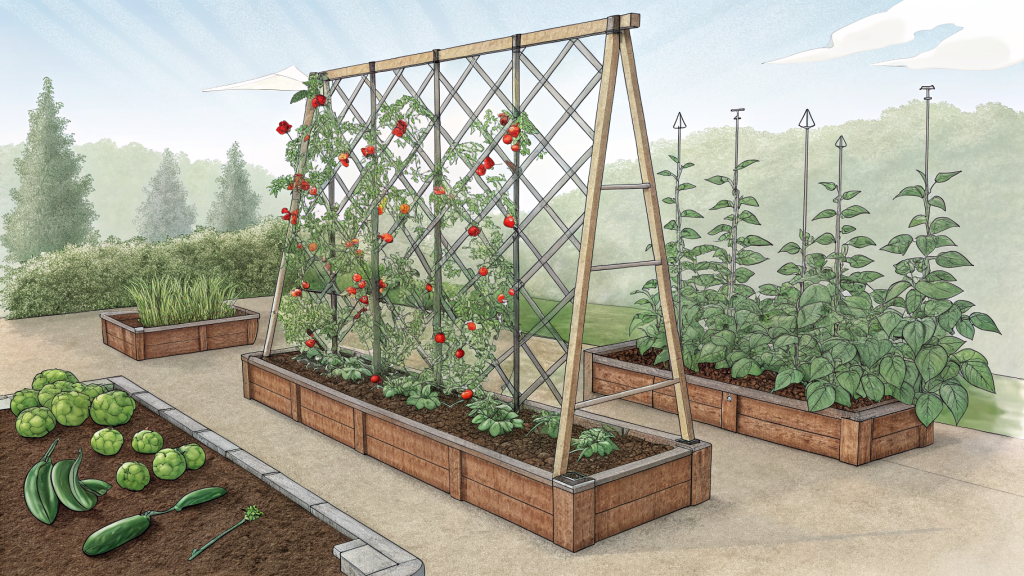
Vines climb trees, trellises, or fences, adding vertical production.
- Recommended: Hardy kiwi, grapes, or passionflower. For small spaces, grow vining squash or beans on a trellis.
- Spacing: Plant at the base of a robust tree or a dedicated trellis.
- Action: Ensure the support structure can handle mature vine weight; prune annually.
Designing Your 1/4 Acre Layout
Begin by mapping your lot: note sun exposure, soil type, water sources, and existing structures. Divide the space into zones based on access and maintenance frequency. For a food forest, designate the highest traffic area near the house for herbs and vegetables (Zone 1), and place the forest layers farther out (Zone 2).
Sample Layout for 1/4 Acre
- Central canopy tree: One semi-dwarf apple (15 ft tall) in the middle of the lot.
- Understory ring: 3 serviceberries (10 ft apart) around the apple.
- Shrub clusters: 5 blueberry bushes (3 ft apart) in a group, 2 currants, and 2 hazelnuts.
- Herbaceous bed: Asparagus and rhubarb along one edge; a comfrey patch near the base of the apple tree.
- Ground cover: Strawberries under the apple and shrubs; creeping thyme along paths.
- Root crops: Jerusalem artichoke in a sunny corner.
- Vines: One hardy kiwi on a trellis on the north side.
Planting and Maintenance Tips
Start with soil preparation: remove grass, add compost, and mulch heavily with wood chips to suppress weeds. Plant in fall or early spring for best establishment. Water deeply the first year.
Ongoing Care
- Pruning: Prune trees and shrubs in late winter to maintain shape and airflow.
- Mulching: Reapply wood chips annually to feed soil and reduce watering.
- Weeding: Pull weeds before they seed; ground covers will eventually outcompete most.
- Pest control: Encourage beneficial insects by planting flowers like dill, fennel, and yarrow.
Practical Takeaway
Designing a food forest design on 1/4 acre is achievable by starting small and expanding over time. Focus on selecting hardy, perennial plants suited to your climate, and remember that the system becomes more self-sufficient each year. Begin with one canopy tree and a few shrubs, then gradually add layers. Your mini-forest will provide fresh food, wildlife habitat, and a beautiful, low-maintenance landscape.