Table of Contents
ToggleUnderstanding Defensible Space for a Firewise Landscape
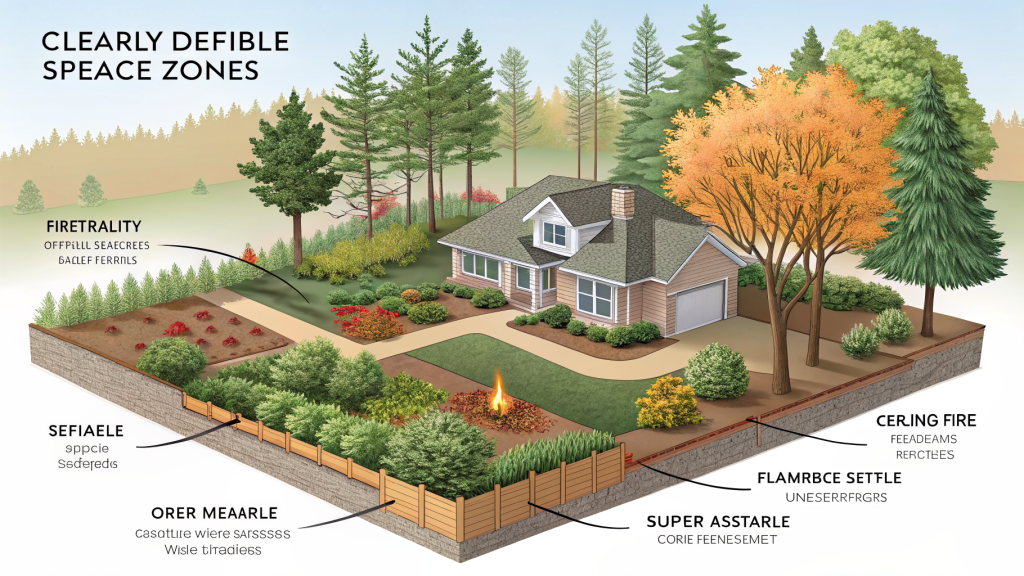
Creating a firewise landscape defensible space is one of the most effective steps you can take to protect your home from wildfire. This approach involves designing your garden in zones, each with specific plant choices and hardscaping strategies that slow or stop the spread of flames. By thinking strategically, you can have a beautiful yard that also acts as a buffer against fire.
Zone 0: The Immediate 0–5 Feet (Non-Combustible Zone)
This zone directly adjacent to your home is the most critical. No combustible materials should be present. Here’s how to harden this area:
- Use non-flammable ground covers: Install concrete pavers, gravel, or decomposed granite. Avoid wood mulch or bark.
- Remove all plants: No shrubs, trees, or tall grasses within 5 feet of structures, decks, or fences.
- Clean gutters and roofs: Regularly clear leaves, pine needles, and debris.
- Choose fire-resistant hardscaping: Stone walls, metal fences, and concrete patios are ideal.
Zone 1: The 5–30 Foot Transition Zone (Low-Fuel Area)
This zone creates a break in fuel continuity. Use fire-resistant plants spaced far apart, and incorporate hardscape paths or patios.
Plant Selection Tips
- Choose high-moisture, low-resin plants: Examples include lavender, sage, ice plant, and succulents. Avoid junipers, pines, and ornamental grasses that burn easily.
- Space plants generously: Leave at least 10 feet between tree canopies and 6 feet between shrubs. Prune lower branches of trees to 6–10 feet from the ground.
- Use rock mulches: Replace wood chips with gravel or stone around plants.
Hardscaping Strategies
- Create firebreaks: Install gravel walkways, stone retaining walls, or a patio to break up vegetation.
- Position water features: A pond or fountain can add moisture and act as a barrier.
Zone 2: The 30–100 Foot Reduced-Fuel Zone
This outer zone slows the fire’s approach. Focus on thinning trees and removing heavy ground fuels.
- Thin tree stands: Remove smaller trees and ladder fuels (low branches). Keep spacing of 10–12 feet between tree crowns.
- Mow grasses: Keep lawns and native grasses mowed to 4 inches or less.
- Remove dead vegetation: Clear fallen branches, leaves, and dead plants regularly.
- Use fire-resistant shrubs: Consider California lilac, manzanita (low-growing), or rockrose.
Fire-Resistant Plant List for a Firewise Garden
Incorporate these plants that have high moisture content and low flammability:
- Groundcovers: Ice plant (Delosperma), creeping phlox, sedum.
- Perennials: Lavender, sage, yarrow, coreopsis.
- Shrubs: Rockrose, California lilac (Ceanothus), dwarf coyote brush.
- Trees: Deciduous fruit trees (apple, pear), maple, oak (with proper spacing).
Avoid these flammable plants: Juniper, pine, cypress, arborvitae, ornamental grasses, and eucalyptus.
Maintenance: Keeping Your Defensible Space Effective
A firewise landscape requires ongoing care to remain effective. Follow these steps:
- Water regularly: Keep plants hydrated, especially during dry seasons. Drip irrigation is efficient.
- Prune annually: Remove dead branches and thin out dense growth.
- Monitor mulch: Replace wood mulch with non-flammable alternatives. If using organic mulch, keep it moist and away from structures.
- Store combustibles away: Move firewood, propane tanks, and lumber to Zone 2 or beyond.
Practical Takeaway
Designing a firewise landscape defensible space is a smart investment in your home’s safety. Start with Zone 0 by removing all combustibles next to your house, then expand outward with fire-resistant plants and strategic hardscaping. Regular maintenance keeps your garden beautiful and your property protected. Remember: a well-planned landscape can make all the difference when wildfire threatens.