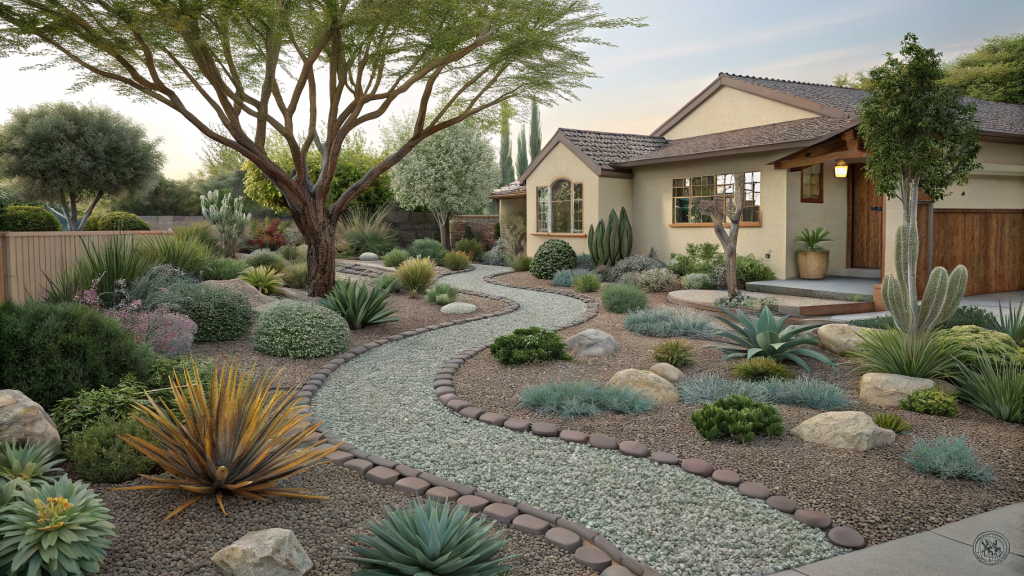
Designing a xeriscape front yard design that is both beautiful and water-wise is easier than you think. By combining drought-tolerant perennials, ornamental grasses, and gravel mulch, you can create a low-maintenance landscape that thrives in dry conditions. This approach not only saves water but also reduces weeding and mowing, giving you more time to enjoy your outdoor space.
Table of Contents
TogglePlanning Your Xeriscape Front Yard Design
Before you start digging, take time to assess your site and create a plan. A well-thought-out design ensures that your xeriscape front yard design will look cohesive and perform well.
Assess Sunlight and Soil
- Observe how sunlight moves across your yard throughout the day. Most drought-tolerant perennials need at least 6 hours of direct sun.
- Test your soil drainage. Dig a hole, fill it with water, and see how long it takes to drain. If it drains in less than an hour, you have well-draining soil—ideal for xeriscaping.
Choose a Design Theme
- Consider a modern, minimalist look with clean lines and symmetrical plantings.
- Or opt for a naturalistic meadow style with drifts of grasses and perennials.
- Match your design to your home’s architecture for a cohesive feel.
Selecting Drought-Tolerant Perennials
Choose perennials that are native to your region or adapted to dry conditions. They will require little water once established and provide long-lasting color.
Top Perennials for Xeriscaping
- Lavender (Lavandula): Fragrant, silver foliage and purple blooms. Thrives in full sun and well-drained soil.
- Sedum (Stonecrop): Succulent leaves and star-shaped flowers. Excellent for ground cover or borders.
- Echinacea (Coneflower): Drought-tolerant once established, with daisy-like flowers that attract pollinators.
- Russian Sage (Perovskia atriplicifolia): Wispy blue flowers and aromatic gray-green leaves. Handles heat and poor soil.
- Yarrow (Achillea millefolium): Flat-topped flower clusters in yellow, pink, or white. Very low water needs.
Group Plants by Water Needs
Place plants with similar water requirements together. This makes irrigation more efficient and prevents overwatering some while underwatering others.
Incorporating Ornamental Grasses
Ornamental grasses add texture, movement, and year-round interest. They are extremely drought-tolerant and require minimal care.
Best Grasses for Xeriscape Front Yards
- Blue Fescue (Festuca glauca): Compact, blue-green clumps perfect for borders.
- Feather Reed Grass (Calamagrostis acutiflora): Upright, narrow blades with feathery plumes. Tolerates clay soil.
- Mexican Feather Grass (Nassella tenuissima): Fine, wispy blades that sway in the breeze. Use in mass plantings.
- Little Bluestem (Schizachyrium scoparium): Native grass with blue-green summer foliage and copper fall color.
Using Grasses as Focal Points
Place taller grasses like Feather Reed Grass near the back of beds or as specimen plants. Low-growing grasses like Blue Fescue work well as edging or ground covers.
Choosing and Installing Gravel Mulch
Gravel mulch is a key element in xeriscape front yard design. It conserves moisture, suppresses weeds, and adds a clean, modern look.
Types of Gravel
- Pea gravel: Small, rounded stones (3/8 inch). Easy to walk on and works well in paths.
- Crushed stone: Angular pieces that lock together, making it stable for driveways or high-traffic areas.
- Decomposed granite: Fine, sandy material that compacts well. Ideal for pathways.
Installation Tips
- Lay landscape fabric before adding gravel to prevent weeds from growing through.
- Apply a 2- to 3-inch layer of gravel. Too thin and weeds may poke through; too thick and it becomes unstable.
- Edge beds with metal or stone edging to keep gravel in place.
Designing with Hardscape and Accents
Incorporate hardscape elements to reduce the area that needs planting and create visual interest.
Paths and Patios
- Use flagstone, concrete pavers, or gravel paths to connect different areas.
- Create a small seating area with a bench or boulders.
Boulders and Rocks
Large rocks anchor the design and provide contrast to soft plant textures. Place them in groups of odd numbers for a natural look.
Maintenance Tips for Your Xeriscape Front Yard
While xeriscaping requires less maintenance than a traditional lawn, it still needs occasional care.
- Water deeply but infrequently: Once established, water your perennials and grasses every 2-3 weeks during dry spells.
- Mulch periodically: Top up gravel as needed to maintain depth.
- Prune spent flowers: Deadhead perennials to encourage reblooming, but leave some seed heads for winter interest.
- Weed regularly: Even with fabric and gravel, some weeds will appear. Remove them promptly.
Practical Takeaway
A successful xeriscape front yard design starts with a solid plan, the right plants, and proper installation of gravel mulch. By choosing drought-tolerant perennials and ornamental grasses, you’ll create a landscape that is both eco-friendly and visually appealing. Start small, observe how your yard responds, and enjoy the process of creating a beautiful, water-wise garden.