Table of Contents
ToggleWhy Build a DIY Drip Irrigation System from Plastic Bottles?
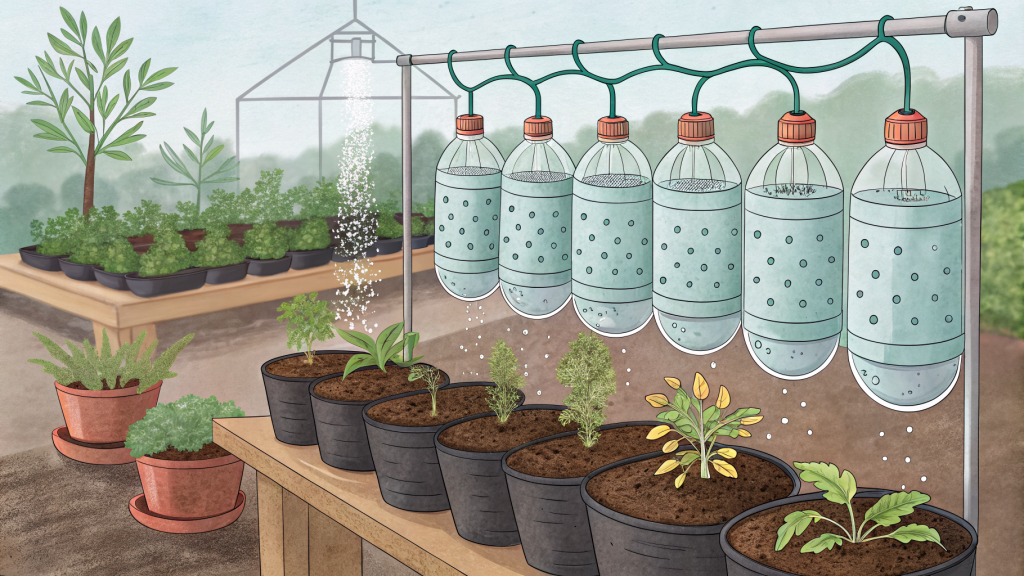
If you’re looking for an eco-friendly way to keep your potted plants hydrated without wasting water, a drip irrigation plastic bottles system is the perfect solution. By repurposing common household containers, you can create a low-cost, self-watering setup that delivers moisture directly to the roots. This method is especially useful when you’re away on vacation or simply want to reduce your watering chores.
Materials You’ll Need
Gather these items before starting:
- Clean, empty plastic bottles (1–2 liter sizes work best for most pots)
- Sharp utility knife or scissors
- Thin nail or pin
- Cotton string or a strip of fabric (optional, for wicking)
- Small drill bit (if using a drill)
- Measuring tape or ruler
Method 1: The Simple Inverted Bottle Drip
This is the easiest technique – perfect for a quick vacation setup.
Step-by-Step Instructions
- Step 1: Clean the bottle thoroughly and remove the label. Fill it with water.
- Step 2: Use a nail to poke 4–6 small holes in the bottle cap. The number and size depend on your plant’s water needs; start with fewer holes and adjust.
- Step 3: Quickly invert the bottle and push the cap into the soil near the plant’s stem, about 2–3 inches deep. The water will slowly drip out through the cap holes.
- Step 4: Check after a few hours to ensure the drip rate is appropriate. If the soil is too wet, reduce hole size or number; if dry, add more holes.
Method 2: The Wicking Bottle System
For more precise moisture delivery, use a fabric wick to draw water gradually.
How to Set It Up
- Step 1: Cut the bottle in half crosswise. Keep both parts.
- Step 2: Poke a hole in the bottle cap and thread a cotton string or fabric strip through, leaving about 4 inches of wick inside the bottle and 6–8 inches outside.
- Step 3: Fill the bottle’s bottom half with water. Invert the top half (with cap and wick) into the bottom, like a funnel. The wick should extend into the water.
- Step 4: Place the top half into the pot, burying the wick end in the soil. Cap the top with the bottle’s original cap (with a small air hole) to reduce evaporation.
Method 3: The Buried Bottle Reservoir
Ideal for larger pots or plants that need consistent moisture over several days.
Installation Steps
- Step 1: Drill or poke several small holes along the lower half of the bottle (sides and bottom). Leave the neck and upper portion hole-free.
- Step 2: Dig a hole in the pot’s soil deep enough to bury the bottle up to its neck. Place the bottle in the hole and backfill around it.
- Step 3: Fill the bottle with water through the neck. Screw the cap on loosely to allow air in and prevent debris.
- Step 4: Water will slowly seep out through the holes, keeping the surrounding soil moist. Refill as needed.
Tips for Success
- Test before leaving: Always test your system a day or two before you go on vacation to adjust the drip rate.
- Use clear bottles: Transparent bottles let you see water levels at a glance.
- Elevate the bottle: For the inverted method, placing the bottle slightly higher than the pot (e.g., on a brick) can increase water pressure and flow.
- Check soil moisture: Different plants have different needs; succulents need less water, while ferns may need more.
- Clean periodically: Algae or mineral deposits can clog holes, so rinse bottles between uses.
Practical Takeaway
A drip irrigation plastic bottles system is a smart, sustainable way to water your container plants with minimal effort and zero waste. Whether you choose the simple inverted bottle, a wicking setup, or a buried reservoir, you’ll save water and keep your plants healthy while you’re away. Start with one or two pots to get the hang of it, then expand to your entire garden. Happy growing!