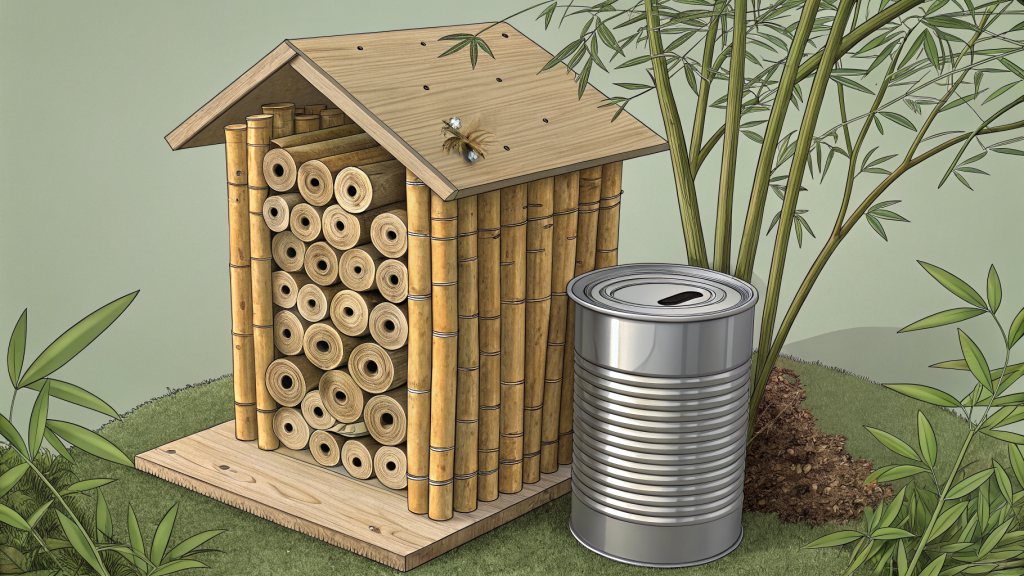
Building a mason bee house diy project is one of the most rewarding ways to support early spring pollinators. With just a few bamboo stems and a recycled tin can, you can create a safe nesting site for these gentle, efficient bees that emerge as soon as temperatures rise. This simple craft takes less than an hour and will boost your garden’s pollination from the very start of the season.
Table of Contents
ToggleWhy Mason Bees Need Your Help
Mason bees are solitary, non-aggressive natives that emerge in early spring when fruit trees and early flowers bloom. Unlike honeybees, they don’t live in hives; each female finds a narrow cavity – like a hollow stem – to lay her eggs. Natural nesting sites are increasingly scarce due to tidy gardening and loss of dead wood. By providing a mason bee house diy shelter, you give them a safe place to reproduce, which directly increases pollination in your yard.
Materials and Tools for Your Mason Bee House
What You’ll Need
- One clean, empty tin can (any size, but 15 oz or larger works well)
- Dried bamboo stems (about ¼ to ½ inch in diameter)
- Pruning shears or a small saw
- Sandpaper (medium grit)
- Twine, wire, or a strong adhesive
- Optional: a piece of wood or cardboard to plug the back of the can
Choosing the Right Bamboo
Look for bamboo canes that are at least 6 inches long and have hollow centers. Avoid stems with cracks or holes – these may already house pests. The inner diameter should be between ¼ and ½ inch; mason bees prefer cavities about 6 inches deep.
Step-by-Step Construction
Prepare the Bamboo Stems
- Cut bamboo into 6-inch lengths. Each stem should have one closed end (at the node) and one open end. The closed end becomes the back of the nesting tube.
- Sand the cut ends gently to remove sharp edges – this protects the bees’ wings.
- Inspect each stem: the inside must be clean and free of debris. If necessary, push a thin stick through to clear any blockages.
Assemble the Bee House
- Remove the label from the tin can and wash it thoroughly. Make sure there are no sharp edges; if so, file them down.
- Bundle the bamboo stems tightly together so they fit snugly inside the can. The open ends should face out.
- If the stems are loose, wrap a rubber band around the bundle before inserting it, or add a few extra stems to fill gaps.
- Place the bundle into the can so that the open ends are flush with the can’s opening. The closed ends should sit at the back.
- If the stems are shorter than the can, cut a piece of cardboard or wood to fit inside the can behind the stems, creating a solid back wall.
Secure and Hang
- Wrap twine or wire around the can to create a hanger, or use a strong adhesive to attach a hook to the back. The house must be mounted securely – it should not swing or tilt.
- Choose a location that faces south or southeast, at least 3–6 feet off the ground. It should receive morning sun to warm the bees early in the day.
- Place the house near flowering plants, but not directly over them. A fence post, tree trunk, or garden shed wall works well.
Tips for Attracting Mason Bees
Provide Mud and Flowers
Mason bees use mud to seal their nesting chambers. Place a shallow dish of damp clay-rich soil near the bee house – not too wet, just moist enough to shape. Plant early-blooming flowers like crocus, willow, heather, and fruit trees within 100 feet of the house.
Maintain Your Bee House
- In late autumn, after the bees have emerged, clean the house by removing old bamboo stems and replacing them with fresh ones. This prevents the buildup of mold and mites.
- Store the used stems in a cool, dry, ventilated container until the following spring, as some bees may still be developing inside.
- Never use pesticides near the bee house – even organic sprays can harm these beneficial insects.
Frequently Asked Questions
Will this bee house attract other insects?
Yes, you may also see leafcutter bees or small wasps – most are harmless pollinators. If you notice ants or spiders, move the house away from dense vegetation or apply a thin layer of petroleum jelly around the hanger to deter crawling insects.
How many bee houses do I need?
One house is enough for a small garden. If you have a large yard or orchard, place several houses at least 10 feet apart to reduce competition and disease spread.
Practical Takeaway
Your mason bee house diy is now ready to welcome spring visitors. With minimal effort and recycled materials, you’ve created a vital nesting site that will boost pollination for years to come. Check the house occasionally during spring and summer to enjoy the sight of bees busily provisioning their nests – and enjoy the fruits (and flowers) of their labor.