Table of Contents
ToggleWhy Make Your Own DIY Seed Tape?
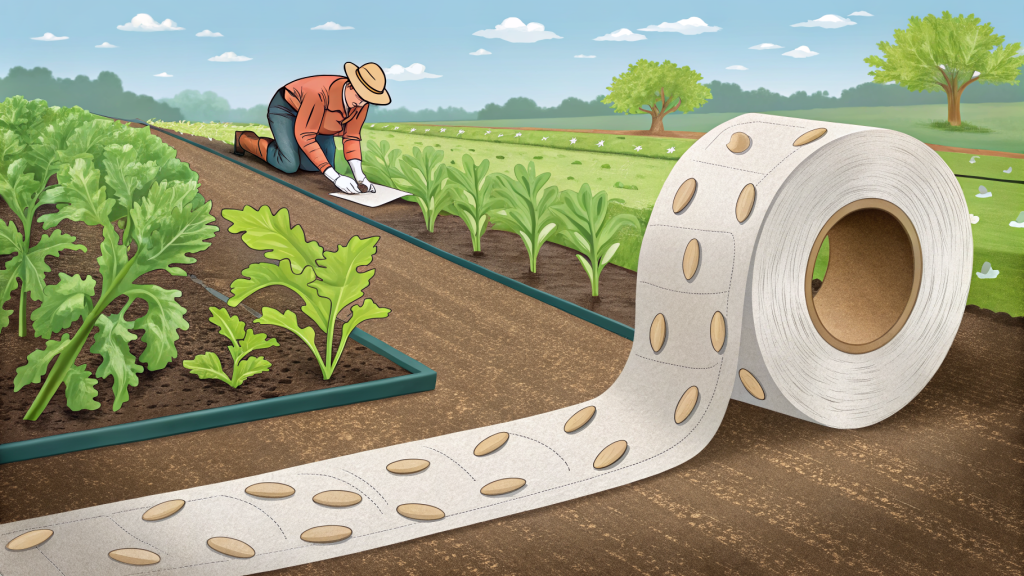
If you’ve ever tried sowing tiny seeds like carrots or lettuce, you know the struggle: they’re nearly impossible to space evenly, leading to overcrowding and hours of tedious thinning. Enter diy seed tape—a simple, low-cost solution that lets you place seeds exactly where you want them. By using biodegradable paper and flour glue, you create a pre-spaced strip that you just lay in the soil, water, and watch grow. No special tools, no plastic waste.
Materials You’ll Need
Gather these common household items:
- Toilet paper or single-ply paper towels (biodegradable)
- All-purpose white flour
- Water
- Small bowl and spoon
- Cotton swab or toothpick
- Ruler
- Seeds (carrots, lettuce, radishes, onions, etc.)
- Parchment paper or wax paper (optional, for drying)
Step-by-Step Instructions
1. Make the Flour Glue
Mix 1 tablespoon of flour with 2 tablespoons of water in a small bowl. Stir until smooth—no lumps. The consistency should be like thin school glue. Add a drop more water if needed. This glue is natural and safe for seeds and soil.
2. Prepare the Paper Strips
Cut your toilet paper into strips about 2 inches wide and as long as your garden row (or manageable lengths, e.g., 3 feet). Single-ply works best because it breaks down quickly. Lay strips on a flat surface, like a counter or parchment paper.
3. Mark Seed Spacing
Use a ruler and a pencil (lightly) to mark dots along the center of each strip at the recommended spacing for your crop:
- Carrots: 2 inches apart
- Lettuce: 4–6 inches apart
- Radishes: 1 inch apart
Check the seed packet for exact spacing. Marking ensures precision.
4. Apply Glue and Place Seeds
Dip a cotton swab or toothpick into the flour glue and dab a small dot at each mark. Then, using tweezers or a toothpick, place one seed onto each glue dot. Press gently so the seed sticks. Work in batches to keep glue from drying.
5. Dry the Seed Tape
Allow the strips to dry completely on parchment paper (about 1–2 hours). Once dry, you can roll them up loosely for storage. Label each roll with the seed type and planting depth.
Tips for Success
- Don’t overcrowd: One seed per dot is enough; you can always thin later if needed.
- Use fresh seeds: Older seeds may have lower germination rates, so test a few first.
- Store properly: Keep seed tape in a cool, dry place until planting. Use within a few weeks for best results.
- Moisten before covering: After laying the tape in a furrow, water it lightly before covering with soil. This activates the glue and helps the paper start decomposing.
Planting Your DIY Seed Tape
When ready to plant, prepare a shallow furrow at the depth recommended on the seed packet (usually 1/4 to 1/2 inch for small seeds). Unroll your seed tape into the furrow, cover with soil, and water gently. The paper will decompose within a week, leaving your seeds perfectly spaced. No thinning required!
Why This Works So Well
Toilet paper and flour glue are both biodegradable, so they won’t harm soil life. The paper holds moisture around the seeds, aiding germination, and the glue provides a temporary anchor. Plus, this method eliminates plastic waste from commercial seed tapes. It’s a win for your garden and the planet.
Practical Takeaway
Making your own diy seed tape with biodegradable paper and flour glue is a quick, satisfying project that saves time and frustration at planting time. Once you try it for carrots or lettuce, you’ll never go back to messy sowing. Give it a go this season—your back (and your garden) will thank you.