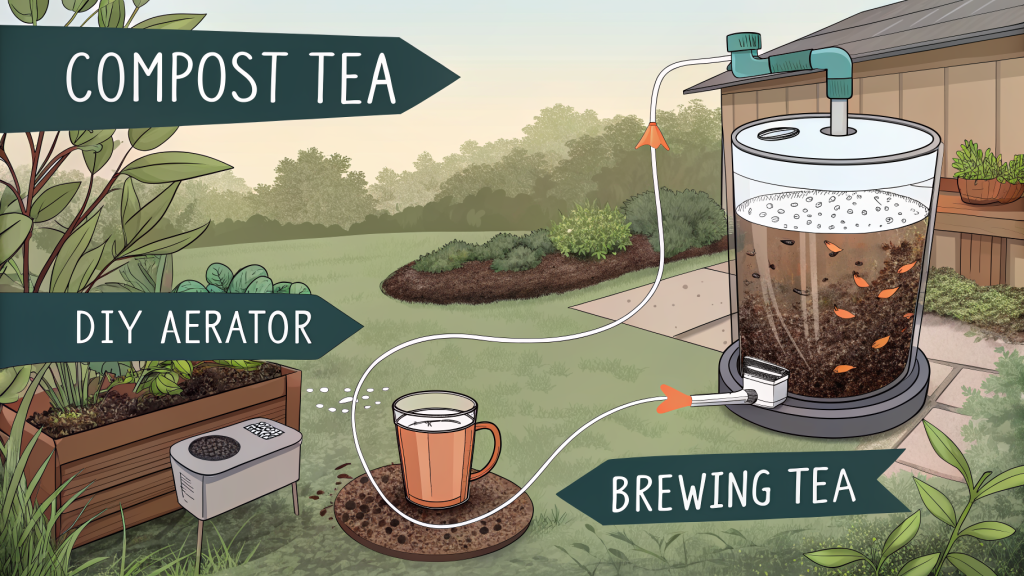
Brewing your own compost tea is one of the most effective ways to boost soil biology and give your plants a natural health kick. With a simple DIY aerator made from a fish tank pump, you can create a powerful compost tea aerator that multiplies beneficial microbes in just 24–48 hours. This aerated compost tea recipe is perfect for foliar feeding and soil drenching, delivering a concentrated dose of living organisms directly to your garden.
Table of Contents
ToggleWhat Is Compost Tea and Why Use a Fish Tank Pump Aerator?
Compost tea is a liquid extract of compost that contains a diverse community of beneficial bacteria, fungi, protozoa, and nematodes. When actively aerated, these microbes multiply rapidly, creating a biologically rich solution. A fish tank pump provides constant oxygen, which keeps the aerobic microbes alive and thriving—unlike stagnant “compost water” that can go anaerobic and produce foul odors. Using a fish tank pump as your compost tea aerator is affordable, quiet, and easy to set up.
Materials You’ll Need for Your DIY Compost Tea Aerator
- Fish tank pump – any size rated for at least 10–20 gallons per hour (GPH).
- Airstone – a fine-bubble airstone (2–4 inches) to maximize oxygen diffusion.
- Tubing – standard aquarium airline tubing (3/16 inch diameter), about 3–5 feet long.
- 5-gallon bucket – food-grade plastic, thoroughly cleaned.
- Non-chlorinated water – dechlorinated tap water (let sit for 24 hours) or rainwater.
- High-quality compost – well-aged, from a trusted source or your own pile.
- Optional additives – unsulfured blackstrap molasses (1 tablespoon per gallon) to feed microbes.
Step-by-Step Brewing Instructions
1. Set Up Your Aerator
Connect the airline tubing to the pump’s outlet, then attach the airstone to the other end. Place the airstone at the bottom of your clean 5-gallon bucket. Position the pump above the water level (or use a check valve) to prevent backflow.
2. Prepare the Water
Fill the bucket with 3–4 gallons of non-chlorinated water. If using tap water, let it sit uncovered for 24 hours to allow chlorine to evaporate. For chloramine, use a water conditioner or filter.
3. Add Compost
Place about 2 cups of high-quality compost into a nylon stocking or fine-mesh bag. Tie it closed and suspend it in the water—or simply dump the compost directly into the bucket. If using loose compost, you can strain it later.
4. Add a Food Source (Optional)
Add 1 tablespoon of unsulfured blackstrap molasses per gallon of water. This provides a quick carbon source for microbes. Avoid overfeeding, which can lead to anaerobic conditions.
5. Aerate for 24–48 Hours
Turn on the pump and let it run continuously. Bubbles should be vigorous. Brew for 24–48 hours at room temperature (60–75°F). Do not exceed 48 hours, as the tea may become anaerobic. A sweet, earthy smell indicates success; a rotten odor means it’s gone bad.
How to Apply Your Compost Tea
Foliar Feeding
Strain the tea through cheesecloth or a fine sieve to avoid clogging sprayers. Dilute with water at a 1:10 ratio (1 part tea to 10 parts water). Apply early morning or late evening using a pump sprayer, covering both upper and lower leaf surfaces. Use within 4 hours of brewing for maximum microbial life.
Soil Drenching
Apply undiluted tea directly to the soil around the root zone. Use about 1 cup per small plant, 1 quart per medium shrub, or 1 gallon per large tree. Water the soil first if it’s dry to help the tea infiltrate. Repeat every 2–4 weeks during the growing season.
Troubleshooting Common Issues
- Foul smell: Tea went anaerobic. Stop brewing, discard, and start over with cleaner equipment and less food.
- Clogged airstone: Soak in a 1:1 water and white vinegar solution for 15 minutes, then rinse thoroughly.
- Low bubble output: Check for kinks in tubing, ensure pump is above water level, and clean the airstone.
- Mold on surface: Usually harmless but indicates too much food. Reduce molasses next time.
- Using in heavy rain: Avoid foliar application right before rain to prevent washing off. Soil drench is fine.
Practical Takeaway
A fish tank pump is a simple, low-cost way to build a powerful compost tea aerator that supercharges your soil with beneficial biology. Brew a fresh batch every week during the growing season, and apply it as a foliar feed or soil drench for healthier plants and richer soil. With consistent use, you’ll notice stronger growth, better pest resistance, and improved soil structure—all from a few dollars’ worth of aquarium gear and some compost.