Table of Contents
ToggleWhy a Keyhole Garden Bed Works in Small Spaces
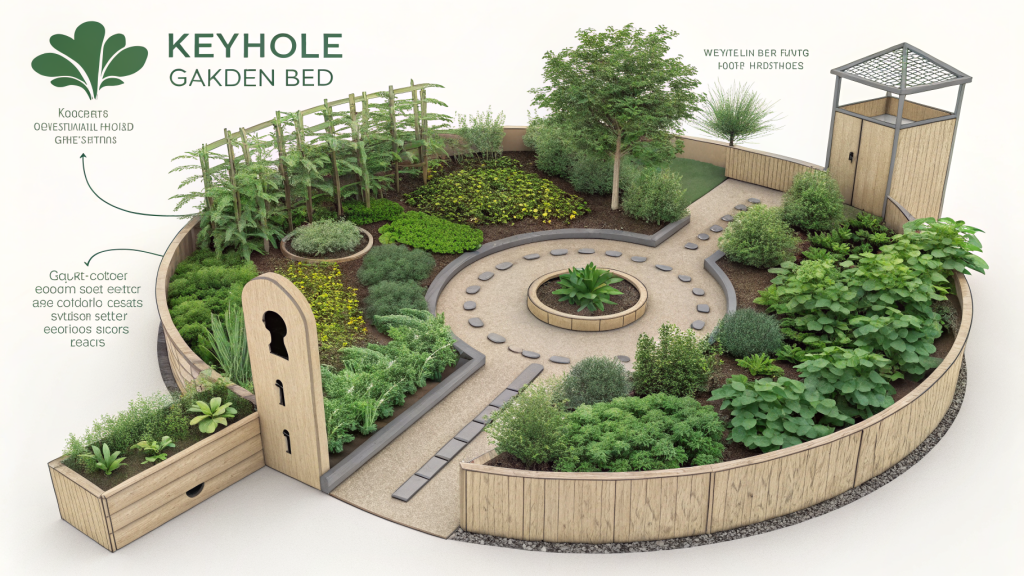
Urban gardeners often face limited square footage, but a keyhole garden design urban approach can transform a tiny patio or balcony into a productive, self-fertilizing oasis. This African-inspired raised bed features a central composting basket that nourishes plants as it decomposes, saving space and reducing waste. In this guide, you’ll learn how to build one that fits your small space while maximizing both growing area and composting efficiency.
Planning Your Keyhole Garden Layout
Choose the Right Dimensions
For small urban spaces, a circular bed with a diameter of 4–6 feet works best. The keyhole notch—a wedge-shaped cutout—should be about 2 feet wide at the outer edge and narrow to 1 foot at the center. This allows easy access to the composting basket without stepping on soil.
- Diameter: 4–6 feet (fits on most balconies or patios)
- Height: 2–3 feet (reduces bending and improves drainage)
- Keyhole notch width: 2 feet at outer edge, tapering to 1 foot
- Central basket diameter: 1–1.5 feet
Select a Sunny, Level Spot
Most vegetables need 6–8 hours of direct sunlight daily. Place your keyhole garden on a level surface—concrete, deck, or gravel—to prevent tipping. If you have only partial sun, choose shade-tolerant crops like leafy greens.
Materials and Tools for a Compact Build
Gather these supplies before you start. All items are readily available at hardware stores or online.
- Raised bed frame: Corrugated metal, cedar planks, or recycled plastic (avoid treated wood)
- Compost basket: Wire mesh or perforated plastic pipe (4–6 inches diameter, 18–24 inches tall)
- Liner: Landscape fabric or cardboard to prevent soil loss
- Tools: Measuring tape, staple gun, wire cutters, shovel
- Optional: Caster wheels for mobility
Step-by-Step Construction
Build the Frame
- Mark a circle on the ground using string and a stake. For a 5-foot diameter, the radius is 2.5 feet.
- Assemble the side walls. If using corrugated metal, cut it to height (e.g., 2 feet) and curve it into a circle. Overlap the ends and secure with screws or rivets.
- Cut out the keyhole notch: measure a wedge from the outer edge to the center, about 2 feet wide at the rim. Remove that section of wall.
- Line the inside with landscape fabric, stapling it to the top edge. This keeps soil in while allowing drainage.
Install the Central Compost Basket
- Place the basket at the exact center of the circle. If using wire mesh, form a cylinder and secure the seam.
- Ensure the basket extends a few inches above the final soil level for easy filling.
- Add a layer of coarse gravel or stones at the bottom of the basket for drainage.
Layer the Soil and Compost
Use the lasagna gardening method to build rich soil without heavy digging.
- Bottom layer: 6 inches of coarse organic material (twigs, straw) for drainage
- Middle layer: 6 inches of brown compost (dried leaves, cardboard)
- Top layer: 12 inches of mixed garden soil and finished compost
- Water each layer as you go to settle the material.
Planting and Maintenance Tips
Choose High-Yield, Compact Crops
Maximize your limited space with vertical growers and quick harvests.
- Leafy greens: Lettuce, spinach, kale (cut-and-come-again)
- Root vegetables: Radishes, carrots, beets
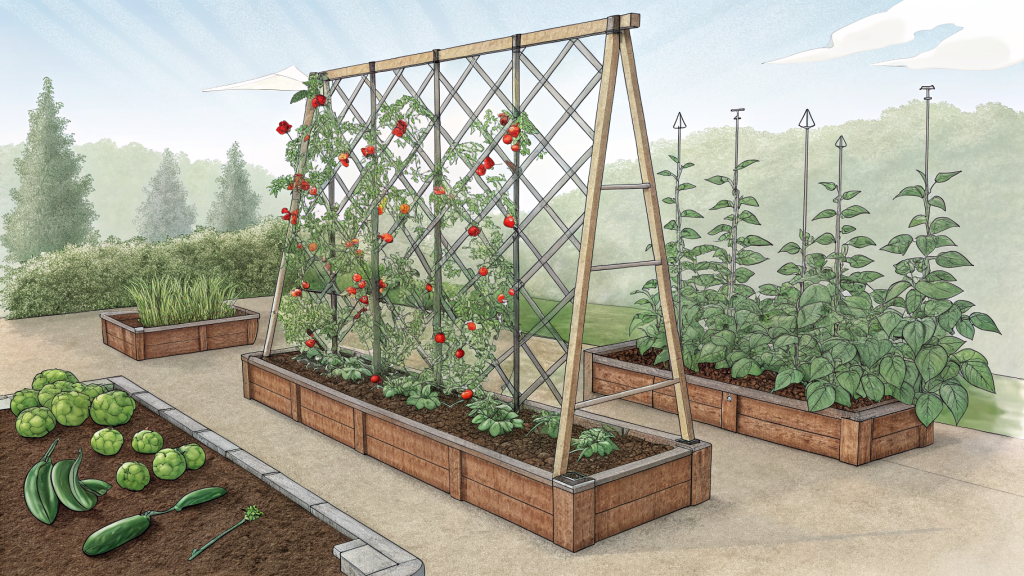
- Vertical climbers: Pole beans, cucumbers, cherry tomatoes (use a trellis on the sunny side)
- Herbs: Basil, chives, oregano (repel pests and save space)
Feed the Compost Basket Regularly
Add kitchen scraps (fruit peels, coffee grounds, eggshells) and dry browns (shredded paper, dried leaves) in a 1:2 ratio. Water the basket weekly to keep decomposition active. Avoid meat, dairy, or oily foods to prevent odors and pests.
Water Efficiently
Water the compost basket rather than the entire bed. Liquid nutrients leach into the soil as they drain. In hot weather, check soil moisture daily; the bed may need more frequent water due to its raised height.
Troubleshooting Common Issues
- Poor drainage: Add more coarse material to the bottom layer or drill extra holes in the frame.
- Pests: Cover the basket with a tight lid or wire mesh to deter rodents. Use row covers for young plants.
- Nutrient deficiency: Increase compost basket feedings or add a thin layer of worm castings around plants.
- Lack of sunlight: Move the bed on casters to follow the sun, or choose shade-tolerant crops.
Practical Takeaway
A keyhole garden bed is a smart, space-saving solution for urban growers who want to compost and garden in one integrated system. By building a compact 5-foot circular bed with a central compost basket, you can grow a surprising amount of food while recycling kitchen waste. Start small, follow the layering steps, and adjust plant choices based on your light. Within a few weeks, you’ll have a thriving, low-maintenance patch of green right outside your door.