Table of Contents
ToggleWhat Is Blossom End Rot and Why Calcium Matters
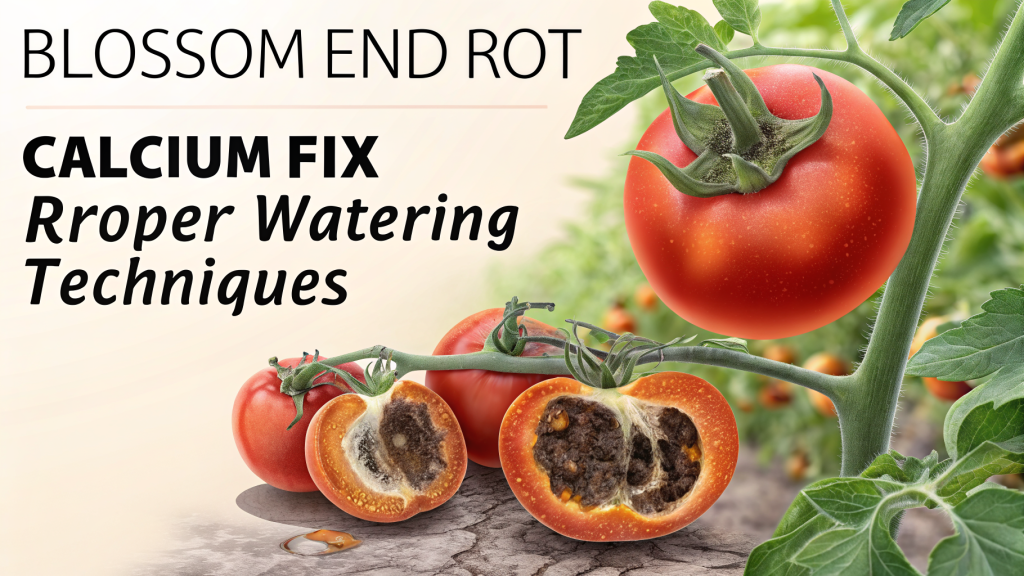
Blossom end rot (BER) is a common physiological disorder in tomatoes, peppers, and squash, characterized by a sunken, brown or black leathery patch on the blossom end of the fruit. Despite its name, BER is not a disease caused by a pathogen; it results from a calcium deficiency in the developing fruit. Calcium is essential for cell wall structure, and when it’s lacking, cells break down. For effective blossom end rot treatment calcium management begins with understanding that the problem is often not a lack of calcium in the soil, but inconsistent watering that prevents uptake. The key is to ensure steady moisture and adequate calcium availability.
Identifying Blossom End Rot
Symptoms
- Water-soaked spot at the blossom end of green fruit that enlarges and turns dark brown or black.
- Affected area becomes sunken, leathery, and dry.
- Typically appears on the first fruit clusters, later fruits may be unaffected if conditions improve.
Common Misdiagnoses
- Fungal or bacterial rot (often has a soft, spreading decay with foul odor).
- Sunscald (white or yellow patches on sides facing sun, not blossom end).
- Stink bug damage (pinprick spots with cloudy area underneath).
Preventing Blossom End Rot with Proper Soil and Water Management
Consistent Watering
Fluctuating soil moisture is the most common trigger. When the soil dries out, roots cannot transport calcium to the fruit fast enough.
- Water deeply and regularly, aiming for 1-2 inches per week.
- Use drip irrigation or soaker hoses to keep moisture even.
- Apply mulch (straw, grass clippings) to retain soil moisture and moderate temperature.
Soil Testing and pH
Calcium is most available at pH 6.5–7.5. Test your soil and adjust if needed.
- If pH is below 6.0, add lime (dolomitic or calcitic) in fall before planting.
- If pH is above 7.5, consider sulfur to lower it, but calcium may still be present.
Proper Fertilization
Excess nitrogen can promote leafy growth at the expense of calcium uptake. Use a balanced fertilizer low in nitrogen, or one with calcium nitrate.
- Avoid high-nitrogen formulas like 10-10-10 during fruiting.
- Apply calcium nitrate as a side dressing when fruits begin to form.
Correcting Calcium Deficiency
Soil Amendments for Long-Term Fix
- Gypsum (calcium sulfate): Adds calcium without raising pH. Apply 1-2 pounds per 100 square feet, worked into soil before planting.
- Dolomitic lime: Adds both calcium and magnesium, but raises pH. Use only if pH is low.
- Bone meal: Slow-release calcium and phosphorus. Mix into planting hole.
- Crushed eggshells: Slow to release, but helpful over time. Incorporate into soil or compost.
Foliar Sprays for Immediate Relief
Foliar calcium sprays can provide quick calcium to developing fruit, but they are not a substitute for soil management.
- Use calcium chloride or calcium nitrate at 1 tablespoon per gallon of water.
- Spray thoroughly on leaves and fruit, especially the blossom end, every 7-10 days.
- Apply early in the morning or late evening to avoid leaf burn.
- Note: Foliar sprays only help new fruit; existing rot will not heal.
Managing Affected Fruit and Plants
- Remove and discard affected fruit to reduce stress on the plant and prevent secondary rot.
- Continue regular watering and calcium management; later fruits often form normally.
- If a plant consistently produces rotted fruit, consider replacing it with a resistant variety (e.g., cherry tomatoes are less prone).
Practical Takeaway
Blossom end rot is preventable and manageable. Ensure consistent watering, maintain soil pH around 6.5, and avoid over-fertilizing with nitrogen. For immediate blossom end rot treatment calcium sprays can help, but long-term fix comes from soil amendments like gypsum or lime. Remove affected fruits and keep your plants stress-free—most will recover and produce healthy tomatoes.