Worm tower composting is a clever, low-effort way to recycle kitchen scraps right in your garden beds. By installing a perforated PVC pipe as a worm tower, you can feed red wigglers directly where plants grow—improving soil fertility without the need for a separate compost pile. This in-ground system is odor-free, pest-resistant, and keeps worms safe and productive.
Table of Contents
ToggleWhat Is a Worm Tower and How Does It Work?
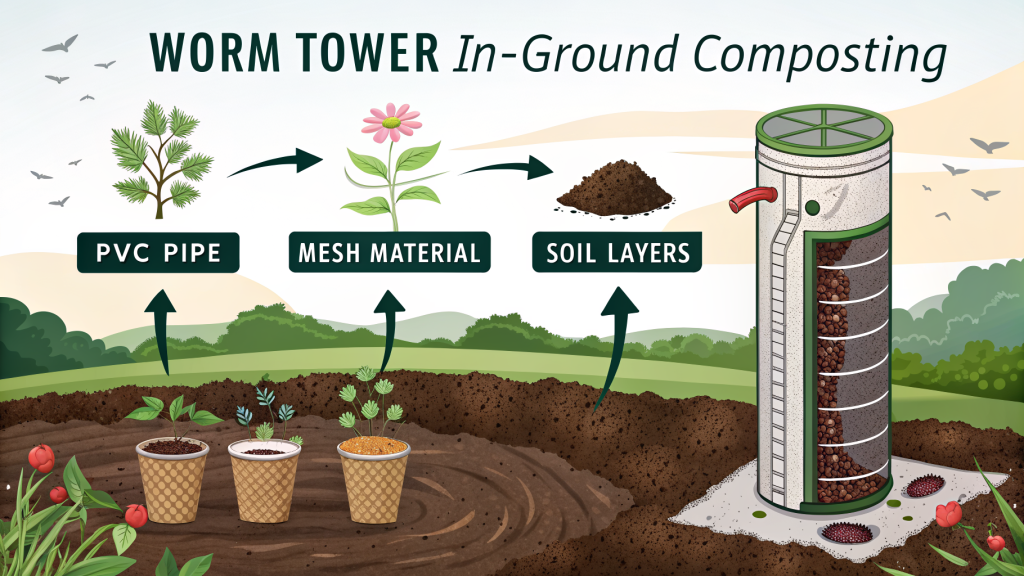
A worm tower is a simple vertical compost bin made from a section of PVC pipe. The pipe is drilled with holes and sunk into a garden bed, with the top extending above ground. Kitchen scraps are dropped into the pipe, and red wiggler worms living in the surrounding soil crawl in through the holes to feed. The worms then return to the soil, depositing nutrient-rich castings right at plant roots.
This system works because worms are naturally drawn to the food source. The pipe protects them from predators and retains moisture, creating an ideal environment. Over time, the soil around the tower becomes dark, crumbly, and full of life.
Choosing the Right Materials
PVC Pipe Specifications
- Diameter: Use 4-inch (10 cm) PVC pipe—wide enough to add scraps easily but narrow enough to fit in beds.
- Length: 18–24 inches (45–60 cm) works well; about 6 inches (15 cm) will remain above ground.
- Cap: A PVC cap or a small pot saucer to cover the top keeps out rain and pests.
Tools and Supplies
- Drill with a 1/4-inch (6 mm) bit
- PVC pipe and cap
- Red wiggler worms (Eisenia fetida)—not earthworms
- Shovel or trowel
- Kitchen scraps (fruit/veggie peels, coffee grounds, eggshells)
Step-by-Step Installation
1. Drill Holes in the Pipe
Drill holes all around the lower half of the pipe—the section that will be underground. Space holes about 2–3 inches apart. This allows worms to enter and exit while keeping the scraps contained.
2. Dig a Hole and Insert the Tower
Choose a spot in your garden bed, preferably near plants that are heavy feeders (like tomatoes, peppers, or squash). Dig a hole deep enough so that about 6 inches of pipe remains above ground. Place the pipe in the hole and backfill firmly around it.
3. Add a Bedding Layer
Before adding worms, put a handful of shredded newspaper or coconut coir at the bottom of the pipe. This gives worms a familiar environment and helps retain moisture.
4. Introduce the Worms
Add about 1–2 cups of red wigglers (roughly 50–100 worms) into the pipe. They will quickly burrow down into the bedding and soil.
5. Start Feeding
Add a small amount of kitchen scraps—no more than a handful every few days. Cover scraps with a thin layer of soil or shredded paper to deter fruit flies. Always replace the cap.
What to Feed (and What to Avoid)
Worms thrive on a varied diet, but some items can harm them or attract pests.
Worm-Friendly Foods
- Fruit and vegetable peels (avoid citrus in large amounts)
- Apple cores, banana peels, melon rinds
- Coffee grounds and filters
- Crushed eggshells (adds grit for digestion)
- Tea bags (remove staples)
Foods to Avoid
- Meat, bones, fish, or dairy (attracts rodents and smells)
- Oily or greasy foods
- Spicy foods (onions, garlic, chili peppers in large amounts)
- Processed foods with preservatives
Maintaining Your Worm Tower
Once established, worm towers require minimal care. Check the moisture level every week: the bedding should feel like a wrung-out sponge. If it’s dry, add a little water. If too wet, add dry shredded paper.
Every month or so, gently stir the contents of the pipe with a stick to aerate and prevent compaction. Avoid disturbing the worms too much.
In cold climates, worms will become less active in winter. You can insulate the tower with straw or move it to a garage if needed. In hot climates, shade the tower with a plant or mulch to keep it cool.
After 6–12 months, the soil around the tower will be noticeably improved. You can rotate the tower to a new spot and start another, or continue using the same one indefinitely.
Benefits of Worm Tower Composting
- Direct feeding: Worms deliver nutrients straight to plant roots.
- No turning required: Worms do the work for you.
- Space-saving: Perfect for small gardens or raised beds.
- Odor-free: When covered, the tower is virtually smell-free.
- Pest-resistant: The pipe keeps out raccoons, rats, and flies.
- Year-round composting: Worms work in mild temperatures.
Practical Takeaway
Building a worm tower takes about 20 minutes and costs less than $10. It’s one of the most efficient ways to turn kitchen waste into garden gold. Start with one tower, and you’ll soon want to add more. Your plants will thank you with bigger yields and healthier growth.