Table of Contents
ToggleWhy Activate Biochar at Home?
Activated biochar is a powerful soil amendment that improves water retention, nutrient availability, and microbial life. But raw biochar can actually rob your soil of nutrients temporarily as it stabilizes. By learning how to activate biochar at home, you pre-load it with beneficial microbes and nutrients, turning it into a ready-to-use soil booster. This step-by-step guide shows you how to make and charge biochar using a metal barrel and compost tea for enhanced fertility.
Step 1: Making Raw Biochar in a Metal Barrel
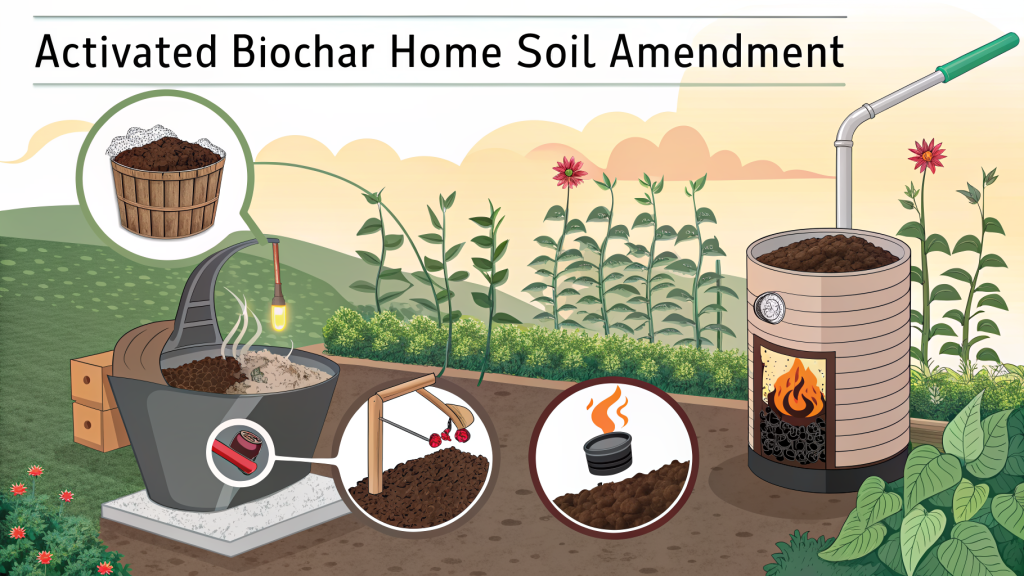
You’ll need a clean 55-gallon metal drum with a removable lid, dry wood (hardwood is best), a heat source, and a way to smother the fire. This method uses pyrolysis—heating wood in a low-oxygen environment—to create a stable carbon structure.
What You’ll Need
- Metal barrel (drill small holes around the bottom for airflow)
- Dry hardwood logs or branches (no treated wood)
- Kindling and a lighter
- A metal lid or wet burlap to smother
- Shovel and heavy gloves
Steps
- Prepare the barrel: Drill 6–8 holes (2 cm diameter) around the base. Place the barrel on a non-flammable surface, away from structures.
- Load wood: Fill the barrel with dry wood, leaving some space for airflow. Start a small kindling fire on top.
- Burn with limited oxygen: Let the wood burn until flames emerge from the top. After 20–30 minutes, you’ll see smoke turn from white to blue (this indicates pyrolysis).
- Smother the fire: Quickly place the metal lid on top or cover with wet burlap to cut off oxygen. Seal tightly with duct tape if needed. Let cool overnight.
- Collect biochar: Once cool, you’ll have black, porous chunks. Break into pieces (1–3 cm) for easier activation.
Step 2: Why You Must Activate Biochar
Raw biochar is like a sponge—it will soak up nutrients and water from your soil before plants can use them. Activating biochar at home fills those pores with beneficial microorganisms and nutrients, making it a net contributor to soil health. Activation also helps biochar retain cations (like calcium and magnesium) that plants need.
Step 3: Preparing Your Activation Solution
The best way to charge biochar is with a nutrient-rich compost tea or liquid fertilizer. Here’s a simple recipe using common ingredients.
Compost Tea Recipe
- 5 gallons of non-chlorinated water (let tap water sit out for 24 hours)
- 2 cups of high-quality finished compost or worm castings
- 1 tablespoon of unsulfured molasses (food for microbes)
- Optional: a handful of garden soil or kelp meal
Steps
- Place the compost in a mesh bag or old pillowcase. Tie it closed.
- Fill a 5-gallon bucket with water. Add the compost bag and molasses.
- Aerate using an aquarium pump with a bubbler stone for 24–48 hours. This grows aerobic microbes.
- Use immediately for best results.
Step 4: Activating the Biochar
Now you’ll combine your raw biochar with the compost tea. This process can be done in a bucket or a large tub.
What You’ll Need
- Raw biochar (crushed to 1–3 cm pieces)
- Compost tea or liquid fertilizer
- A large container (bucket, tub, or wheelbarrow)
- Stirring tool
Steps
- Submerge the biochar: Place biochar in the container and pour compost tea over it until fully covered. Stir well.
- Soak for 24–48 hours: Let it sit, stirring occasionally. The biochar will absorb the liquid and microbes.
- Drain (optional): If you want to store the activated biochar, drain excess liquid. The damp biochar can be used immediately or dried for later use.
- Check readiness: Activated biochar should feel moist and smell earthy, not sour. If it smells bad, it may have gone anaerobic—discard and restart.
Step 5: Using Your Activated Biochar
Once charged, biochar is ready to improve your soil. Mix it into garden beds, potting mixes, or compost piles.
Application Rates
- Garden beds: Apply 5–10% by volume (e.g., 1 part biochar to 10 parts soil).
- Potting mix: Use up to 10% of the total volume.
- Compost pile: Add a handful per layer to absorb nutrients and reduce odors.
Tips for Best Results
- Mix biochar into the top 6–8 inches of soil.
- Combine with compost or organic fertilizers for synergy.
- Water well after application to integrate microbes.
Practical Takeaway
Making and activating biochar at home is a rewarding way to recycle wood waste and boost soil fertility. The key is to always activate biochar at home before adding it to soil—your plants will thank you with better growth and resilience. Start with a small batch to perfect your technique, then scale up as you see the benefits.