Table of Contents
ToggleWhy Pruning Lavender Matters for Blooms
If you want your lavender plants to stay compact, bushy, and covered in flowers, you need to prune lavender for blooms every year. Without regular pruning, lavender becomes woody, leggy, and produces fewer flowers. This guide covers the correct pruning techniques for both English and French lavender, so you can maintain a neat shape and encourage repeat flowering throughout the season.
When to Prune Lavender
Timing is crucial. Prune at the right time to avoid damaging next year’s blooms.
English Lavender (Lavandula angustifolia)
- Main prune: Immediately after the first flush of flowers fades, usually in late summer (August). This encourages a second bloom and keeps the plant compact.
- Light tidy: In early spring, remove any winter-damaged tips, but avoid cutting into old wood.
French Lavender (Lavandula dentata)
- Main prune: After the first flowering in spring or early summer, cut back the flower stems and a little foliage to promote a second flush in late summer.
- No hard prune: French lavender does not regrow well from old wood, so avoid cutting into the woody base.
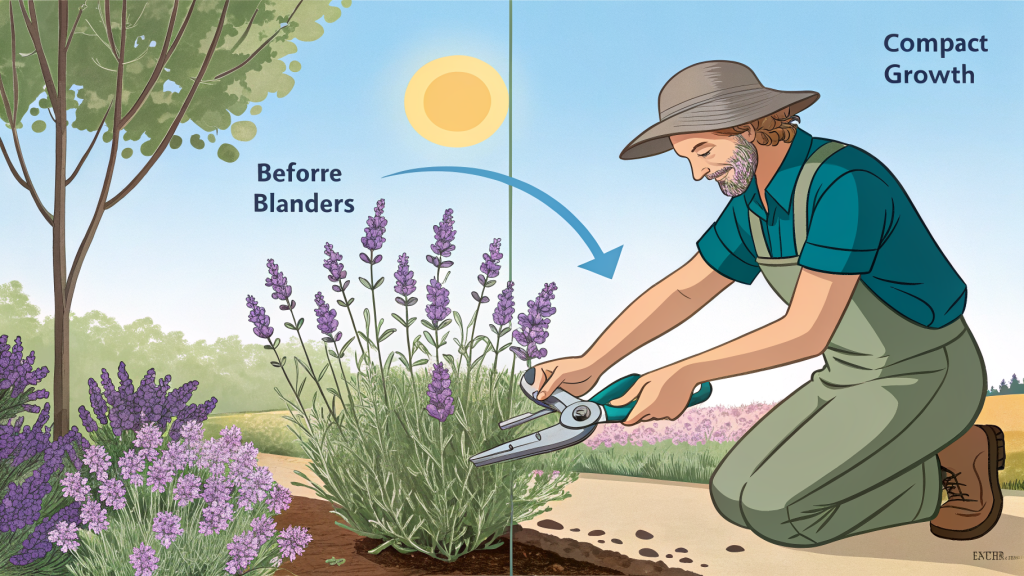
How to Prune English Lavender for Compact Growth
English lavender is more forgiving than French, but still requires careful technique.
Step-by-Step Guide
- Wait until flowers start to fade. About two-thirds of the flower spikes should have turned brown.
- Use sharp, clean secateurs. Sterilize with rubbing alcohol to prevent disease.
- Cut above the leaf node. Find the point where the flower stem meets the leafy part of the plant. Cut about 1–2 cm above the woody growth, into the green leafy area. Never cut into the brown, woody stems – these rarely regrow.
- Shape the plant. Aim for a rounded, slightly domed shape. Remove any straggly stems to maintain a uniform appearance.
- Remove all pruned material. Clear away dead flowers and leaves to prevent pests and diseases.
What to Avoid
- Cutting into old wood – only prune where you see green leaves.
- Pruning too late in autumn – new growth may be damaged by frost.
- Leaving long, bare stems – these become woody and unattractive.
How to Prune French Lavender for More Blooms
French lavender has softer stems and a looser habit. It responds well to light pruning after each flowering.
Step-by-Step Guide
- Deadhead regularly. As flowers fade, snip off the entire flower stem just above a leaf joint. This encourages new side shoots and more flowers.
- After the main bloom (spring/early summer), cut back the flowered stems by about one-third, into the leafy section. Do not cut into the woody base.
- Maintain shape. Trim any uneven growth to keep the plant symmetrical.
- Second bloom. After the second flowering (late summer), repeat the deadheading process. You can do a light trim, but leave enough foliage for winter protection.
Special Considerations
- French lavender is less cold-hardy, so avoid heavy pruning after September.
- If your plant becomes very woody, replace it rather than trying to rejuvenate it from old wood.
Common Pruning Mistakes That Reduce Blooms
Avoid these errors to ensure your lavender flowers abundantly.
- Pruning too late: If you prune after September, new growth may not harden off before frost, reducing blooms next year.
- Cutting into woody stems: Lavender rarely produces new growth from old wood. Once you cut into the brown, leafless area, that stem may die or remain bare.
- Not pruning at all: Without annual pruning, lavender becomes leggy and the center of the plant opens up, leading to fewer flowers.
- Using dull tools: Ragged cuts can introduce disease and delay healing.
Aftercare: Encouraging More Blooms
Proper aftercare helps your lavender recover and produce a second flush of flowers.
- Water lightly: After pruning, water the base of the plant to reduce stress, but avoid overhead watering.
- Apply a balanced, low-nitrogen fertilizer: A light feed of bone meal or a special lavender fertilizer (low in nitrogen) promotes flowering. Avoid high-nitrogen feeds, which encourage foliage over blooms.
- Mulch with grit or gravel: Lavender prefers dry feet. A 2–3 cm layer of grit around the base prevents moisture from rotting the stems.
- Remove spent flowers regularly: Even between main pruning sessions, deadheading encourages continuous blooming.
Practical Takeaway
To keep your lavender compact and full of flowers, prune lavender for blooms once a year after the main flowering. For English lavender, cut into the green growth, avoiding old wood. For French lavender, deadhead and lightly trim after each bloom. With regular care, your lavender will stay tidy and reward you with waves of fragrant flowers all season long.