Table of Contents
ToggleWhy Train a Fruit Tree as an Espalier?
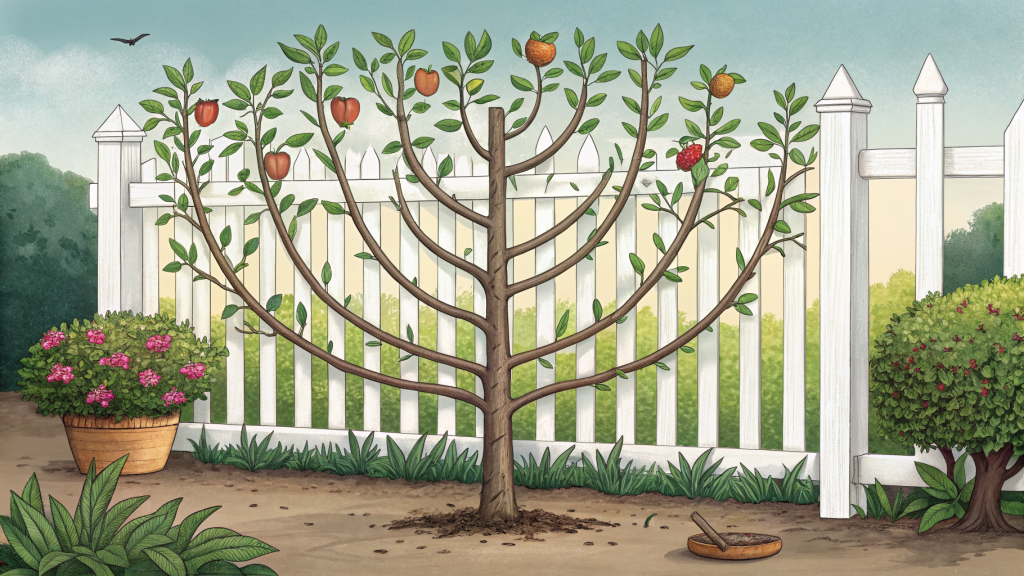
If you have a small garden and crave fresh fruit, an espalier fruit tree training wall is a space-saving ornamental technique that turns bare walls into productive art. This ancient method involves pruning and tying branches to a support system, creating a flat, two-dimensional tree that yields full-sized fruit while adding architectural beauty.
Selecting the Right Tree and Wall
Best Fruit Tree Choices
Not all trees are ideal for espalier. Choose dwarf or semi-dwarf rootstocks with flexible branches. Top options include:
- Apple (especially spur-bearing varieties like ‘Fuji’ or ‘Granny Smith’)
- Pear (e.g., ‘Conference’ or ‘Bartlett’)
- Plum (choose self-pollinating types like ‘Santa Rosa’)
- Peach or nectarine (dwarf cultivars work best)
Wall and Support Considerations
- Select a south- or west-facing wall for maximum sunlight (at least 6–8 hours daily).
- Ensure the wall has good drainage and is not prone to dampness.
- Install a support system: use galvanized wires spaced 30–40 cm apart horizontally, or a wooden trellis fixed 15 cm from the wall.
Planting and Initial Training
Planting Steps
Plant your young tree in early spring or autumn. Dig a hole twice as wide as the root ball, loosen the soil, and mix in organic compost. Position the tree 20–30 cm away from the wall, leaning slightly toward it. Water thoroughly and mulch.
First-Year Training
The goal is to establish a strong central leader and two main horizontal branches (tiers).
- After planting, cut the main stem to 60–75 cm above the graft union.
- Select two healthy side shoots near the top, spaced 15–20 cm apart, and prune away others.
- Gently bend the chosen shoots to a 45–60° angle and tie them to the lowest wire using soft plant ties.
- Over the growing season, gradually lower the branches to horizontal, securing them with figure-eight ties to avoid girdling.
- Remove any vertical shoots that compete with the leader.
Pruning and Maintenance for Shape
Summer Pruning
In early summer, pinch back side shoots on the main branches to 4–6 leaves to encourage fruiting spurs. Remove suckers from the base and any shoots growing toward the wall.
Winter Pruning
During dormancy, cut back the central leader to just above the next set of wires where you want a new tier. Shorten side branches to 2–3 buds. Remove crossing or dead wood.
Ongoing Care
- Water regularly during dry spells, especially in the first two years.
- Apply a balanced fertilizer in early spring and after harvest.
- Check ties annually and loosen them to prevent damage as the trunk thickens.
Common Problems and Solutions
- Poor growth: Ensure adequate sunlight and avoid overwatering. Test soil pH (ideal 6.0–7.0).
- Pests (aphids, scale): Use insecticidal soap or neem oil; encourage beneficial insects.
- Diseases (powdery mildew, apple scab): Prune for air circulation; apply fungicide in early spring if needed.
- Uneven branch development: Nip the tip of the stronger branch to redirect energy to the weaker one.
Practical Takeaway
Training a fruit tree as an espalier transforms a small garden into a functional work of art. Start with a dwarf apple or pear on a sunny wall, follow the simple pruning steps, and within 3–4 years you’ll enjoy both beauty and homegrown fruit. The key is patience and consistent, gentle training—your wall will thank you with a living sculpture that produces for decades.