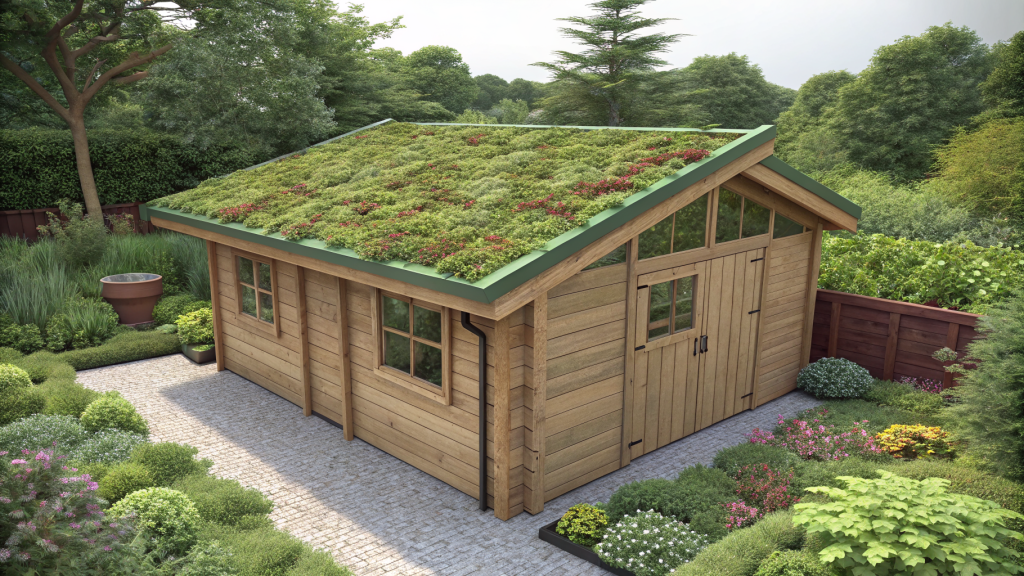
Transform your garden shed into an eco-friendly powerhouse by installing a sedum green roof. These low-maintenance mats provide natural insulation, reducing heat loss in winter and keeping the shed cooler in summer, while absorbing stormwater to prevent runoff. In this guide, you’ll learn how to install a sedum roof step by step, even on a sloped shed roof.
Table of Contents
ToggleWhy Choose a Sedum Green Roof for Your Shed?
A sedum green roof is a lightweight, durable, and low-maintenance option perfect for small structures like sheds. Sedum plants are succulents that store water in their leaves, so they can survive dry spells and require minimal watering once established. The roof membrane and growing medium act as additional insulation, improving energy efficiency. Plus, the roof captures rainwater, reducing runoff and helping manage stormwater in your garden.
Planning Your Sedum Green Roof Installation
Assess Your Shed Roof
- Check slope: Sedum roofs can be installed on flat to moderate slopes (up to 30 degrees). For steeper slopes, use a grid system to prevent slippage.
- Evaluate load capacity: A typical sedum green roof adds 10–20 kg per square foot when saturated. Ensure your shed can support this weight.
- Consider orientation: South-facing roofs get more sun, which suits sedum. North-facing may need shade-tolerant sedum varieties.
Gather Materials
Purchase a sedum mat kit designed for green roofs. Kits include pre-grown sedum mats, a waterproof membrane, a root barrier, and drainage layer. For a DIY approach, buy separate components:
- Waterproof membrane (EPDM or PVC)
- Root barrier (polyethylene sheet)
- Drainage mat or gravel layer
- Growing medium (lightweight, high mineral content)
- Sedum plugs or pre-grown mats
Step-by-Step Installation
Step 1: Prepare the Roof Surface
Clean the shed roof of debris and ensure it is structurally sound. If the roof is metal or asphalt, no further preparation is needed. For wooden roofs, apply a sealant to prevent moisture damage.
Step 2: Install the Waterproof Membrane
Lay the waterproof membrane over the entire roof, allowing a 4-inch overlap at edges. Secure with fasteners or adhesive, and ensure it extends up the sides of the roof (if applicable) to create a watertight seal.
Step 3: Add the Root Barrier and Drainage Layer
Place the root barrier on top of the membrane. Then add a drainage layer such as a dimpled plastic sheet or a 2-inch layer of lightweight gravel. This prevents waterlogging and protects the membrane.
Step 4: Apply the Growing Medium
Spread a 2–4 inch layer of lightweight growing medium over the drainage layer. Use a mix of sand, perlite, and organic matter. Level the medium gently.
Step 5: Plant the Sedum
If using sedum mats, roll them out over the growing medium and press lightly to ensure contact. If using plugs, plant them 6–8 inches apart in a staggered pattern. Water thoroughly after planting.
Step 6: Water and Establish
Keep the sedum moist for the first few weeks until roots establish. Thereafter, water only during prolonged dry spells. Sedum is drought-tolerant and will thrive with minimal care.
Maintenance Tips for Your Sedum Green Roof
- Weeding: Remove any weed seedlings that appear, especially in the first year.
- Fertilizing: Apply a slow-release fertilizer in spring if growth is slow.
- Watering: In hot summers, water once a week if no rain. Otherwise, rely on natural rainfall.
- Inspecting: Check the membrane and edges annually for damage or leaks.
Practical Takeaway
Installing a sedum green roof on your shed is a weekend project that pays off for years. You’ll reduce stormwater runoff, improve insulation, and create a habitat for pollinators. Start with a small shed to practice, then consider scaling up to a larger structure. Your garden—and the environment—will thank you.