Keeping a garden pond clear without resorting to chemicals is not only eco-friendly but also creates a healthier habitat for wildlife. By strategically using aquatic plants filter pond water naturally, you can achieve crystal-clear water while supporting a balanced ecosystem. This guide focuses on two key groups: oxygenators and floating plants.
Table of Contents
ToggleWhy Choose Natural Filtration?
Chemical treatments can harm beneficial bacteria, fish, and plants. Natural filtration with aquatic plants mimics nature’s own purification system. Plants absorb excess nutrients like nitrates and phosphates that fuel algae blooms, while their roots provide surfaces for beneficial microbes that break down waste. This reduces maintenance and creates a self-sustaining pond.
Oxygenators: The Underwater Powerhouses
Oxygenating plants are submerged species that release oxygen directly into the water, improving water quality and clarity. They compete with algae for nutrients and help stabilize pH.
Top Oxygenating Plants for Your Pond
- Hornwort (Ceratophyllum demersum) – A fast-growing, rootless plant that floats freely or can be anchored. Excellent for nutrient uptake.
- Anacharis (Elodea canadensis) – Hardy and easy to grow; provides dense foliage for fish and invertebrates.
- Waterweed (Egeria densa) – Similar to Anacharis but more robust; ideal for larger ponds.
- Parrot’s Feather (Myriophyllum aquaticum) – Also grows emersed; fine leaves trap debris and host microbes.
How to Plant Oxygenators
- Install in early spring after frost danger passes.
- Use planting baskets with heavy loam soil (no potting mix).
- Place in shallow water (6–12 inches deep) or scatter free-floating types.
- Aim for 1–2 bunches per square meter of pond surface.
Floating Plants: Surface Shade and Nutrient Sponges
Floating plants cover the water surface, blocking sunlight that algae need to grow. They absorb nutrients directly from the water and provide shelter for fish and frogs.
Best Floating Plants for Filtration
- Water Lettuce (Pistia stratiotes) – Soft, rosette leaves; prolific grower but not winter-hardy in cold zones.
- Frogbit (Hydrocharis morsus-ranae) – Small, round leaves; easy to control and remove.
- Duckweed (Lemna minor) – Tiny, fast-growing; excellent nutrient removal but can become invasive. Use sparingly.
- Azolla (Azolla filiculoides) – A floating fern that also fixes nitrogen; turns red in sun.
Managing Floating Plant Coverage
- Maintain 40–60% surface coverage to allow gas exchange and light for submerged plants.
- Thin out excess plants weekly during growing season.
- Remove dead leaves to prevent decay and nutrient release.
Combining Plants for Optimal Filtration
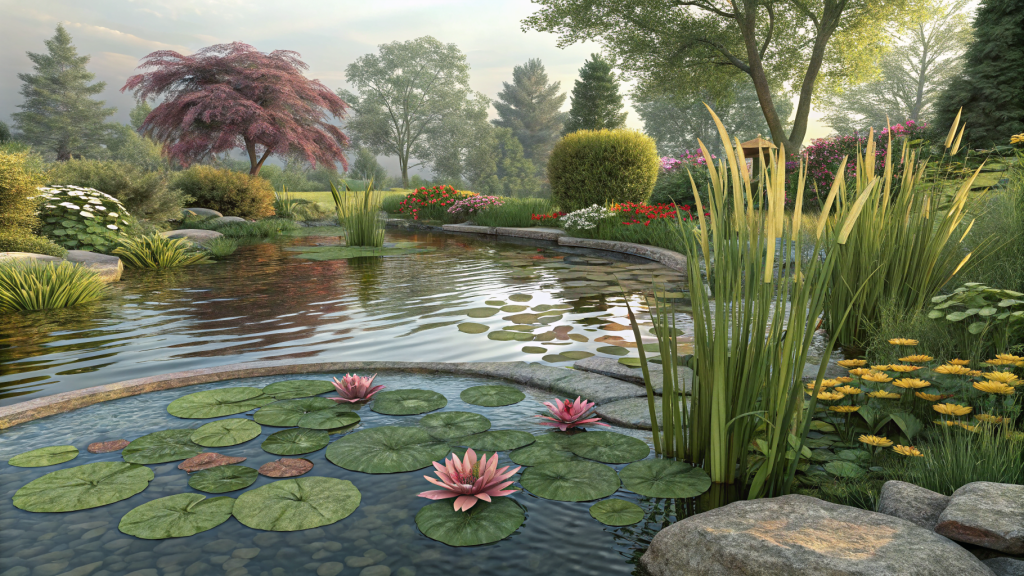
For the best results, use a mix of oxygenators, floating plants, and marginal plants (like water lilies and iris) around the edges. This creates multiple filtration zones.
Step-by-Step Planting Plan
- Install oxygenators in deeper areas (1–2 feet depth).
- Add floating plants once water temperature stabilizes above 60°F.
- Place marginal plants in shallow shelves or planting pockets along the edge.
- Add a small pump or fountain to keep water moving (prevents stagnation).
- Monitor water clarity weekly; adjust plant coverage as needed.
Common Mistakes and Troubleshooting
- Too many nutrients: Overfeeding fish or decaying organic matter can overwhelm plants. Reduce fish food and remove debris.
- Algae blooms after planting: Plants need time to establish. Use manual removal and barley straw as a temporary measure.
- Invasive growth: Contain floating plants with a floating ring or regularly thin them out.
- Winter die-off: In cold climates, bring tender plants indoors or replace annually. Hardy oxygenators like Anacharis may survive under ice.
Practical Takeaway
Start with a few bunches of oxygenators and a handful of floating plants, then observe how your pond responds. Adjust coverage seasonally, and you’ll soon enjoy clear, chemical-free water that supports a thriving ecosystem. Remember: patience is key—natural filtration takes time but yields lasting rewards.