Table of Contents
ToggleWhy Lasagna Layering Beats Tilling for Lawn Conversion
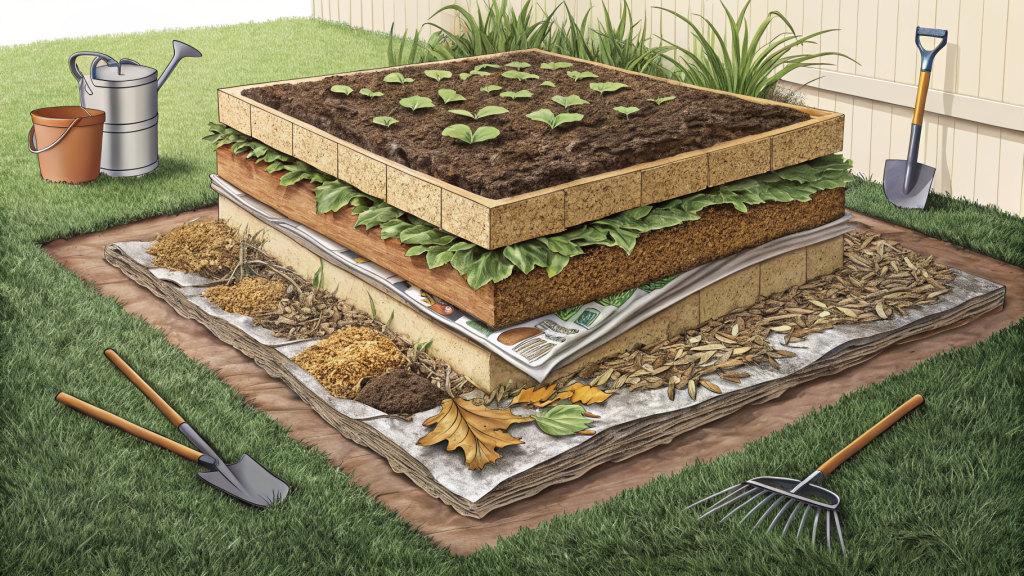
If you want to turn your grass into a fertile garden bed without back-breaking labor, a lasagna garden no dig lawn conversion is the perfect solution. This method smothers the sod, builds rich soil, and eliminates the need to remove turf or till. Instead, you layer organic materials directly on top of the grass, creating a bed that breaks down over time and feeds your plants.
What You Need for a Lasagna Garden Bed
The beauty of lasagna layering is that it uses common, inexpensive materials. Here’s a checklist:
- Cardboard or several layers of newspaper (avoid glossy inserts)
- Green materials (nitrogen-rich): grass clippings, vegetable scraps, coffee grounds, fresh manure
- Brown materials (carbon-rich): dried leaves, straw, wood chips, shredded paper
- Compost or topsoil (optional, to speed up planting)
- Water source
Step-by-Step: How to Build Your Lasagna Layer Bed
1. Mark and Mow the Area
Outline your new bed with a hose or string. Mow the grass as short as possible—this helps the cardboard lie flat and speeds decomposition.
2. Lay the Cardboard Barrier
Spread overlapping sheets of cardboard (or 8–10 layers of newspaper) directly over the grass. This blocks light, killing the lawn underneath. Wet the cardboard thoroughly so it stays in place and begins to soften.
3. Add Your First Brown Layer
Cover the cardboard with 3–4 inches of brown material, such as shredded leaves or straw. This provides carbon for microbes and helps hold moisture.
4. Add a Green Layer
Top with 2–3 inches of green material like grass clippings or kitchen scraps. Nitrogen-rich greens fuel decomposition.
5. Repeat Layers
Continue alternating brown and green layers until the bed is 18–24 inches tall. The pile will settle significantly. Finish with a 2-inch layer of compost or topsoil if you plan to plant immediately.
6. Water Well
Moisten each layer as you go. The final bed should be damp but not soggy.
When Can You Plant?
If you use finished compost as the top layer, you can plant right away. For seeds or transplants, simply pull back the top layer, add a handful of soil, and plant. For best results, plant in spring or fall when temperatures are mild. If you build the bed in fall, it will be ready for spring planting with minimal effort.
Maintenance Tips for Long-Term Success
- Keep it mulched: Add a 2–3 inch layer of wood chips or straw on top to suppress weeds and retain moisture.
- Feed the soil: Each season, top-dress with compost or a thin layer of well-rotted manure.
- Replenish layers: As the bed settles, add more brown and green materials to maintain height and fertility.
- Don’t dig: The whole point is no-dig! Let worms and microbes do the work.
Common Questions About Lasagna Garden No Dig Lawn Conversion
Will the grass grow through?
No, if you use thick cardboard and wet it well, the grass dies within weeks. Any persistent weeds can be pulled easily from the loose soil later.
Can I use this on Bermuda grass or other tough turf?
Yes, but you may need to double-layer cardboard and wait longer (2–3 months) before planting. Alternatively, use a thicker initial brown layer.
Does it attract pests?
If you avoid meat, dairy, and oily foods in your green layers, pests are rarely a problem. A 6-inch brown layer on top deters flies.
Practical Takeaway
Lasagna layering is the easiest way to convert lawn to garden without tilling or sod removal. In one season, you’ll have dark, crumbly soil teeming with life. Start your lasagna garden no dig lawn conversion today and enjoy a thriving, low-maintenance bed for years to come.